


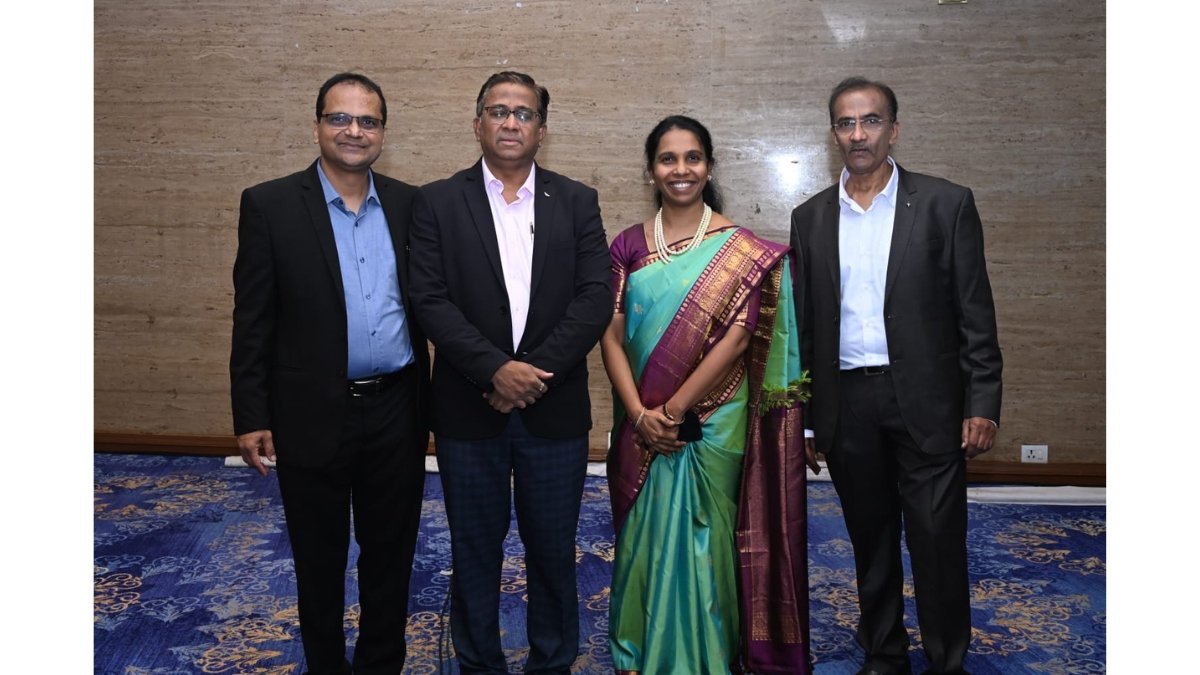




Dr. Sat Kumar Tomer & Dr. Yukti Gill, Founder, CEO & Co-founder, MD of Satyukt Analytics Private Limited
Bengaluru (Karnataka) [India], May 25: In India, small and marginal farmers are defined by landholding size. Marginal farmers cultivate less than 1 hectare (about 2.47 acres), while small farmers operate between 1 and 2 hectares (roughly 2.47 to 4.94 acres). Together, they account for over 85% of India’s farmers, yet work on about 47% of the cultivated land and produce more than 40% of the country’s food grains, supporting an agricultural sector that contributes around 17–18% to GDP. At the farm level, decision-making cannot assume uniformity. Even within a single acre, soil moisture, nutrient levels, and crop health vary across different sections, which means effective farming requires understanding these micro-level differences rather than treating the field as one unit.
Satellite-based precision agriculture makes this possible by capturing variation within the farm and turning it into actionable insights. Solutions like Sat2Farm provide a continuous, field-wide view, helping identify stress and variability early, even for farms as small as a single acre. With a typical 10-meter resolution, each pixel represents a specific area within the field, and a one-acre farm can be observed through roughly 30–40 pixels or data points, each reflecting conditions in a different part of the field. In contrast, IoT sensors provide high accuracy but only at fixed points. A single sensor reflects conditions only at its installed location, and capturing similar variation requires placing multiple sensors across the field, increasing cost and complexity. Satellite systems, on the other hand, deliver these multi-point insights without incremental hardware costs, making them more accessible while enabling better input use, reduced wastage, and improved economic outcomes.
Understanding What Precision Agriculture Means at the Farm Level
Precision agriculture is the use of data and technology to make farming decisions more accurate and timely. It involves monitoring soil conditions, tracking crop health, planning irrigation, and applying inputs like fertilisers in the right quantity at the right time. The key shift is moving away from treating a field as uniform to recognising variation within it, and acting on those differences to improve efficiency and outcomes.
For small and marginal farmers, this approach builds on what they already do. Decisions are often based on observation and experience, but are limited by what can be seen at a given moment. Precision agriculture adds structured, continuous insights that strengthen these decisions. The real consideration, however, is economic. Any shift from traditional practices must justify its cost through clear gains, whether in reduced input use, better yields, or more consistent farm performance.
The Cost Side: What Farmers Need to Consider
Adopting precision agriculture often comes down to a simple question for small and marginal farmers: is the cost justified? Expenses can include tools, digital platforms, training, and sometimes hardware. Unlike large farms that can invest in multiple on-ground technologies, smaller farms need solutions that avoid heavy upfront investment. Satellite-based approaches address this by eliminating the need for physical installation while still delivering farm-level insights. With access through mobile applications and shared service models, farmers can start using data-driven support without significantly increasing operational costs.
At the same time, risk plays a critical role in decision-making. With limited financial buffers, even one failed season can have serious consequences, making predictable returns essential. In this context, the Sat2Farm app helps improve input efficiency by enabling timely and informed actions. By optimising the use of fertilisers, water, and crop protection measures, they reduce unnecessary spending and minimise losses caused by delays or inaccuracies. This makes precision agriculture not just accessible, but economically viable within the constraints small and marginal farmers operate in.
The Benefit Side: Where Value Can Be Created
The value of precision agriculture becomes clear when it directly improves how inputs are used.Instead of relying on broad assumptions, farmers can apply fertilisers, water, and crop protection measures based on actual field conditions. This leads to more efficient use of resources and avoids unnecessary spending, which is critical when margins are already tight.
It also strengthens decision-making across the season. Early detection of issues like pest attacks, nutrient deficiencies, or water stress allows timely intervention before damage escalates, reducing potential yield losses. At the same time, access to weather data, crop health insights, and soil information supports better planning around sowing, irrigation, and harvesting. Over time, this results in more consistent outcomes and a more reliable use of limited resources.
The Balance Between Cost and Return
The economics of precision agriculture for small farmers is not simply about comparing total costs with total returns. It is about understanding how small improvements in efficiency can add up over time. For example, even a modest reduction in fertilizer use or a slight improvement in yield can have a meaningful impact on income.
Since every minute detail needs time to take effect, precision agriculture works by steadily building value season after season.
The scale of the farm also plays a role. On smaller plots, the absolute gains may be limited, but the relative impact can still be significant. What matters is whether the improvement justifies the effort and cost involved.
Accessibility and Practical Challenges
One of the main challenges in making precision agriculture economically viable for small farmers is accessibility. Technology must be easy to use, available in local languages, and relevant to local farming conditions. Sat2Farm supports this by delivering insights in over 20 languages, helping ensure that information is understandable and usable across diverse regions. If the information is too complex or not aligned with ground realities, it is unlikely to be used effectively.
Another challenge is trust. Farmers need to be confident that the recommendations they receive are reliable. This comes from consistent, accurate performance over time, where insights prove their value directly in the field.
Infrastructure also plays a role. Connectivity and digital familiarity can vary across regions, so solutions need to be designed to work reliably across these differences.
The Role of Scalable and Affordable Solutions
For precision agriculture to work for small and marginal farmers, the focus must be on affordability and scalability. Instead of relying on high-cost equipment like sensors, solutions that use widely available tools such as mobile phones are more likely to see adoption. Platforms that can support multiple crops and adapt to different regions also deliver greater value. Sat2Farm reflects this approach by providing insights across over 140 crops in more than 50 countries, making it easier for farmers in diverse regions to access relevant, localised guidance without added complexity.
Shared models can also help reduce costs. For example, services that are accessed through cooperatives, farmer groups, or institutions can make technology more accessible without requiring individual investment.
The goal should be to develop approaches that fit the realities of smallholder agriculture, taking into account their specific constraints, resources, and decision-making processes. This becomes especially important in a country like India, where there are over 12 crore small and marginal farmers, each operating under different local conditions and constraints.
Looking Ahead
The economics of precision agriculture for small and marginal farmers is still evolving. As technology becomes more accessible and better adapted to local conditions, the balance between cost and benefit is likely to improve. However, adoption will depend on how well these solutions address the practical constraints faced by farmers.
Ultimately, precision agriculture is not just about technology. It is about making better use of available resources, reducing avoidable losses, and supporting more informed decision-making. For small and marginal farmers, even incremental improvements can make a meaningful difference. The key is to ensure that the solutions offered are not only effective but also practical and economically viable in real-world conditions.
If you object to the content of this press release, please notify us at pr.error.rectification@gmail.com. We will respond and rectify the situation within 24 hours.