



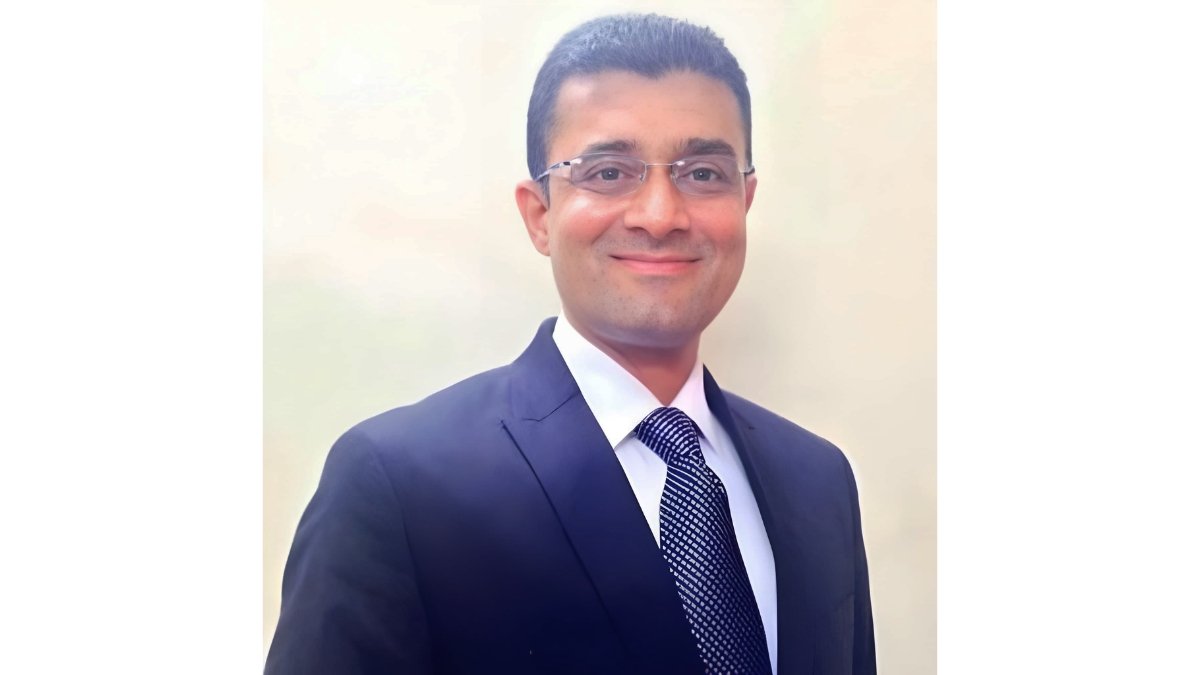
Ashissh Raichura, Founder & CEO, Scanbo Technologies
Surat (Gujarat) [India], June 25: India is having a healthcare AI moment. Every week brings a new chatbot that answers medical questions, a new app that promises to diagnose from a photograph, a new model that scores well on a medical exam. The excitement is real, and some of it is justified. But after a decade of building and deploying AI diagnostics in real clinical settings, I want to offer a note of caution about where we are putting our attention.
We are spending most of our energy on the easy half of the problem and almost none on the hard half. And the hard half is the one that actually determines whether AI improves health outcomes for ordinary Indians or simply generates impressive demonstrations that never reach the people who need them.
The chatbot era is loud. The real test is quieter.
A chatbot is software. It is relatively cheap to build, easy to demonstrate, and instantly shareable. You can launch one from a laptop and have a million people try it in a week. That is why so much of the Indian health AI conversation has gravitated toward conversational tools and consumer apps. They are visible, they are fundable, and they make for good headlines.
A cardiac signal is something else entirely. To capture a clean, diagnostic-grade reading of a human heart at the point of care, you need a reliable device, accurate sensors, consistent calibration, and a way to turn that raw signal into something a clinician can act on. None of that is glamorous. None of it trends on social media. But it is the actual foundation of clinical AI. Because an algorithm, however sophisticated, is only as good as the signal you feed it. Garbage in, garbage out has not stopped being true just because the model got bigger.
This is India’s real health AI test. Not whether we can build clever software, we clearly can, but whether we can build the diagnostic infrastructure that makes the software meaningful in a clinic in a small town with unreliable power and one overworked physician.
Signal quality is the foundation everyone skips
In the clinics where our technology operates, the lesson that repeats itself is simple. The quality of the AI output depends entirely on the quality of the input. A device that captures over a hundred thousand data points in a single blood pressure measurement gives the AI something rich to work with. A poorly calibrated reading taken in a hurry gives you a confident-sounding answer built on noise.
Most of India’s primary healthcare still runs on fragmented records, basic equipment, and data scattered across systems that do not speak to each other. You cannot build trustworthy clinical AI on that foundation. The starting point is not a better algorithm. It is a better signal, captured reliably, at the moment of patient contact. We learned early that if you do not control the device, you do not control the signal, and if you do not control the signal, you cannot stand behind the diagnosis. That is why we chose to build the full stack, device, intelligence, and clinical record, as one system rather than stitching together parts that were never designed to work together.
India’s real opportunity is at the frontline
Here is what excites me about India specifically. We have one of the largest frontline health workforces in the world. Over a million ASHA workers and hundreds of thousands of community health workers are already in the villages, already trusted, already doing the work. They are an extraordinary national asset that no other country can match at this scale.
The wrong move is to bypass them with a chatbot and call it access. The right move is to put reliable, AI-powered diagnostic tools in their hands. When you do that, you do not get “better than nothing.” You get something genuinely powerful. A trusted human who knows the family, equipped with intelligence that makes her as capable as a specialist in a city hospital. An algorithm on a phone can give a villager an answer. A health worker with the right tools gives them care. Those are not the same thing, and India of all countries should not confuse them.
The data question we cannot postpone
There is one more part of this test that we are not talking about enough. As India builds the largest pool of health and biometric data on earth, through digital health programmes, wearables, and connected devices, we are creating something of enormous value. That data will power the next generation of medicine. The question is who owns it and who benefits from it.
I believe this data is a sovereign asset and, more fundamentally, it belongs to the people who generate it. A citizen should have a say in how their biological data is used and a stake in the value it creates, not simply receive a free app in exchange for the most personal information they will ever produce. I call this principle dignity over dependency. Health data is not exhaust to be harvested. It is a national resource and a personal one, and how India governs it now will shape the trust people place in health AI for a generation.
What must change
Three things need to shift if India is to pass this test.
First, we must value the hard infrastructure as much as the visible software. The funding, the talent, and the policy attention should flow toward diagnostic signal capture at the frontline, not only toward consumer-facing apps. The unglamorous work is the work that changes outcomes.
Second, we must design for the clinician and the health worker, not around them. Technology that adds steps to an overloaded clinic gets abandoned, no matter how accurate it is. The test of any tool is whether it makes the human delivering care more capable, and whether the patient ends up better served.
Third, we must treat data governance as foundational, not as an afterthought. Build the consent, the ownership, and the participation from the start. Trust is the one thing that, once lost, no algorithm can recover.
India does not lack ambition or talent in health AI. What will separate real progress from expensive experimentation is whether we are willing to do the harder, quieter work beneath the headlines. The chatbots are the easy part. The cardiac signal, captured cleanly, in a real clinic, for a real patient who owns their own data, that is the test. And it is one I believe India can pass, if we choose to build for dignity rather than dependency.
Ashissh Raichura is the Founder and CEO of Scanbo Technologies, which builds AI-powered point-of-care diagnostic technology. He is the author of the manifesto “Dignity over Dependency” (dignityoverdependency.org).