



Indore (Madhya Pradesh) [India], September 17: As children move through another academic year of unit tests, term exams, and eventually board exams, child psychologists across India are seeing a familiar pattern: a bright, otherwise capable child who struggles to read fluently, reverses letters, avoids reading aloud, or takes disproportionately long to finish written work — and is labelled careless, lazy, or simply “not trying hard enough.” Experts say a significant share of these children are living with dyslexia, an undiagnosed specific learning disability (SLD) that has nothing to do with intelligence or effort.
How Common Is Dyslexia Among Indian School Children? – Multiple Indian studies place the prevalence of dyslexia among school-going children between roughly 6% and 11%, with pooled meta-analysis data putting overall specific learning disability rates near 10–11% of the school-age population — meaning most classrooms of 30–40 students are statistically likely to include at least two or three children affected by some form of SLD. Among these, dyslexia is consistently found to be the most common subtype, ahead of dysgraphia (writing) and dyscalculia (mathematical difficulty). A 2023 nationwide review found an average gap of nearly four years between the point a mother first suspects something is wrong and the child actually receiving a formal diagnosis — a delay experts say directly costs children years of confidence and academic ground that’s hard to recover later.
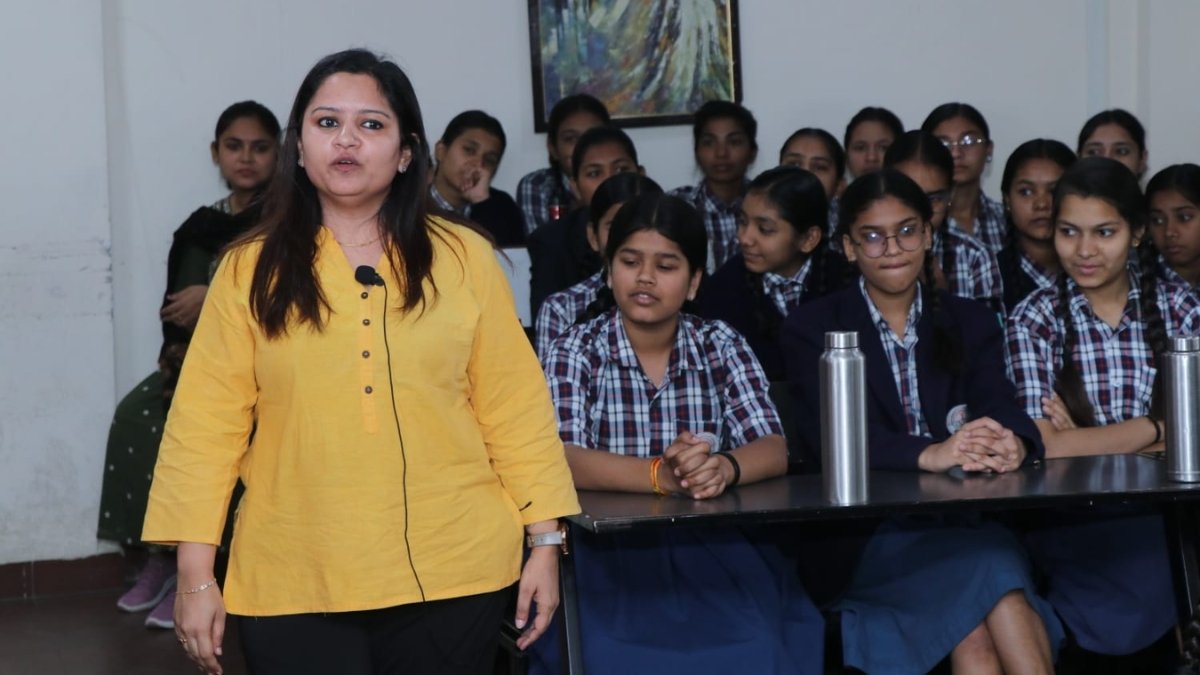
“The tragedy isn’t the condition itself — it’s the years lost before anyone names it correctly,” said Dr. Vini Jhariya, Clinical & Child Psychologist in Indore and founder of Urjasvini Child Development Centre, who has worked with children presenting learning difficulties for over a decade. “A child who is struggling to decode words is often working twice as hard as their classmates just to keep up — and instead of support, they get told to concentrate more.”
Why Do Teachers and Parents Miss the Early Signs of Dyslexia? Part of that delay, research suggests, starts in the classroom itself. Indian school-based studies have found that as many as seven in ten teachers remain unaware of specific learning disabilities until they undergo targeted training — meaning the adults best placed to catch early warning signs are often the least equipped to recognise them. This is despite the Rights of Persons with Disabilities Rules, 2017 explicitly recommending that all children be screened for SLD indicators by age 8 or Class III, whichever comes first.
What Are the Early Signs of Dyslexia in Children? Dr. Jhariya said the signs are frequently visible years before a formal diagnosis: difficulty matching letters to sounds in early primary years, slow and effortful reading by class 3–4, spelling that doesn’t match how hard a child studies, and a growing reluctance to read aloud or attempt written work — a pattern that shows up in every exam a child sits, not just the ones at the end of school. “Parents often describe it as the child being ‘smart in conversation but somehow blank on paper.’ That gap between spoken ability and written performance shows up test after test, long before anyone connects the dots,” she said.
CBSE Exam Concessions for Dyslexia: What Parents Should Know– What makes the issue particularly urgent in the Indian schooling context is a lesser-known provision: the CBSE has, since a formal 2018 circular consolidating earlier rules, extended specific examination concessions to students with recognised benchmark disabilities under the Rights of Persons with Disabilities Act, 2016 — a category that explicitly includes dyslexia. These concessions include additional time (up to an extra hour in a three-hour paper), the use of a scribe, and in many cases exemption from a third language paper, along with spelling and language-specific relaxations during evaluation — provisions that apply specifically at the board exam stage, which is why early identification matters long before a child reaches Class IX or XI.
The catch, according to Dr. Jhariya, is timing and awareness. “These concessions have to be applied for through the school, backed by a certificate from a recognised assessor, and the disability category typically needs to be registered when the child enrols for board exams. Given how long it already takes families to reach a diagnosis, many don’t find out their child even qualifies until it’s too late in that window,” she said.
When Should a Child Be Tested for Dyslexia? – Early identification, Dr. Jhariya said, changes the trajectory entirely — not just for exam accommodations, but for the child’s confidence and long-term relationship with learning. “If we catch this at age 6 or 7, the work is simple: build the skill and keep the child’s confidence intact. If we wait until the child is 15, we’re not just teaching reading anymore — we’re also trying to undo years of that child quietly believing they’re not smart enough,” she said.
Dr. Jhariya, who has assessed and supported over 5,000 children through Urjasvini’s integrated model of assessment, therapy, and special education, recommends that any child showing a persistent gap between verbal ability and reading/writing performance — visible across everyday classwork and exams alike, not just at board level — be taken for a structured psychological and educational assessment rather than being placed in extra tuition alone. “More tuition doesn’t fix a processing difference. It usually just adds more hours of frustration,” she said.
With exam season a recurring part of every academic year, experts are urging parents and schools to treat early dyslexia testing not as an afterthought, but as a step that protects both a child’s learning and, when it matters, their academic rights.
Dyslexia Test Names in India: How Is Specific Learning Disability (SLD) Diagnosed? – A dyslexia diagnosis is not based on classroom performance alone — it requires a structured psychological and educational assessment conducted by a qualified professional using standardised tools, often a mix of Indian-normed and internationally validated instruments:
NIMHANS Index for Specific Learning Disabilities — a widely used Indian screening battery developed by the National Institute of Mental Health and Neurosciences, assessing reading, writing, and arithmetic separately.
DST-J (Dyslexia Screening Test – Junior) — a standardised tool used to flag dyslexia risk in younger school-age children.
MISIC (Malin’s Intelligence Scale for Indian Children) — an IQ assessment adapted for the Indian population, used to rule out intellectual disability as the underlying cause.
WISC (Wechsler Intelligence Scale for Children) — an internationally recognised cognitive assessment used alongside Indian-normed tools for a fuller cognitive profile.
WRAT (Wide Range Achievement Test) — an internationally standardised measure of reading, spelling, and math skills, widely used to benchmark academic achievement against age norms.
WIAT (Wechsler Individual Achievement Test) — a comprehensive, internationally validated battery assessing reading, writing, and language skills in detail.
Woodcock-Johnson Tests of Achievement — an internationally used battery assessing academic skills alongside cognitive processing, often used in comprehensive SLD evaluations.
CTOPP-2 (Comprehensive Test of Phonological Processing) — an internationally standardised test specifically measuring phonological skills, a core deficit area in dyslexia.
DSM-5 clinical criteria — the diagnostic framework used to formally classify Specific Learning Disorder once test results and clinical history are reviewed together.
A certified diagnosis from a recognised institute or RCI-registered professional is what schools require to process CBSE’s exam concessions — making dyslexia testing not just clinical, but procedurally necessary for accessing a child’s legal entitlements.
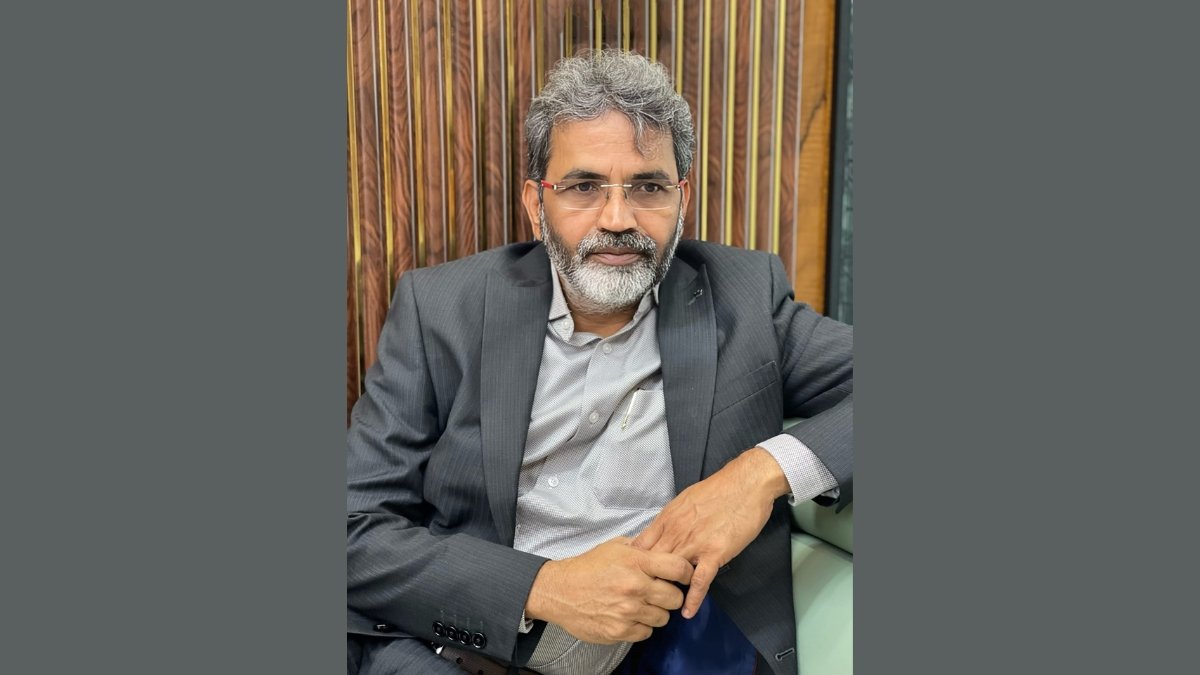
Dr. Vini Jhariya is an RCI-registered Clinical and Child Psychologist and is a TEDx Speaker with over a decade of experience in her field . She is Founder of Urjasvini Child Development Center, Indore. Hitesh Jhariya is a Clinical Psychologist (Associate) and Co-Founder of Urjasvini Child Development Center, Indore. Their work includes psychological assessment, IQ and cognitive testing, developmental and behavioural evaluation, learning difficulties and multidisciplinary child intervention.
If you object to the content of this press release, please notify us at pr.error.rectification@gmail.com. We will respond and rectify the situation within 24 hours.