


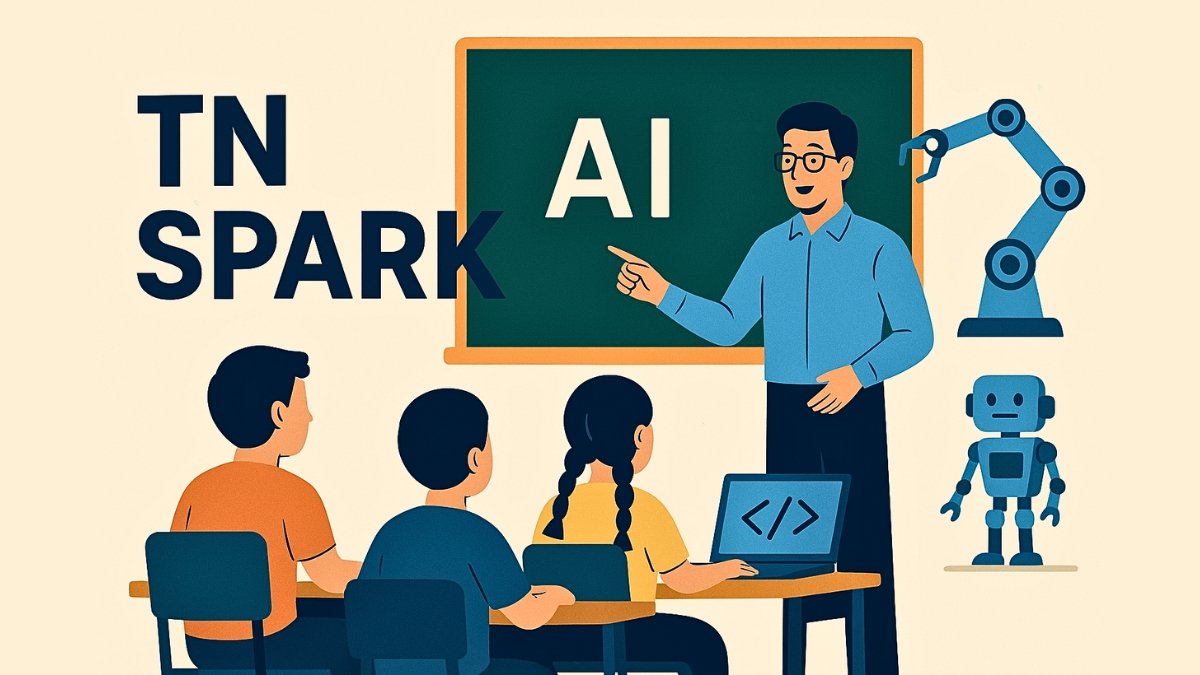
Chennai (Tamil Nadu) [India], September 13: If you thought government schools in India were forever doomed to chalk-and-talk classrooms and crumbling blackboards, think again. Tamil Nadu’s education department has quietly decided that its students deserve not just the three R’s—reading, writing, and arithmetic—but also the new-age trinity of AI, robotics, and coding. Enter TN SPARK (State Platform for Adaptive Robotics and Knowledge), a pilot initiative that is already turning 80 schools in Coimbatore into testing grounds for tomorrow’s tech-savvy citizens.
The program promises to train students from Classes VI to IX in artificial intelligence applications, robotics, online tools, and even the dreaded “coding” word that has both parents and ed-tech companies salivating. The textbooks? Bilingual in Tamil and English. The teachers? Handpicked and trained. The pitch? To democratise cutting-edge digital skills for students who otherwise might never have touched a laptop outside an internet café.
The Glorious Side of SPARK
On the positive side, TN SPARK is nothing short of revolutionary. Let’s face it—India has long been accused of preparing its students for exams, not life. By injecting AI and robotics into the government school curriculum, Tamil Nadu is attempting to rewrite that script. Imagine a Class VII student in rural Coimbatore, who once memorized multiplication tables on a slate, now experimenting with robotic sensors or dabbling in Python code. The psychological leap alone is worth applauding.
Even critics agree on one thing: exposure matters. Early exposure to technology not only builds confidence but also removes the elitist halo surrounding coding and AI. If CBSE and elite private schools can flaunt robotics labs, why should state-run schools be condemned to outdated encyclopedias and creaky projectors?
The Flip Side—Because Every Spark Can Burn
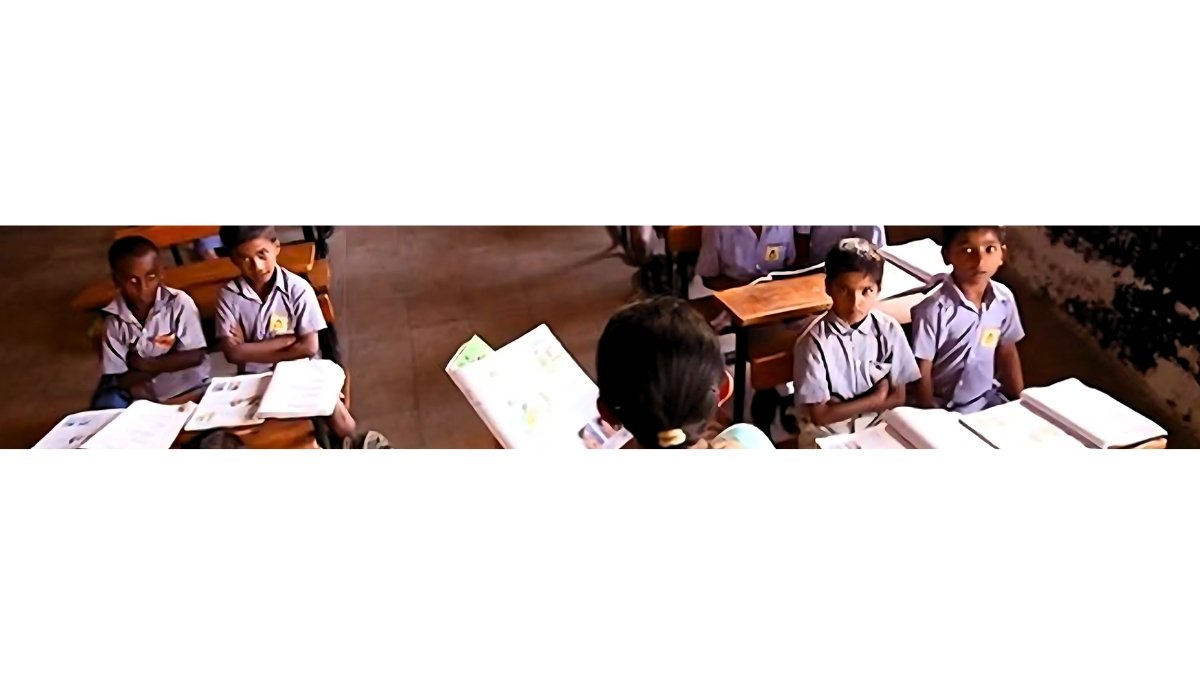
Of course, no ambitious project in India is without its flaws. The TN SPARK initiative may sound dazzling on paper, but the ground reality is not immune to skepticism. For starters, 80 schools in a state with thousands of institutions feels like a drop in the digital ocean. Critics argue that unless scaled up rapidly, the program risks becoming yet another “pilot that died a pilot.”
And then there’s the teacher question. Educating a small group of teachers in Coimbatore is laudable, but maintaining that zeal in classes full of 60 hyperactive adolescents is a different story altogether. Will overburdened teachers—already managing attendance, midday meal monitoring, and syllabus coverage—really have the resources to mentor students through robotics projects?
And let’s not forget the infrastructure elephant in the room. Reliable internet in rural Tamil Nadu is still as patchy as monsoon rains. Without consistent connectivity, “online tools” could very well mean “offline frustration.”

Voices from the Ground
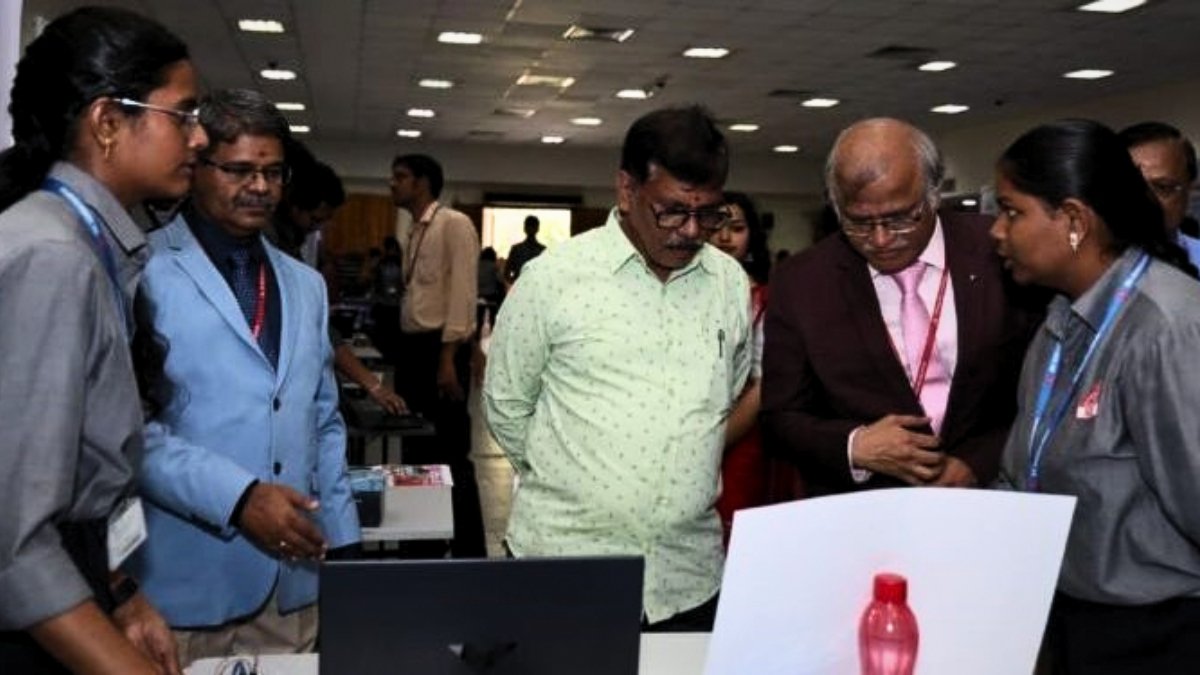
Interestingly, early feedback from students is glowing. One Class VIII student reportedly gushed, “We built a small robot that could sense light and move towards it. I never thought I could do this in my school.” Parents, too, are cautiously optimistic. A father of a Class IX student admitted, “I don’t know much about AI, but if my daughter learns it in Tamil and English, maybe she can get a good job one day.”
Teachers, however, remain divided. Some are energized by the new curriculum; others whisper that the state has handed them sophisticated tools without long-term support. One educator quipped, “It’s like giving us a Ferrari but no fuel station.”
Why the Timing Matters
It is no accident that Tamil Nadu is pursuing this agenda presently. With the ed-tech universe in India thriving, and AI proclaimed the buzzword of the decade, the compulsion on governments to reform curricula never been greater. If NEP 2020 promotes coding at early levels, TN SPARK is an ambitious state-level expression of that ideology.
In addition, by going bilingual with the curriculum, Tamil Nadu has pre-emptively muted critics who fault such initiatives for isolating rural students on a jargon trap. By marrying Tamil’s vernacularity with English’s worldwide appeal, the program achieves inclusivity without compromising aspiration.
A Sarcastic Reality Check
Still, one cannot ignore the irony: many government schools still lack proper toilets, uninterrupted electricity, or sufficient desks. Yet, here we are talking about artificial intelligence. It’s the classic Indian paradox—dreaming of the moon while tripping on potholes. Of course, investing in AI does not mean neglecting basics, but critics argue that the state should walk on both legs: technology and infrastructure.
There’s also the danger of turning buzzwords into hollow slogans. “AI” can easily become the new “Digital India”—a phrase repeated in conferences, splashed on posters, but barely trickling down to actual classrooms.
The Bigger Picture
Even with the misgivings, the potential benefit of TN SPARK is too great to ignore. If it works, Tamil Nadu would be a model for other states in India—and perhaps even in developing countries—about how to demystify advanced-tech education. Consider if all government school students in India were confident in working with robotics kits, writing an app, or knowing how AI touches their lives. That would not just narrow the digital divide but also redefine the future workforce.
The Road Ahead
For TN SPARK to shine beyond its pilot stage, the state must address three immediate concerns: scalability, sustainability, and support. More schools must be added quickly, teachers must be continuously trained (not just once and forgotten), and infrastructure must be upgraded. Otherwise, the initiative risks becoming a well-packaged gimmick.
Final Word
Call it ambitious, call it unrealistic, or call it visionary—TN SPARK has certainly rocked the discourse on education in state schools. Whether it turns out to be a beacon of change or merely another good-intentioned headline will rest on the state’s capacity to foster this flame beyond the pilot stage.
For the moment, however, the vision of a 12-year-old from Coimbatore coding a robot in Tamil is enough to make us reconsider India’s future of education. And maybe that’s the true spark Tamil Nadu wanted to light.