





New Delhi [India], January 3: India has now done the prominent. Blood that is used in transfusion is now subject to the same rulebook as medicines.
The blood transfusions have existed in a strange regulatory half-light for years. Everyone relied on them. Not many of them were wondering how evenly they were controlled. That uncertainty concludes with the Indian Pharmacopoeia 2026.
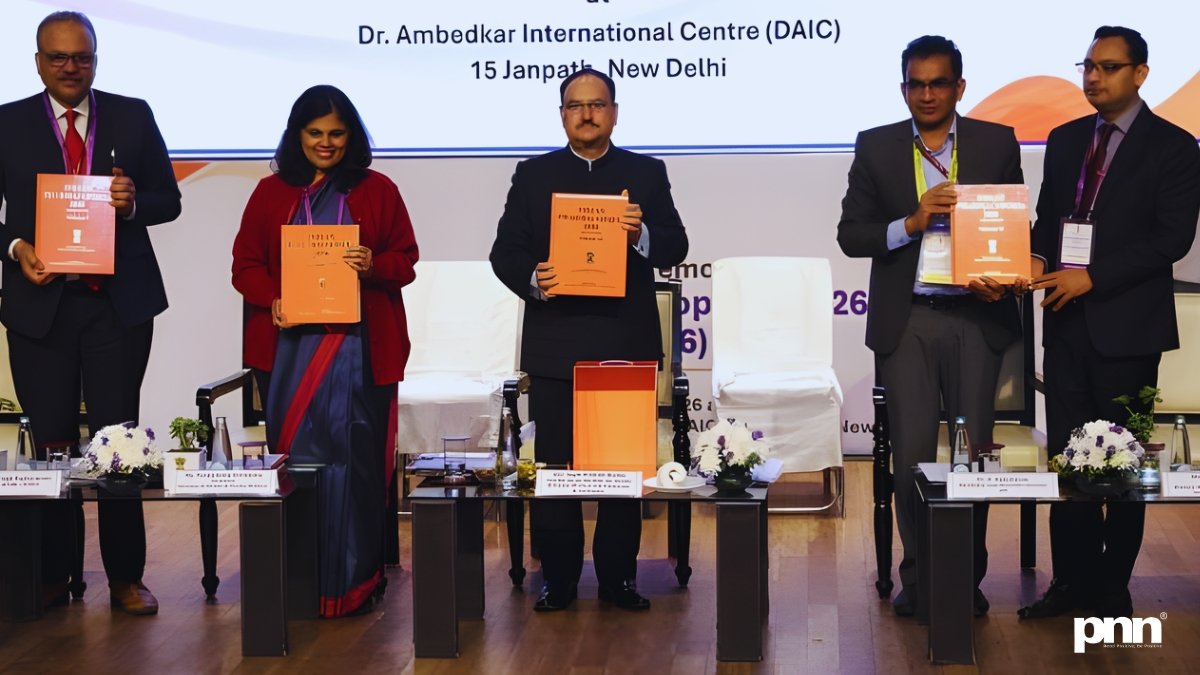
The 10th edition of the Indian Pharmacopoeia, the drug safety and efficacy encyclopedia of the country, was released quietly in New Delhi by the Union Health and Family Welfare and Chemicals and Fertilisers Minister JP Nadda, and increases the boundaries of the perimeter of drug safety in the country. Quietly, but decisively.
Pharmacopoeia standards are now uniformly available in legally enforceable blood components used in transfusion medicine. Not advisories. Not best practices. Norms that may be referred to by the inspectors and enforced by courts.
Indian Pharmacopoeia 2026: What Changed, Exactly?
Released the 10th edition of the Indian Pharmacopoeia 2026 in New Delhi today. This updated edition strengthens India’s commitment to quality, safety, and efficacy of medicines through robust and science-based standards. It reflects global best practices and highlights India’s… pic.twitter.com/NsCDtTKeNK
— Jagat Prakash Nadda (@JPNadda) January 2, 2026
The official book of drug standards in India is the Indian Pharmacopoeia. It is governed by the Drugs and Cosmetics Act, 1940 and its regulations are binding. Licences, distribution, and inspections. Everything flows from it.
The Indian Pharmacopoeia 2026 expands that framework in a manner not previously done by its predecessors. It is the first time that it presents 20 monographs devoted to blood and blood components.
That act alone would bring blood banks and hospital transfusion services under more regulatory scrutiny. Less interpretation. Fewer grey zones.
What Blood Products Are Controlled Nowadays?
The scope is not symbolic. It is granular.
Whole blood, even irradiated ones, is covered. So also are red blood cell products in their various forms: packed cells, additive solution RBCs, leucodepleted units, buffy coat removed cells, cryopreserved RBCs, and washed RBCs.
Plasma products are also characterised in the same way. Whole-blood and apheresis fresh frozen plasma. Cryoprecipitate. Cryo-poor plasma.
Platelets, which are usually the most difficult element to deal with, are also placed under the same standards. PRP, pooled platelets, random donor platelets, buffy coat platelets and apheresis-derived platelets, such as additive solution and two-unit platelets.
Even the granulocyte components derived by either apheresis or buffy coat pooling of the buffy coat qualify to be listed.
In case it gets into the blood of the patient during any transfusion process, the Indian Pharmacopoeia 2026 details its measurements, tests, storage and labelling.
The reason this is important.
Transfusion of blood is not a specialised branch of medicine. It is ordinary, emergency, and usually life-saving.
Trauma care. Cancer treatment. Major surgeries. Childbirth complications. Inherited blood disorders. The public hospitals in India are reliant on blood on a daily basis.
Equal standards minimise inter-facility variation. They reduce risks of contamination, mishandling and silent failure. Accountability is also made easier by them. In case of something going wrong, the benchmark is not argued anymore.
That transparency is important in the case of a healthcare system that operates at scale.
Drugs Come Under Stricter Examination as well.
Blood is not even the half-upgrade.
Indian pharmacopoeia 2026 incorporates 121 new standards of drugs, and the total number of monographs is 3340. Every monograph provides an abbreviation of the way a medicine should be prepared, administered, stored, and labelled.
This empowers the regulators to take action against poor or unsafe medicines. It also increases the compliance level among the manufacturers who are on the other side of the line.
Here, there is a kind of public-health aspect which we cannot overlook.
Medicines utilised in national health programmes have become the subject of more critical quality scrutiny. Tuberculosis drugs. Diabetes medication. Cancer therapies. It is a long-term therapy for millions of people, most of whom depend solely on government health care systems.
Here, consistency is not cosmetic. It is survival.
Surveillance Is Catching Up
Standards are best in conjunction with vigilance.
The Pharmacovigilance Programme of India, operated by the Indian Pharmacopoeia Commission in India, has been on a low profile in enhancing its international status. In the years between 2009 and 2014, India was number 123 in the world with regard to donations to the pharmacovigilance database of the World Health Organisation. By 2025, it reached 8th.
That leap indicates an increase in prompt reporting of adverse drug reactions and actions taken by the regulators. Indian Pharmacopoeia 2026 feeds on this by further impeding the quality control further upstream, before damage is caused.
Why It Makes Sense?
There is a high disease burden in India. Volume is managed by the public hospitals. Complexity is dealt with in private hospitals. They both require the blood and needed medicines to work exactly as they should.
Meanwhile, India is an international pharmaceutical provider. International trust is becoming more and more influenced by domestic standards.
With the combination of regulating blood components and medicines, the Indian Pharmacopoeia 2026 is harmonising patient safety and manufacturing discipline. It also portends that regulators are ready to fill longstanding blanks even though they are not seated in comfortable locations, such as transfusion medicine.
Not dramatic. Just necessary.
What Comes Next?
Everything will be determined by implementation.
Blood banks will be forced to tighten operations. There will be a need to have improved documentation in hospitals. Uniformity will be required of the inspectors. The pressure will be on the manufacturers.
Nevertheless, it is clear where the direction is.
Indian Pharmacopoeia 2026 is not the news or the applause. It concerns the reduced number of avoidable risks within hospitals. About blood that is safer. Drugs that do what they are supposed to do. At times, reform is most effective when it is not aimed at impressing.
This is just a simple way of fixing plumbing.