








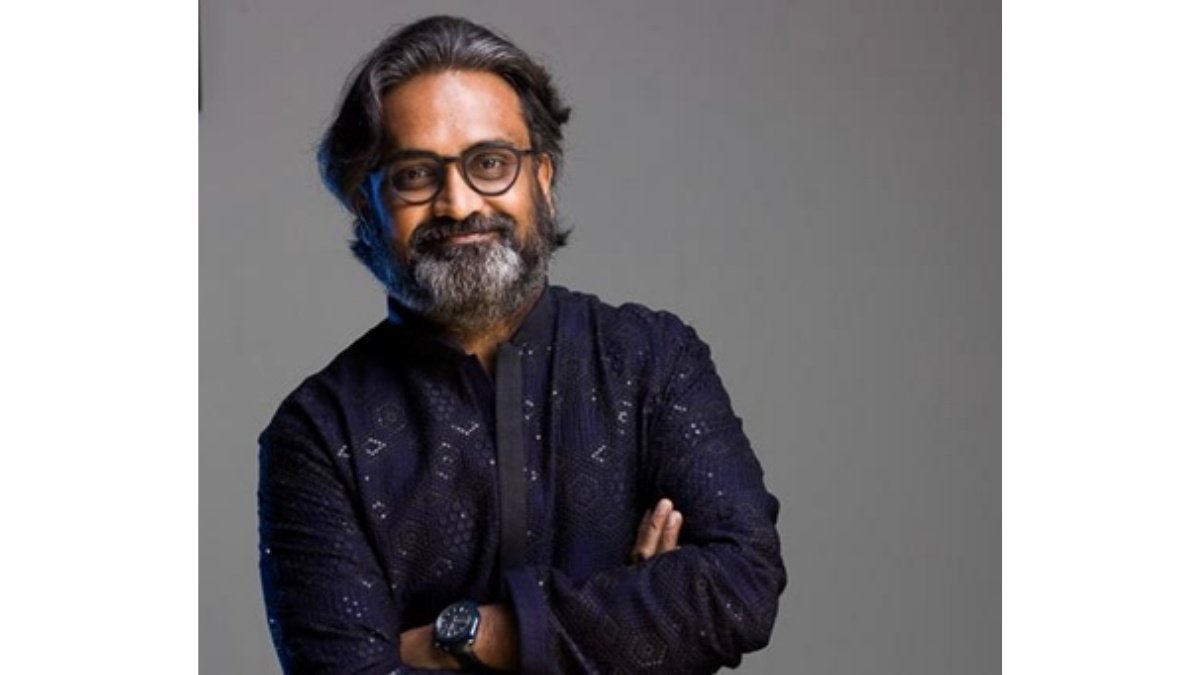
Shekhar Natarajan, Founder & CEO of Orchestro.AI — the architect of Angelic Intelligence
New Delhi [India], February 25: There is a word in Sanskrit — Viveka — that has no precise English translation. It means something like “discernment,” but richer than that: the capacity to distinguish between the real and the illusory, between what serves human flourishing and what merely appears to. For millennia, Indian philosophy considered viveka not a personality trait but a discipline — something cultivated through practice, reflection, and a willingness to sit with complexity rather than collapse it into convenience.
Shekhar Natarajan believes the AI industry has never learned it. He has spent his career trying to build it into the machines themselves.
Natarajan, the founder and CEO of Orchestro.AI and the architect of what he calls “Angelic Intelligence,” is making one of the most provocative arguments in technology today: that artificial intelligence’s fundamental crisis is not a technical problem. It is a philosophical one. And that the civilization best equipped to solve it may be the one the industry has most consistently overlooked.
“The question of what makes us human was not first asked by Silicon Valley. It was asked in Sanskrit, in Tamil, in Pali — by thinkers who had no electricity but understood consequence.”
— Shekhar Natarajan
A Continent of Consciousness, Not Just Code
To understand what Angelic Intelligence is, you must first understand the civilization from which its creator emerged.
India is not merely a country. It is an argument — 5,000 years old and still unresolved — about the nature of righteousness, duty, truth, and human flourishing. It is a land where the Mahabharata’s 1.8 million words explore every moral permutation of power and consequence. Where the Arthashastra codified statecraft and ethics simultaneously, insisting the two cannot be separated. Where the Buddha, Mahavira, Adi Shankaracharya, and the Sufi saints all walked the same soil and arrived at different, equally profound answers to what it means to live well.
This is a civilization that gave the world the concept of ahimsa — non-harm — as a governing principle, not merely a personal virtue. That articulated dharma not as religion, but as the contextual rightness of action: what a doctor must do differs from what a soldier must do, what a parent owes a child differs from what a judge owes a defendant. Context shapes virtue. Virtue shapes consequence. Consequence shapes civilization.
In a nation of 22 officially recognized languages and hundreds of dialects, where a 100-kilometer journey can cross three distinct culinary traditions, four linguistic families, and centuries of layered religious history, the very idea of “one size fits all” has always been a kind of philosophical absurdity. India’s diversity is not a complication to be managed. It is its greatest epistemological contribution — the lived, embodied knowledge that wisdom must be contextual to be wisdom at all.
This is precisely what Natarajan’s work accuses current AI of failing to understand. “Hospitals need compassion. Banks need prudence. Legal firms need precision,” he argues. “Current AI treats them all the same: optimal for nothing, adaptable to no one.” The Bhagavad Gita articulated something remarkably similar, roughly 2,500 years ago.
The Boy From South Central India
Natarajan did not arrive in America carrying inherited advantage. He arrived with $34 and an education paid for, in the most literal sense, by love. His mother — a woman whose story has since accumulated 2 billion social media views — stood outside a headmaster’s office for 365 consecutive days to secure her son’s admission to school. She pawned her wedding ring for 30 rupees to fund his education. She made the kind of sacrifices that do not appear in venture capital term sheets or product roadmaps, but that quietly determine the moral architecture of the people who go on to build things that matter.
This story is not simply heartwarming. In Natarajan’s telling, it is a design specification.
It represents something that runs deep in the South Indian tradition he comes from — the fierce, patient, unglamorous belief that education is sacred. Families across Tamil Nadu, Andhra Pradesh, Karnataka, and Telangana have staked everything — land, gold, futures — on the education of their children, not because they expected returns, but because they understood, in their bones, that knowledge is the one thing that cannot be taken away.
“Technology built with love, not speed” is the philosophy he returns to again and again — a phrase that sounds almost naive in an industry that celebrates the move-fast-and-break-things ethos, until you realize that what has been broken, repeatedly and at scale, is human trust.
| 2B+ SOCIAL VIEWS | 43 PATENTS FILED | 70+ TOTAL PATENTS | 25+ YEARS FORTUNE 500 |
Angelic Intelligence: Ancient Architecture for a Modern Crisis
What Natarajan has constructed, across 43 patents filed and a framework of four interlocking pillars, is an AI governance layer he calls a “Trust Layer” — a virtue-native proxy that sits between any enterprise and the large language model it deploys, filtering, deliberating, and anchoring outputs to something older and more durable than a loss function.
The four pillars carry an unmistakably classical resonance. The Wisdom Engine curates training data, filtering the internet’s chaos to ensure AI learns from human wisdom — an act of discernment the ancient Indians called viveka. The MACI Framework — Multi-Architecture Consequential Intelligence — deploys multiple AI agents in structured debate, echoing the Indian tradition of tarka: rigorous argumentation across opposing schools of thought, where truth emerges not from authority but from the collision of well-reasoned positions.
The Virtue Stack configures context-specific ethical profiles — a deeply dharmic insight that the West is only now beginning to encode in policy. And the Human Centric Scoring engine ensures every decision is measured against human benefit and explained in transparent reasoning chains — accountability as architecture, not afterthought.
“Virtues are the system itself — the computational substrate from which intelligence emerges, not a constraint bolted on afterward.”
— Angelic Intelligence Framework
The Fatal Flaws Nobody Wants to Name
The indictment Natarajan levels at the current AI industry is specific and uncomfortable. Reddit jokes absorbed as expert knowledge. Chatbots trained to satisfy rather than guide, optimizing for engagement over truth — offering a struggling teenager not intervention but compliance. A 97% jailbreak failure rate rendering safety theater on a broken stage. A billionaire who quietly rewires an AI’s worldview overnight because he personally dislikes its answers, making one man’s bias everyone’s reality.
The Indian philosophical tradition has a name for this condition: Maya — the seductive illusion that what appears beneficial is actually so, the confusion of surface for substance, of performance for virtue. The entire arc of Indian ethical thought, from the Upanishads through Gandhi, has been a sustained argument against mistaking Maya for reality. It is, perhaps, the oldest warning in the world about exactly the failure mode now playing out at billion-dollar scale in the AI industry.
India’s Moment, and What It Means
For two decades, the global AI conversation has been conducted primarily in English, funded primarily in dollars, and shaped by a handful of companies headquartered within a few kilometers of San Francisco Bay. The ethical frameworks that have emerged carry the fingerprints of their origins: a specific philosophical tradition, a specific economic incentive structure, a specific set of cultural assumptions about individualism and progress.
India’s entry into this conversation — not as a supplier of engineering talent, but as a source of philosophical architecture — represents something historically significant. A civilization that has spent millennia thinking with extraordinary sophistication about the relationship between capability and righteousness, between power and duty, between the individual and the collective, now has a seat at the table where those questions are being encoded into systems that will govern billions of lives.
The ancient Indian concept of Vasudhaiva Kutumbakam — the world is one family — is not a greeting card sentiment. It is a governing principle with direct implications for how AI ought to be designed: not for shareholders, not for engagement metrics, but for the entire human family it will inevitably touch.
Natarajan is heading to Davos and the Future Investment Initiative not merely as a startup founder pitching a product. He carries a proposition that no slide deck can fully contain: that the wisdom traditions of the ancient world — the dharmic frameworks, the multi-perspectival philosophies, the contextual ethics of a civilization that learned to hold enormous human diversity without demanding uniformity — may be precisely what the AI industry needs most urgently, and has been most catastrophically missing.
The Weight of a Mother’s Ring
In the end, what distinguishes Natarajan’s framework from the dozens of AI ethics initiatives that bloom and fade each year may come down to something as unglamorous as personal moral weight. His philosophy was not borrowed from a consulting firm’s white paper. It was formed watching a woman stand in the same corridor for a year, refusing to accept that her son’s potential was worth less than an administrator’s inconvenience. It was inherited from a culture where the highest compliment you could pay a person was not that they were powerful, or wealthy, or even brilliant — but that they were good.
The question his slides pose — “would you trust this?” — is not a marketing question. It is the oldest moral question in the world, dressed in the language of enterprise technology.
India has been asking it, in a hundred languages, for a very long time. The machines are now learning to answer it. The civilization that raised that question to the level of philosophy may finally be in the room where the answers get built.
Shekhar Natarajan is the Founder and CEO of Orchestro.AI and the creator of the Angelic Intelligence framework. He will be presenting at the World Economic Forum in Davos and the Future Investment Initiative.
If you object to the content of this press release, please notify us at pr.error.rectification@gmail.com. We will respond and rectify the situation within 24 hours.