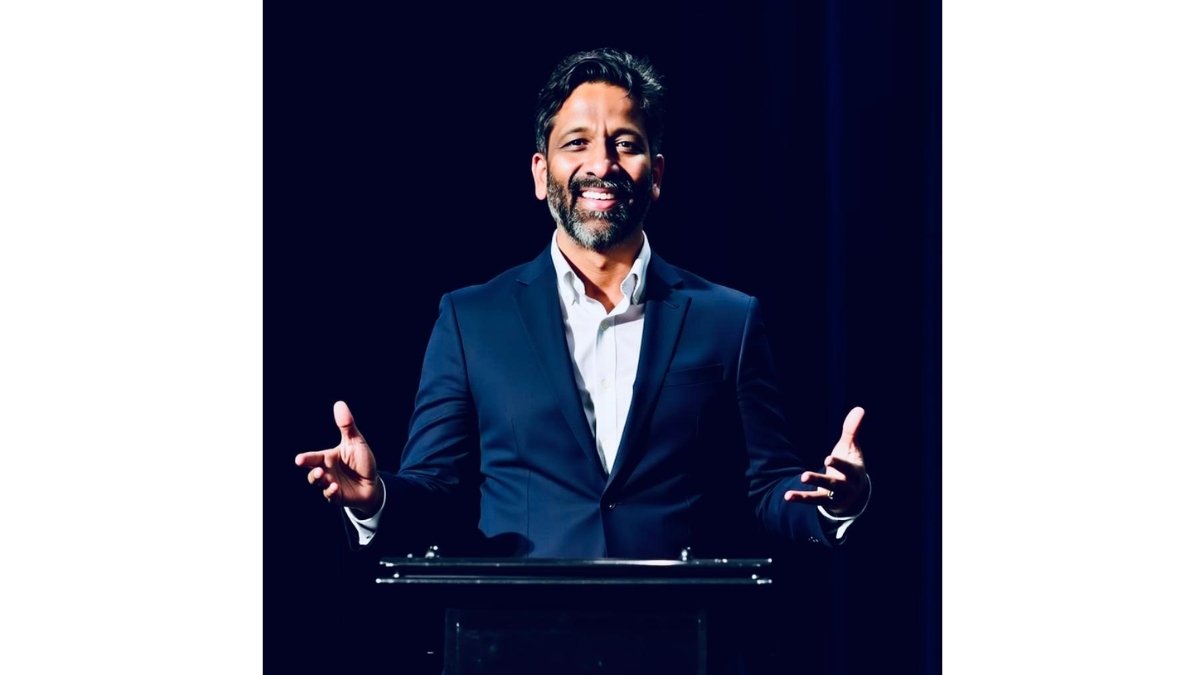







Chicago [USA], November 27:: When Atharv Singh, 20, a Sciences Po undergraduate currently on exchange at Northwestern University—and the founder of The Emissary Network and Purus Research LLP—greeted former Canadian Prime Minister Justin Trudeau at the Chicago Council on Global Affairs’ Global Leadership Awards Dinner, the interaction was brief: a photograph, a few polite words. Yet what Singh carried forward from that moment was far more substantive. For him, the evening served as a distilled lesson in the operational reality of modern democratic governance. High-level convenings, he observed, are not ornamental gatherings—they are functional mechanisms for policy development, norm-setting, and institutional consolidation.
The Chicago Council dinner, which honoured Mr Trudeau alongside distinguished leaders from both public and private sectors, also functions as a cornerstone event for the Council’s research and advocacy initiatives. It is both a fundraising platform and a strategic convening space, designed to concentrate expertise, resources, and influence. In such environments, ideas can accelerate—from conceptual white papers to actionable pilot programmes—within a compressed time frame.
Across global democracies—spanning North America, Europe, and Asia—think tanks, research collaboratives, and civic forums operate as critical yet often under-recognised pillars of governance. These institutions undertake long-horizon analyses on matters ranging from economic stability and climate strategy to public health, technological transformation, social equity, and national security. They convene experts who sit across ideological and professional divides. They translate complex datasets into actionable policy pathways. And, importantly, they provide a layer of intellectual accountability that electoral cycles alone cannot deliver.
In an era defined by information saturation, political polarisation, and rapid technological disruption, such institutions act as stabilisers of democratic reasoning. They help societies pause, evaluate, and respond—privileges rarely afforded by short political timelines.
“Democracies today face challenges that are data-heavy, fast-moving, and globally entangled,” Singh remarked after the event. “We need institutional spaces where ideas can be debated seriously, free from the short-term pressures of politics.”
Yet even as their relevance expands, these institutions confront significant structural pressures. Funding remains inconsistent and frequently volatile. Public trust, eroded in many contexts, is fragile. Digital misinformation has diluted expert authority. And in several countries, polarisation has compelled research organisations to adopt defensive postures, limiting their ability to offer independent assessments.
The result is a widening gap: while demand for credible, high-quality policy research has surged, the institutional supply chain remains strained.
Still, the fundamental principle remains unchanged: when capable individuals gather around shared civic concerns, democratic societies strengthen their capacity to understand and respond to complex issues.
For Singh, witnessing this interplay in real time was formative. “It’s not the glamour of the event that matters,” he noted. “It’s the architecture. When scholars, legislators, business leaders, and civil society representatives share the same room, you generate governance capacity in real time.”
Modern democracies increasingly rely on this architecture. Think tanks develop evidence-based policy options. Research collaboratives test, refine, and evaluate programmes over extended horizons. Civic forums bring citizens into larger strategic conversations. Cross-sector convenings accelerate the journey of ideas—from theory to pilot, and ultimately to policy. Collectively, these entities form the knowledge infrastructure that keeps democratic decision-making intelligent, accountable, and adaptable.
For a young civic entrepreneur—globally educated, deeply networked, and engaged in the public sphere—participating in such a forum is more than symbolic. It crystallises the role these institutions play in shaping governance outcomes.
From this vantage point, Singh argues that India’s civic ecosystem requires significant expansion and structural reinforcement if the country hopes to meet its developmental aspirations for 2047. The numbers underscore the urgency: India hosts millions of registered non-profits, historically estimated at approximately 3.3 million. Yet only a fraction possess a stable financial corpus or the capacity to deliver sustained research, evidence-based insights, or long-term policy engagement. Recent sector studies point to persistent funding gaps; many NGOs lack enduring financial stability, with one analysis noting that fewer than one-quarter report a reliable corpus. These dynamics inevitably shape the capacities of India’s research and advocacy institutions.
“No one from outside can build the institutions we need for our civic and policy discourse—the onus lies on us,” Singh said. “We must read, debate, and act on diverse perspectives to manage the complex issues shaping daily life.”
Singh’s next initiative, the Council on Legislative Research in India (CLRI), is slated for launch in June next year. The body is designed to bring together academics, researchers, business leaders, social-sector practitioners, and retired civil servants to strengthen evidence-based policymaking. CLRI will work directly with legislators, offering structured research support in the law-making process and helping bridge the gap between expertise and execution.
“We all have to do our part. India is of ever-growing global consequence, and we must think better, deeper, and further,” he added.
This conviction reflects a foundational truth: democracies do not mature solely through economic expansion. They mature when their civic infrastructure—the research institutions, legislative support units, independent media, and the philanthropic networks that sustain them—gains the capacity to hold power accountable, propose viable alternatives, and translate technical solutions into politically implementable reforms.
Singh’s brief encounter in Chicago may represent just one moment, but it underscores a critical proposition: strong democracies require strong meeting places—and the institutional continuity necessary to convert conversation into policy.
If India’s 2047 ambitions are to transcend rhetoric, Singh argues, the nation must invest—financially, institutionally, and culturally—in building those spaces. Global convenings may illuminate pathways, but the work of institution-building is, ultimately, a sustained domestic project.
If you have any objection to this press release content, kindly contact pr.error.rectification@gmail.com to notify us. We will respond and rectify the situation in the next 24 hours.