
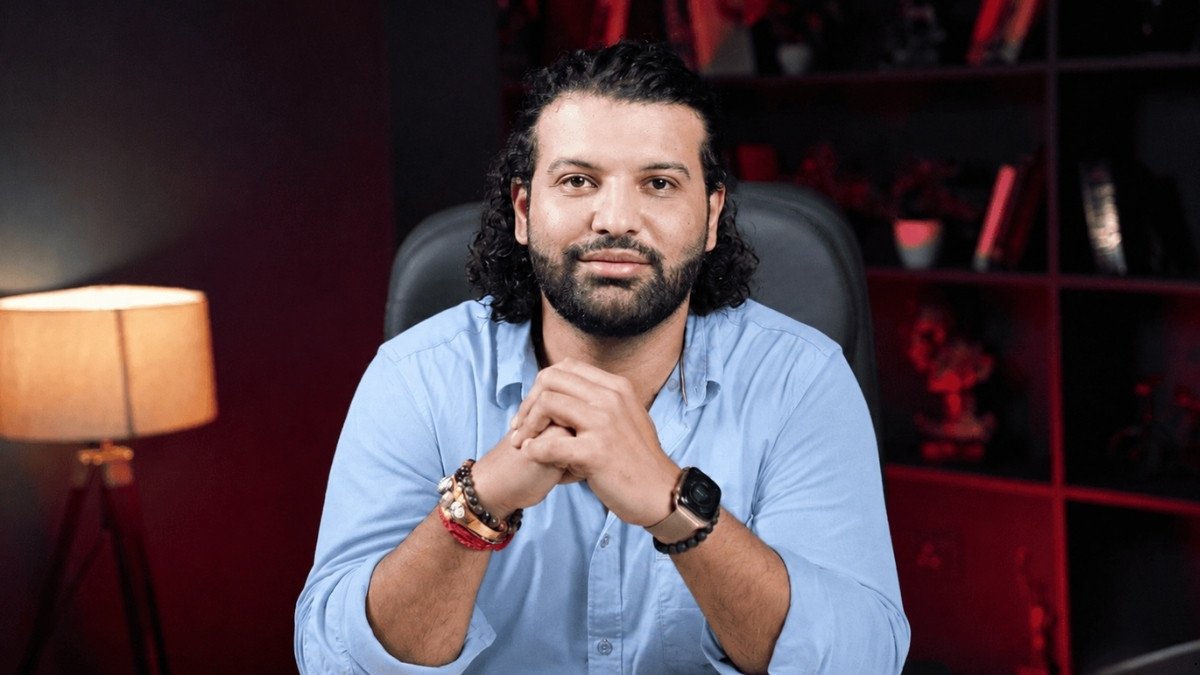




Dev Punj, Vice President, Chimes Aviation Academy (CAA)
Gurugram (Haryana) [India], August 14: Ask a room full of parents in India what they want their child to become, and you’ll hear ‘doctor’, ‘engineer’, or ‘maybe a civil servant’. Somewhere down the list, if it comes up at all, someone will mention pilot – usually followed by a comment about how expensive it is or how it’s “an uncertain path” or “whether it is a practical career at all”. Nobody says that about medicine, even though medicine is expensive too. Nobody says it about engineering.
That gap is worth sitting with, because it isn’t really about money. It’s about how we talk about the professions themselves.
Three professions, one kind of training; treated very differently
Medicine and engineering share a public image built on years of visible rigour: entrance exams, licensing boards, residencies, apprenticeships, and continuing certification. Most of us know the shape of the journey even if we’ve never lived it. Aviation has an equivalent structure – arguably a stricter one – and few outside the industry can describe it.
Nor is aviation training simply about learning to control an aircraft. A cadet must develop a working understanding of navigation, meteorology, aircraft systems, aerodynamics, regulations, human performance and operational decision-making. The knowledge is technical, the practical training is closely supervised, and progress depends on demonstrating competence at every stage. Aviation may follow a different educational route from medicine or engineering, but it is no less serious as a field of professional study.
A commercial pilot doesn’t finish training once and fly for forty years on the strength of a single certificate. Every six months, pilots undergo simulator checks and are tested again – not as a formality, but as a condition keeping their licence valid. Medical checks are recurring, not one-time. In a modern commercial jet, over 80 parameters are logged every second, which are reviewed and can be scrutinised. Almost no other job has so many aspects of their work being constantly recorded. Very few professions build recertification this deeply into the job itself, and yet the public conversation around aviation rarely mentions it. We talk about turbulence and delays. We don’t talk about the discipline that keeps both from becoming something worse.
At Chimes Aviation Academy (CAA), this is the part of the profession we prepare cadets for and the part that gets talked about the least. Cadets don’t just learn to fly an aircraft; they learn to be tested on flying it, over and over, for the rest of their working lives. That’s closer to how a surgeon or a structural engineer is trained than most people realize. Medicine got centuries to build its public mythology. Aviation, as a mass profession, has had decades.
What the job actually looks like
Talk to a first officer the morning of a flight, and the picture that emerges has little to do with the uniform. The day starts hours before boarding, with a briefing on weather, fuel, and route that the crew has to absorb and question, not just receive. A walk-around of the aircraft follows – a physical, methodical check of the machine they’re about to fly, done in person every time, regardless of how many times it’s been done before. In the cockpit, checklists run before the engines even start, a call-and-response between two pilots designed so neither one ever relies purely on memory.
Then there’s the actual flying, most of which is calm, exact, and almost invisible to passengers who assume the aircraft is largely flying itself. It isn’t. Every phase of the flight has a decision point behind it – when to climb, when to hold, what to do if something in the cockpit doesn’t look right – made by two people trained to think under pressure and to catch each other’s mistakes before they matter. Landing safely at the end of a routine flight is itself the product of hundreds of small correct decisions nobody outside the cockpit ever sees.
For a young cadet, this is the part worth aspiring to – not the layovers or the uniform, but the fact that by the time they’re a few years into the job, their judgement is trusted with hundreds of lives at a time and trusted enough that they’ll be tested on that judgement again and again for the rest of their career. Few professions hand a twenty-five-year-old that much responsibility this early, with this much structure built around making sure they’re ready for it.
A profession is judged by its worst day, not its best one
Part of why medicine and engineering command instant respect is that failure in those fields is visible, personal, and immediate – we understand exactly what’s at stake when something goes wrong. Aviation carries the same weight, but the industry has spent so much energy engineering failure out of the system that the public rarely sees what that effort looks like from the inside. Redundancy, checklists, standard operating procedures, and a culture that rewards reporting mistakes instead of hiding them – this is aviation’s version of medical protocol. Yet a profession that has quietly built some of the safest systems in industrial history gets less public credit for rigour than professions with far more visible failure rates.
That’s a communication problem as much as anything else. Doctors and engineers have decades of television, literature, and family folklore built around the training itself. Pilots have plenty of folklore too – it just tends to stop at the uniform and the travel, without going any further into what the job actually demands of a person’s judgement under pressure.
What changes the story
The fix isn’t a marketing campaign. It’s making the training itself visible, the way medical colleges and engineering institutes have made theirs visible for generations. Academies that publish what a cadet actually goes through – the hours, the failure rates in checkrides, the recurring exams that never really end – do more for the profession’s standing than any slogan could.
At Chimes, we’ve leaned into that visibility on purpose: standardized fleets, in-house maintenance, structured cadet pathways and training systems designed around consistency.
The principle is not very different from the one that governs a respected teaching hospital: training quality must be demonstrated through standards, systems and outcomes, not merely claimed. When an academy’s graduates are hired on the strength of their knowledge, discipline, and professional readiness that airlines expect, confidence begins to build not only in the institution but also in the profession itself. Aviation has that signal available. It just hasn’t been telling that story out loud.
The bigger opportunity
There’s a reason this matters beyond professional pride. A country that talks about aviation with the same seriousness it brings to medicine and engineering builds a deeper, steadier pipeline into it. People choose professions partly based on how those professions are spoken about at home, and aviation deserves to be spoken about for what it demands, not just what it offers. That’s the same shift medicine and engineering went through decades ago, and it’s overdue in aviation.
India is in an unusually good position to lead that shift. The country already has the scale, the training capacity, and – as its aviation talent increasingly finds its way into cockpits abroad – the growing proof that the training holds up against any standard in the world. What’s missing isn’t capability. It’s the public conversation catching up to what the profession has already become.
The day aviation gets spoken of in the same breath as medicine and engineering won’t be the day it becomes as rigorous. It already is. It’ll be the day enough people finally recognise it.
Dev Punj is the Vice President at Chimes Aviation Academy (CAA)