








New Delhi [India], April 08: India’s EV story was supposed to be simple. Cleaner air, smarter tech, fewer fuel bills, you know, the usual pitch. And for a while, that’s exactly how it was sold. Almost idealistic. Almost too neat.
But then reality walked in. Loud, unpredictable, and carrying a barrel of crude oil.
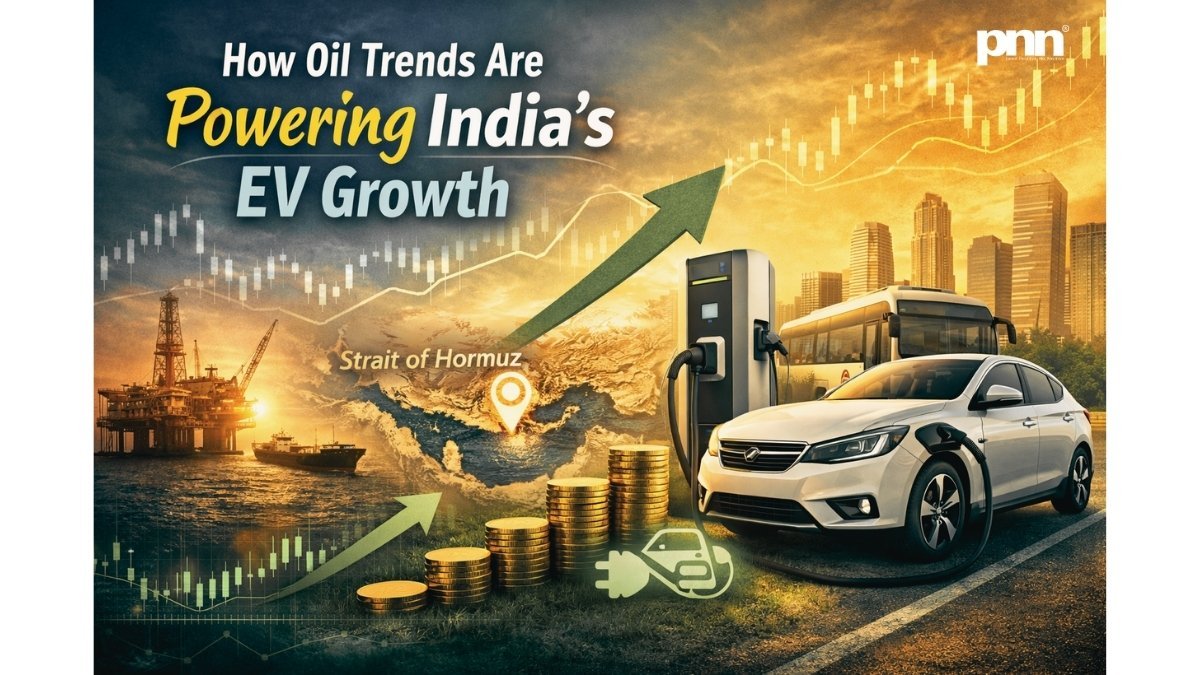
Because here’s the thing, India doesn’t just consume oil, it depends on it. Heavily. Roughly 85% of its crude oil needs are imported. That’s not a small vulnerability, that’s… well, a structural pressure point. And most of that oil? It flows through the Strait of Hormuz, a narrow stretch that handles nearly 20% of the world’s petroleum supply and about one-fifth of global LNG trade.
Now pause for a second. One chokepoint. One disruption. And suddenly fuel prices don’t just rise, they spike, they ripple, they mess with everything from transport costs to grocery bills.
And that’s where the EV story quietly changes tone.
The Surge That Feels… Different
India’s EV sales didn’t just grow in FY26; they exploded. We’re talking about a 246% year-on-year jump, crossing roughly 1.7 million units sold across segments. Two-wheelers led the charge (no surprise there), making up nearly 60–65% of total EV sales, while three-wheelers weren’t far behind, especially in urban logistics and last-mile delivery.
Passenger EVs? Still a smaller slice, about 4–5% of total car sales, but growing steadily, almost stubbornly.
At first glance, this looks like a classic adoption curve. Early traction, policy push, rising awareness. But honestly… it feels like something else is at play.
Because consumer behavior doesn’t usually shift this fast without a trigger. And in this case, that trigger seems to be fuel volatility. Petrol prices are flirting with ₹100+ per liter in multiple states, diesel not far behind. People notice that. Businesses definitely do.
So EVs stop being a “future choice” and start becoming a “cost decision.”
And that shift? It’s huge.
Not Just Policy — Pressure
Yes, government incentives have helped. The FAME II scheme, state subsidies, GST cuts — all of that matters. But policy alone doesn’t create urgency. Pressure does.
And pressure, right now, is coming from global oil markets.
India spent over $130 billion on crude imports in FY25, and that figure swings wildly with global prices. A $10 increase per barrel doesn’t just sound abstract; it translates into billions added to the import bill, widening the current account deficit, nudging inflation upward.
You feel it eventually. Maybe not directly. But it shows up in transport fares, delivery costs, and even food prices.
So yeah, EV adoption isn’t just about being eco-friendly anymore. It’s about insulating the economy from shocks. A kind of financial self-defense, if you think about it.
The Hormuz Effect (Yes, It’s a Thing Now)
It’s strange, honestly. The idea that a distant waterway like the Strait of Hormuz could influence what kind of vehicles Indians buy.
But it does.
Any tension in that region, geopolitical conflicts, naval disruptions, or even just the threat of instability sends crude prices upward. Not always dramatically, but enough to create uncertainty. And markets hate uncertainty.
So policymakers start thinking long-term. Businesses start hedging. Consumers start calculating.
And EVs? They suddenly make more sense.
Not perfect sense, not everywhere. Charging infrastructure is still patchy, and battery costs are still high. But the logic of EVs strengthens every time oil becomes unpredictable.
It’s almost like the old system is unintentionally accelerating the new one.
Follow the Money, Follow the Shift
Let’s talk numbers again, because they tell a very grounded story.
India’s EV market is projected to reach $100 billion by 2030, with penetration expected to hit 30% in private cars, 70% in commercial vehicles, and 80% in two- and three-wheelers. Ambitious? Definitely. Impossible? Not really.
Battery prices have already fallen by nearly 85% over the last decade, though they’ve seen some volatility recently due to raw material costs. Charging infrastructure is expanding, too. India had around 12,000+ public charging stations by early 2026, and that number is growing fast, albeit unevenly across regions.
But here’s where it gets a bit messy.
EVs reduce oil dependency, yes. But they increase dependence on something else, critical minerals. Lithium, cobalt, nickel. And India imports most of these too. So while one dependency shrinks, another quietly grows.
Different game, same rules.
So… Is This Really About Sustainability?
Honestly? Partly.
There’s no denying the environmental benefits of lower emissions, better urban air quality, and reduced noise pollution. All of that is real and important.
But if we’re being completely honest and maybe a little blunt, sustainability alone isn’t what’s driving this surge.
It’s economics. It’s risk management. It’s the need to control exposure to global shocks.
Because when oil prices rise, India doesn’t just pay more, it feels more vulnerable. And EVs, in a slightly indirect but very real way, offer a path out of that vulnerability.
Not a perfect path. Not an immediate one. But a direction.
Where This Leaves Us
So yeah, India’s EV boom isn’t just about shiny new cars or green ambitions. It’s deeper than that. Slightly more pragmatic. Maybe even a bit reactive.
It’s about a country trying to navigate uncertainty. Trying to reduce its exposure to forces it can’t control, like global oil routes, geopolitical tensions, and price shocks.
And in that sense, the connection between Indian EV adoption and the Strait of Hormuz isn’t weird at all.
It’s logical.
Because sometimes, the biggest changes don’t come from innovation alone. They come from pressure. From constraints. From systems that stop feeling stable.
And right now, oil is that system.
Which means EVs aren’t just the future anymore.
They’re becoming the fallback plan. Or maybe… the main plan.