





For years, homes were treated like showroom checklists. Neutral sofa? Check. Minimal lighting? Check. A marble countertop nobody actually uses? Naturally. Somewhere along the way, living spaces became less about living and more about impressing people who don’t pay the EMIs.
That era is quietly—and slightly smugly—ending.
As 2026 settles in, interior design is undergoing a philosophical pivot. Homes are no longer designed to look expensive; they’re designed to feel intentional. Personalised layouts, tactile materials, local craftsmanship, and story-driven décor are replacing cookie-cutter “luxury.” The modern home is becoming an experience, not a catalogue spread—and yes, it has opinions.
This shift isn’t accidental. It’s cultural, economic, and deeply emotional. And while it sounds aspirational, it’s also riddled with contradictions, access gaps, and a few aesthetic crimes disguised as “expression.”
Welcome to the age of lived-in luxury.
When Quiet Luxury Became Emotionally Loud
The pandemic years forced people into prolonged intimacy with their own spaces. Kitchens doubled as offices. Bedrooms hosted therapy sessions. Living rooms became gyms, cinemas, and existential crisis zones.
What emerged was a collective realisation: beautifully photographed homes can still feel deeply uncomfortable.
By late 2024 and through 2025, interior designers began reporting a clear fatigue with sterile minimalism. The beige-on-beige aesthetic—once marketed as timeless—started to feel emotionally vacant. By 2026, the backlash is complete. Homes are warming up, cluttering intentionally, and leaning into imperfection.
Luxury is no longer about silence. It’s about resonance.
Design Is Becoming Biographical, Not Aspirational
Today’s interiors read less like mood boards and more like memoirs.
Instead of designing spaces around trends, homeowners are designing around experiences:
A dining table built from reclaimed wood sourced from a childhood hometown
Handwoven rugs tied to regional crafts rather than Instagram palettes
Open shelves displaying inherited crockery instead of concealed storage
Reading corners designed for actual reading, not visual symmetry
This biographical approach is redefining luxury as something earned emotionally, not purchased impulsively. The value lies in meaning density, not price tags.
Ironically, the more personal the home becomes, the less it looks like anyone else’s—and that’s the point.
Craftsmanship Is The New Status Symbol
If the 2010s worshipped mass-produced perfection, 2026 is flirting shamelessly with artisanal irregularity.
Handcrafted furniture, limewashed walls, natural stone with visible flaws, and bespoke joinery are enjoying a resurgence. Not because they’re “rustic,” but because they’re irreplaceable. In a world of identical algorithms and duplicated feeds, uniqueness has become the ultimate flex.
Design studios are reporting increased demand for:
Custom carpentry over modular units
Locally sourced materials instead of imported finishes
Multi-functional furniture designed for evolving lifestyles
Luxury, it turns out, feels better when it has fingerprints.
Sustainability Has Entered Its Practical Era
Sustainability is no longer just a buzzword slapped onto bamboo blinds. In 2026, it’s being measured by durability, lifecycle value, and adaptability.
Homeowners are asking harder questions:
Will this age well—or just age quickly?
Can this space evolve with family needs?
Is this material repairable, not just recyclable?
Energy-efficient layouts, passive cooling strategies, and long-lasting materials are now part of mainstream luxury planning. Not because it’s virtuous—but because constant renovation is exhausting and expensive.
That said, sustainability still suffers from a branding problem. Many eco-friendly solutions remain priced out of reach, turning “conscious living” into yet another privilege marketed as moral superiority.
The Rise Of Experience-Led Layouts
Homes are no longer zoned strictly by function. They’re zoned by feeling.
Designers are prioritising experiential flow over rigid room definitions:
Kitchens that encourage lingering, not rushing
Bathrooms designed as decompression zones, not utilities
Living rooms that support conversation, not screen dominance
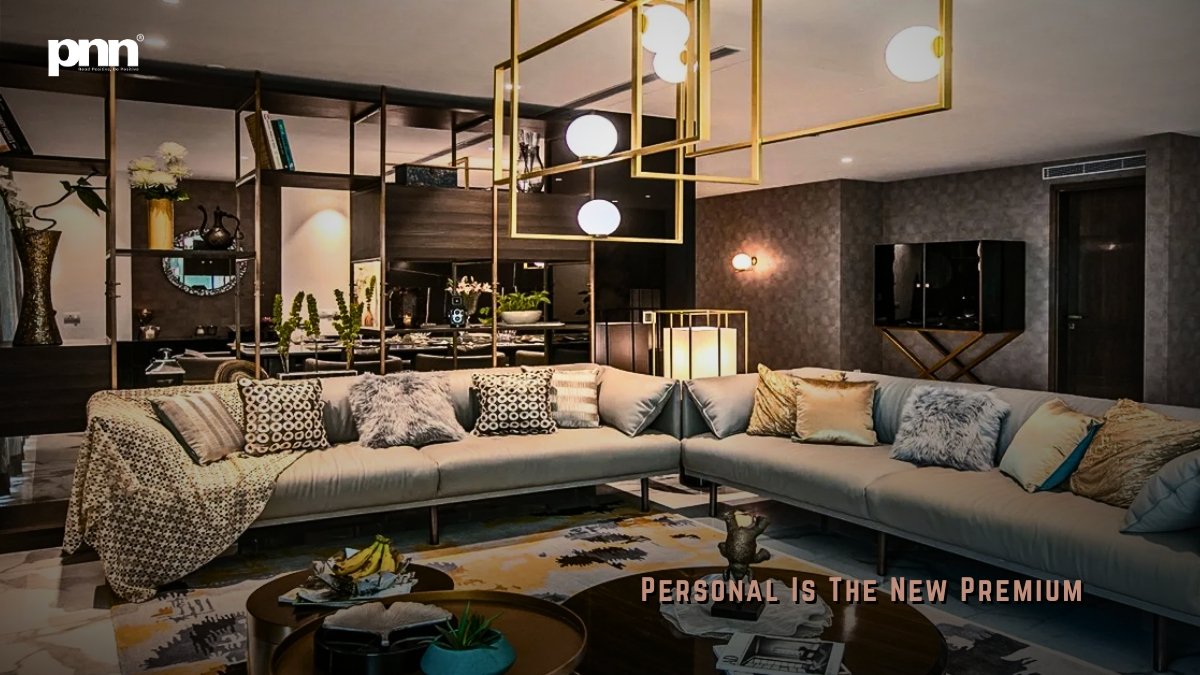
Lighting is layered. Acoustics matter. Texture is intentional. Even scent is being considered part of spatial design.
This is hospitality thinking entering private homes—and it’s changing how people interact within them.
The Problem With Personalisation (Yes, There Is One)
Here’s the uncomfortable truth: not all personalisation is good design.
The push toward individuality has opened the door to excess. Over-curation, trend-stacking, and forced quirkiness often masquerade as personality. Just because something is “you” doesn’t mean it functions well—or ages gracefully.
There’s also a widening gap between aspirational design content and lived realities. Social platforms continue to romanticise large, custom-built homes while most urban dwellers navigate compact apartments and rental restrictions.
Experience-led luxury sounds inclusive. Execution, however, still favours those with time, capital, and creative access.
Why Brands Are Paying Attention
Furniture and lifestyle brands have caught on. Instead of selling collections, they’re selling narratives.
We’re seeing a shift toward:
Modular systems that evolve with users
Customisable finishes rather than fixed designs
Storytelling-led marketing over feature lists
Brands are no longer asking, “How does this look?” They’re asking, “How does this live?”
The most successful ones understand that modern consumers don’t want homes that perform—they want homes that participate.
What This Means For The Future Of Living
The personalised, experience-led home isn’t a fleeting trend. It’s a response to burnout, digital saturation, and performative lifestyles.
As work-life boundaries blur further and social lives fragment across screens, the home becomes the final stable narrative space. It has to hold memory, emotion, rest, and identity—often all at once.
Luxury, in this context, isn’t about marble anymore. It’s about alignment.
And while not everyone can afford bespoke interiors, the underlying philosophy—designing with intention rather than imitation—is increasingly accessible.
The house of 2026 doesn’t whisper wealth.
It tells a story.
Sometimes a messy one.
Usually an honest one.
And honestly? That’s the most luxurious thing it could do.