







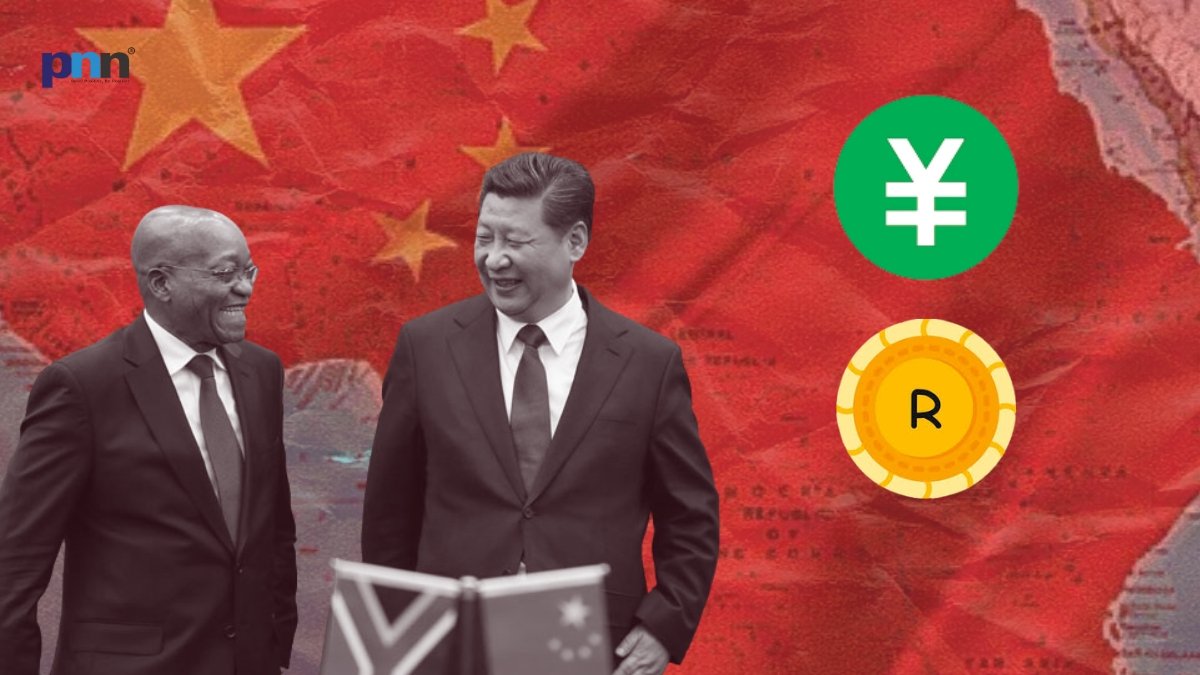
New Delhi [India], February 14: When China declared that it would eliminate tariffs on imports from the majority of Africa from May 1, 2026, the policy was couched in terms of being development-friendly. But when looked at in terms of strategic trade, it is a measured step that reconfigures supply chains, diplomatic correlations, and competitive constructs – particularly for India.
The decision increases an earlier zero duty arrangement that applied strictly to 33 African Least Developed Countries (LDCs). Now, the policy includes all 53 African countries that have diplomatic relations with Beijing. This is a critical distinction: the new list brings under the zero-tariff umbrella Africa’s economic heavyweights – South Africa, Nigeria, Egypt, and Kenya. It is not merely a symbolic concession to the poorest nations; it is a structural change to how the commodities, agricultural goods, and now industrial products will flow into the world’s second-largest economy.
For policymakers and business leaders, however, the importance is not so much in the tariff cut itself as in the signal it sends.
A strategy for Market Access Disguised as Development Policy
Tariffs are one of the most effective levers in international economics. When a large market eliminates them, it is more or less an invitation for particular supply chains to deepen and expand. China’s decision tells African producers one thing very clearly: sell to us, and sell more.
This complements Beijing’s long-standing infrastructure push throughout the continent through initiatives like the Belt and Road Initiative. Roads, ports, railways, and industrial parks have already lowered logistical barriers. Zero tariffs have now eliminated the price barrier.
The result is a vertically integrated trade corridor where African raw materials and agricultural products come into China at a lower cost, are processed into products at Chinese factories, and return to the world’s general markets. It is a classic industrial strategy, carried out at the scale of the continent.
Why This is Important For Global Trade
For African exporters, the policy is simple: enhanced price competitiveness in one of the biggest consumer markets in the world. Duty-free access boosts margins and produces less uncertainty, and stimulates production.
To China, the advantages are a sheer volume game. In 2025, China had an estimated trade of $348 billion with Africa, with Chinese exports dominating the trade. By getting rid of tariffs, China is essentially subsidizing its own supply chain. Lower-cost imports of minerals, metals, and agricultural inputs lower the cost base for Chinese manufacturers, making their exports even cheaper globally. Furthermore, Beijing has introduced “Green Lanes” to fast-track African agricultural goods that have created a logistical efficiency to which competitors will struggle to match.
In a period of trade animosities and disintegration of global supply chains, having the cheapest inputs from a whole continent – including its industrial backyard – is not merely an economic choice. It is a geopolitical one.
India’s Position: Cultural Goodwill Vs. Market Incentives
India’s engagement with Africa, which today stands at about $100 billion of annual trade, has been based historically on common political histories with a large diaspora, development co-operation, and educational partnerships. Indian pharmaceuticals, IT services, and small-scale industrial ventures have earned a lot of goodwill from all African economies.
But the key to trade is incentives.
If African exporters are given zero-tariff access to the Chinese market, the gravitational force of that $348 billion ecosystem will be that much stronger. For the commodity exporters, even small differences in duty structures can change whole flows of trade. Over the years, then, China may emerge as the default destination for a greater variety of African exports.
This change has two implications for India.
First, there is the possibility that Indian importers will be subjected to more vigorous competition for Africa’s resources and agricultural products.
Second, cheaper African inputs to Chinese factories could make Chinese-manufactured exports more competitive in the world economy – often at the expense of Indian producers, especially in sectors such as textiles and automotive components, in which South Africa and Egypt are key players.
The Hidden Opportunity of Indian Business
Despite the competitive dangers, China’s move also throws up indirect opportunities for Indian firms.
Duty-free access to China will presumably lead African countries to expand production in sectors such as agriculture, mining, and simple manufacturing. As production scales up, these economies will experience a “services gap.” They will require supporting industries – logistics, pharmaceuticals, financial services, digital infrastructure, and skill development – which are also sectors where China’s hard-infrastructure focus is lacking.
These are areas in which Indian companies have a natural advantage. India can present itself as a “Soft Power Integrator” for the growth of Africa. India’s private sector is especially robust in cheap healthcare, IT services, fintech (like Google model-based payments), education technology, small-scale manufacturing partnerships, etc. Rather than fighting China head-to-head on infrastructure or raw material trade, India can specialize in value-added layers around African growth.
In effect, while China may have a monopoly over the extraction and commodity pipelines, India can still influence the service and industrial ecosystems that sit above them.
Three Strategic Moves for India to Consider
Targeted trade agreements
Instead of generalized, symbolic frameworks, India should go in for selective trade deals with key African economies where it enjoys advantages in terms of sectors.
Stronger export financing
One reason why Indian firms are often losing ground is not due to poor quality or bad prices, but the lack of access to competitive financing. Expanding export credit and project finance tools may change that equation.
Supply Chain Partnerships, Not Just Exports
India’s Africa policy must be focused on co-production and local manufacturing, and not just as an export market.
The Bigger Lesson: Market Access Is the New Diplomacy
China’s zero-tariff policy is part of an overall trend in world economics. Market access is increasingly being used as a diplomatic instrument. Countries that make it easier to get their products into their markets can often achieve much more influence than the trade statistics indicate.
For India, it is not a question of copying China’s tariff policy. The challenge is to create a coherent, long-term trade architecture with Africa that includes investment, supply chains, services, and strategic partnerships.
Africa is to become one of the fastest-growing economic regions for the next two decades. The real question is not whether or not India participates, but how it positions itself.
In China, China has opened the door of its market.
India must now decide in which direction and to what extent it wants to open its own.