








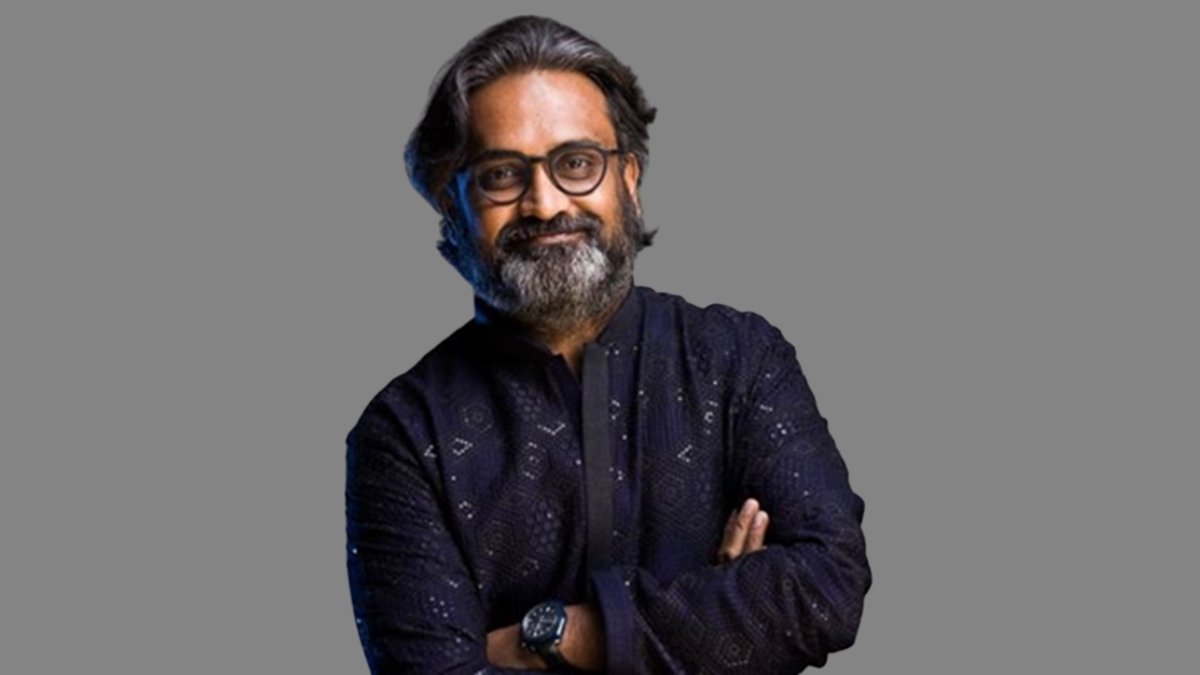
New Delhi [India], February 26: Before dawn each morning in the city that never quite sleeps, a man picks up a brush. Not a stylus, not a keyboard — a brush. He practices classical Indian painting the way monks practice prayer: not to produce something, but to become someone. By 5 AM, Shekhar Natarajan has already done the most important work of his day. The code can wait. The patents can wait. The world’s most prestigious forums — Davos, Riyadh, New Delhi — can wait. First, there is the discipline of beauty.
On February 20, 2026, inside the cavernous hall of Bharat Mandapam — the same stage where India had just hosted global leaders, pledged hundreds of billions in AI investment, and declared itself the world’s alternative to a two-nation silicon race — a man from South Central India stood before an audience of policymakers, technology executives, and international journalists and told them, quietly, that they were building the wrong thing.
The standing ovation came not when he was done. It came mid-sentence.
“If you have to teach a machine not to be harmful, you have already built the wrong machine. Angelic Intelligence starts from a different place entirely — it starts from love.”
— Shekhar Natarajan, AI Summit on Trust, Safety & Governance, New Delhi
- THE WRONG QUESTION
The global conversation about artificial intelligence has, for the better part of a decade, been consumed by a single question: how do we stop it from going wrong? Guardrails. Compliance checklists. Ethics committees assembled in the aftermath of systems already deployed. It is, Natarajan argues, the equivalent of designing a car and only then asking whether it should have brakes.
His framework — Angelic Intelligence — inverts the premise entirely. Rather than constraining behavior after the fact, it asks what it would mean to build virtue directly into the computational substrate of a machine. Not as a layer of rules on top of capability, but as the architecture itself. His 27 Digital Angels are not filters. They are the engine.
Twenty-seven AI agents — each embodying cross-cultural virtues like compassion, justice, and wisdom — that collaborate in real time to make decisions the way, Natarajan says, a truly good person does: not by consulting a rulebook, but by being unable to do otherwise.
| 27 DIGITAL ANGELS | 70+ PATENTS FILED | 30¢ A WEDDING RING, PAWNED |
2. THE ORIGIN STORY THAT CAN’T BE GAMED
There is a moment in every great story where you understand that the protagonist could not have arrived anywhere else. For Natarajan, that moment is a woman standing outside a headmaster’s office.
His mother stood there for three hundred and sixty-five consecutive days. Not to demand something extraordinary. Only to secure her son’s admission to school. She had already pawned her wedding ring — thirty rupees — to pay his fees. The electricity at home was unreliable, so the boy studied under streetlights. These are not metaphors. They are the literal infrastructure of his education.
He arrived in America with $34. He left behind a country where sacrifice was not a strategy but a way of life. And somewhere between those two facts, he built a philosophy that Silicon Valley, for all its capital and computing power, has not been able to replicate.
“My mother stood outside a headmaster’s office for 365 days so I could get an education. That kind of love — that sacrifice — is what I want to encode into the machines we build.” — Shekhar Natarajan
The journey from those streetlights to the boardrooms of Walmart, Disney, Coca-Cola, and Target is remarkable enough. Natarajan grew Walmart’s grocery business from $30 million to $5 billion — a 166x multiplier — a number that strains credulity until you understand that the man behind it was not optimizing. He was, in his own terminology, building with love.
3. WHAT 800 MILLION PEOPLE HEARD
When the World Economic Forum invitation arrived, it did not come through the traditional channels — an academic appointment, a government advisory role, a prior Davos appearance. It came because 800 million people, across cultures and time zones and political persuasions, had watched something Natarajan made and felt something they did not expect to feel about artificial intelligence: hope, without sentimentality.
A program director at a major global policy forum described the shift: institutions are accustomed to inviting people because of their institutional positions. This invitation was because of reach — a demonstrated ability to articulate something that resonates with hundreds of millions of people. That, the director said, is a fundamental shift in how we identify relevant voices.
Invitations followed from the Future Investment Initiative in Riyadh, the Munich Security Conference, and multiple government advisory bodies. Each cited the same justification. Each was asking, in its own way, the question that the New Delhi audience had just answered by rising to their feet: what if this man is right?
4. THE PAINTER’S METHOD
There is a detail that Natarajan offered at the summit, almost in passing, that his audience will not have expected. Every morning at 4 AM, before the code and the boardrooms and the keynotes, he practices classical Indian painting. He did not offer this as a charming biographical footnote. He offered it as a design principle.
“It taught me that the best solutions come not from speed, but from patience,” he said. “We must build AI with love, not just with code.”
For a field defined by its obsession with velocity — faster training runs, faster deployment, faster iteration — this is either naïve or visionary. The record of Natarajan’s career suggests the latter. He holds more than 70 patents. He built supply chain systems at the intersection of AI and human dignity. He speaks not of technology’s roadmap but of its thousand-year implications.
5. A CIVILIZATIONAL WAGER
What Natarajan is proposing is not, at its core, a technology argument. It is a philosophical bet: that the constraints Silicon Valley applies to artificial intelligence after the fact are symptoms of a deeper error — the belief that optimization is neutral, that speed is always good, that efficiency metrics can stand in for human values.
He watched that belief play out across two and a half decades in the world’s most admired corporations. He saw what happens when systems built purely to maximize metrics encounter the irreducible complexity of human lives. And then, with the patience of a painter and the strategic acuity of someone who scaled a $5 billion business, he decided to build something different.
At Bharat Mandapam — where India declared itself an alternative to the Washington-Beijing duopoly — Shekhar Natarajan offered a third alternative: not faster, not bigger, but better. Built, from the first line of code, with love.
THE JOURNEY
South Central India
Studies under streetlights. Mother pawns her wedding ring for 30 rupees. Stands outside a headmaster’s office for 365 consecutive days.
Arrives in America
$34 in pocket. Georgia Tech, MIT, Harvard Business School, and IESE ahead of him.
Fortune 500 Years
Walmart. Disney. Coca-Cola. PepsiCo. Target. American Eagle. Walmart grocery: $30M → $5B.
Orchestro.AI Founded
Angelic Intelligence conceived. 70+ patents filed. The 27 Digital Angels architecture developed.
February 20, 2026
Standing ovation at Bharat Mandapam. WEF, FII, Munich Security Conference invitations. 800M views and counting.
“If AI cannot understand dignity, it has no business making decisions about human lives.”
He stood under streetlights as a child to learn. He is standing under much brighter lights now. The question being asked — the one the standing ovation answered — is whether the world is ready to learn in return.
If you have any objection to this press release content, kindly contact pr.error.rectification@gmail.com to notify us. We will respond and rectify the situation in the next 24 hours.