








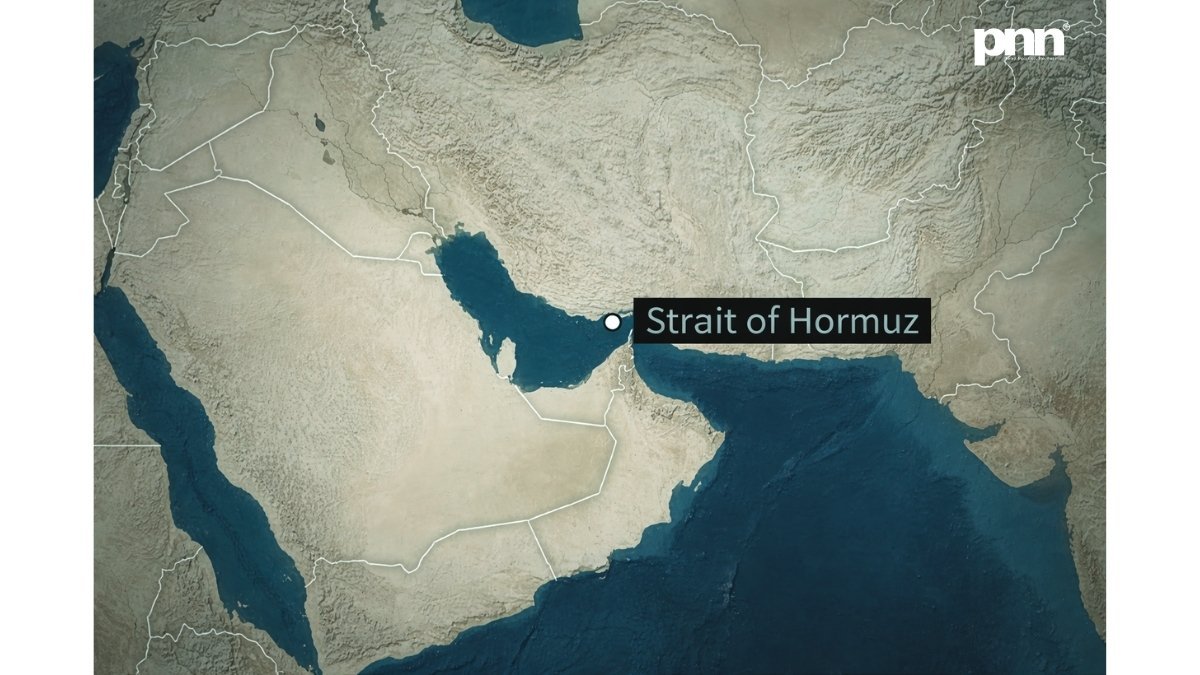
New Delhi [India], April 03: The shutdown of the Strait of Hormuz didn’t just disrupt oil flows—it exposed how fragile global trade really is, sending prices, logistics costs, and economic forecasts into a sharp and uncomfortable reset.
Immediate Shock: When Oil Stops Being “Just a Price”
The thing about global trade is… it hums along quietly until it doesn’t.
And then suddenly, everything feels fragile.
That’s pretty much what happened when the Strait of Hormuz went offline in March 2026. Not partially disrupted. Not “under pressure.” Effectively shut. Which, for a route that carries about a fifth of the world’s oil, is… yeah, not great.
The first crack showed up in pricing. Not subtle either. Dated Brent shot up to $141.36. Futures? Sitting around $109. That $32 gap is doing a lot of talking.
This is what traders call extreme backwardation. Sounds technical. It is. But also pretty simple. People are willing to pay way more for oil now than later. Why? Because they’re not sure “later” will actually deliver.
It’s not about speculation anymore. It’s about barrels. Real ones. Loaded, shipped, arriving.
And when physical supply becomes uncertain, markets don’t behave nicely. They panic a little. Or a lot.
Honestly, it reminds me of those early pandemic days when people hoarded basic stuff. Same psychology. Different scale. Much, much bigger consequences.
The Trigger: A Speech, a Misread, and a Short Squeeze
Now here’s where it gets messy.
Markets weren’t exactly calm before April 2, but they weren’t pricing full escalation either. There was this quiet assumption floating around that things might cool off. Traders leaned into that. Positioned for it.
Then came Donald Trump’s address.
Look, regardless of politics, markets heard one thing: the risk of escalation just jumped.
And boom. Positions flipped. Fast.
What followed was a short squeeze. Traders who had bet on falling prices suddenly had to buy back contracts at higher prices just to limit losses. That buying pressure pushed prices even higher. Feedback loop. Nasty one.
Volatility spiked. The VIX crossed into uncomfortable territory. You could almost feel the hesitation in the market… like everyone suddenly second-guessing everything.
And yeah, this always happens. Markets think they’re smarter than events. Then reality shows up.
The 12% Hole No One Can Ignore
Right, so let’s talk scale. Because this is where it stops being a trading story and becomes an economic one.
According to Oxford Economics, a prolonged closure would create a 13-million-barrel-per-day deficit.
Thirteen million.
That’s roughly 12% of global supply. Not a rounding error. Not something you tweak around the edges. It’s a hole. A big one.
And when supply drops like that, demand doesn’t adjust instantly. It resists. For a bit. Then prices rise. Then, behavior changes.
Airlines cut routes. Factories slow down. Logistics companies start rethinking everything from routes to contracts. Consumers feel it last, but they always feel it.
Demand destruction kicks in. Gradually, then all at once.
Global GDP forecasts? Already trimmed to 1.4% for 2026. Which is… fine on paper. But in reality, that’s flirting with stagnation.
It’s like the economy is still moving, but just barely. Like traffic crawling at 5 km/h. Technically moving. Practically stuck.
Logistics: The Part Everyone Underestimates
Here’s something people don’t think about enough. Oil isn’t just produced. It has to move.
And right now, moving it is the problem.
Tanker rates have tripled. Around $420,000 a day. That’s not a typo. That’s the cost of getting oil from point A to B in this environment.
So even if you find oil, you still have to pay a premium to transport it. That’s your logistics tax right there.
And then there’s the pipeline argument. “Why not just bypass the Strait?”
Sounds logical. Isn’t.
Saudi Arabia’s East-West pipeline is maxed out at about 5 million barrels per day. The UAE adds another 1.8 million through Fujairah.
Together? 6.8 million.
Normally, about 21 million barrels move through the Strait of Hormuz.
Do the math. It doesn’t work.
Even if everything runs perfectly, you’re still missing a massive chunk. And pipelines don’t just magically expand overnight. Infrastructure doesn’t behave like software updates. Wish it did.
The International Energy Agency stepped in with a 400-million-barrel release from reserves. That helps. Of course it does.
But it’s a buffer. Not a fix.
It buys time. That’s it.
The Ripple Effect: From Fuel Tanks to Food Prices
This is where things get uncomfortable.
Because the impact doesn’t stay in energy.
The Strait of Hormuz also handles about 30% of the global fertilizer trade. And fertilizer isn’t optional. It’s directly tied to food production.
So when supply gets disrupted, fertilizer prices go up. Farmers either pay more or use less. Neither scenario is great.
Less fertilizer means lower yields. Higher costs mean higher food prices.
And here’s the tricky part. This effect is delayed. You don’t see it immediately. It shows up months later. Next harvest cycle.
So even if oil stabilizes, food inflation might just be getting started.
Aviation’s already feeling it. Jet fuel up over 30% in a month. Airlines are adding surcharges. Demand softens.
Manufacturing is dealing with margin compression. Petrochemical inputs are more expensive. Passing costs to consumers? Not always possible.
So companies absorb some of it. Margins shrink. Profits take a hit.
And yeah, it all connects. Energy → transport → food → consumption → growth. One chain.
Market Behavior: Pricing Fear, Not Just Oil
Markets right now aren’t just pricing supply. They’re pricing fear. Or, more politely, a geopolitical risk premium.
Estimates put it at $9 to $15 per barrel. That’s not tied to actual shortages. That’s the cost of uncertainty.
And uncertainty sticks around longer than disruptions.
Even if the Strait reopens tomorrow, traders won’t just go, “Cool, back to normal.” Doesn’t work like that. Memory matters.
Risk models adjust. Caution stays baked in.
Which means prices don’t fully normalize. Not quickly anyway.
Where This Is Heading: Stagflation, Probably
So here we are.
Growth slowing. Inflation rising. Classic stagflation setup.
And policymakers? They’re stuck in that awkward spot. Raise rates to control inflation, and you risk killing growth. Stimulate growth, and inflation gets worse.
Pick your poison.
The closure of the Strait of Hormuz didn’t just disrupt supply. It exposed how dependent global trade still is on a few critical chokepoints.
We like to think the system is diversified. Flexible. Resilient.
It is… until it isn’t.
And right now, it isn’t.
Maybe things stabilize soon. Maybe supply routes reopen, prices cool off, and we all move on.
But something’s changed. You can feel it.
Markets don’t forget shocks like this. They adjust. Slowly. Unevenly. But they do.
And next time? They’ll price the risk faster.
Probably higher too.