




New Delhi [India], April 04: Some images don’t just look good. They do something to you.
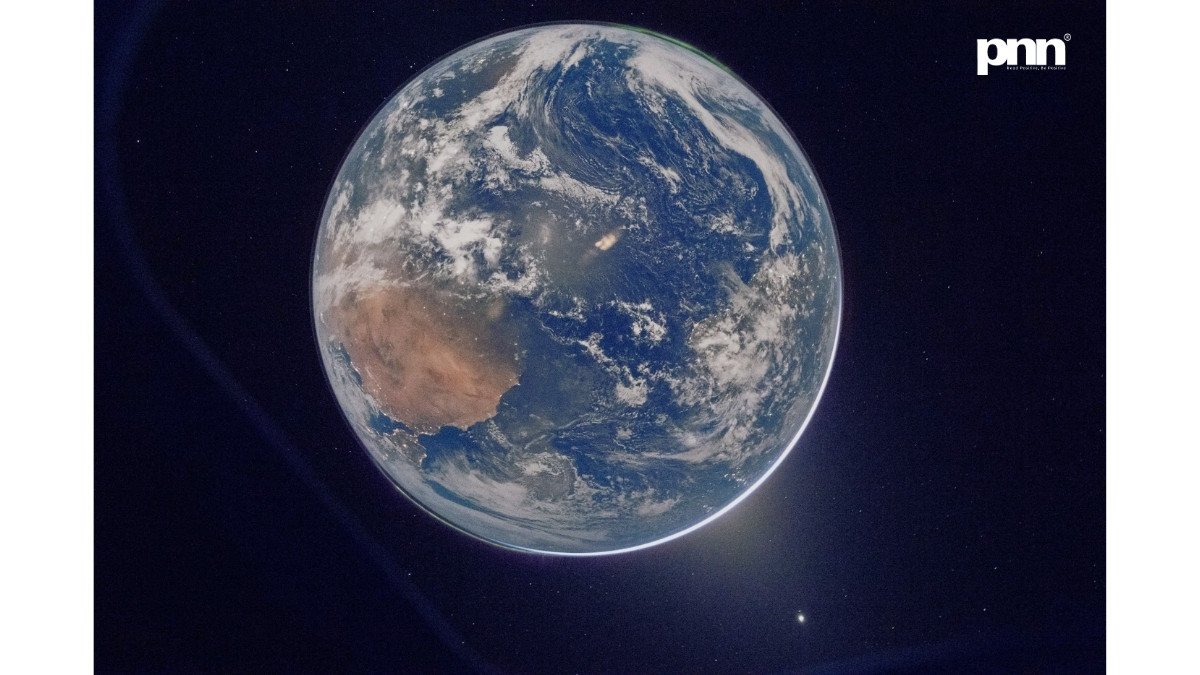
That’s exactly what NASA managed with its latest release from the Artemis II mission. Fresh images of Earth. Not from a drone. Not from the ISS. But from deep space, on a path that literally loops around the Moon and comes back.
And yeah… we’ve seen Earth from space before. A million times. Blue Marble, all that. Still hits. Always does.
But this time feels… different.
That View. That Distance. That Perspective.
So here’s what’s actually happening. Artemis II is NASA’s first crewed mission in its Artemis program, built to send humans back to the Moon after decades. Not landing yet. That comes later. This one’s more like a high-stakes dress rehearsal, except the stage is 3,70,000 kilometers away.
And somewhere along that journey, the spacecraft turns back. Looks home.
Clicks.
And suddenly Earth is this small, glowing, absurdly calm sphere floating in complete darkness. No borders. No noise. No breaking news alerts. Just… there.
It’s weirdly quiet to even look at.
I mean, think about it. Everything happening right now, wars, markets, your pending emails, that chai you forgot on the table, it’s all happening on that tiny dot. And from up there? It looks like none of it exists.
Kinda humbling. Kinda uncomfortable too, if you think about it long enough.
Not Just Pretty Pictures, Let’s Be Clear
Now, before this turns into a philosophical spiral, let’s ground it a bit.
These images aren’t just for Instagram or headlines. There’s real engineering and mission validation going on here. Artemis II is testing systems that actually matter: life support, navigation, and deep space communication. The stuff that can’t fail when humans are on board.
Because here’s the thing. Sending people to low Earth orbit is one thing. We’ve been doing that for years. But deep space? That’s a different beast entirely.
Radiation exposure. Communication delays. Autonomous systems that need to work even when Earth isn’t instantly reachable. It’s not sci-fi anymore. It’s logistics. Brutal, precise logistics.
And this mission is basically NASA saying, “Alright, let’s see if this all holds up when it counts.”
The Moon Is Just the Beginning
People keep framing Artemis as a “return to the Moon.” That’s technically correct. Also kinda underselling it.
The Moon isn’t the end goal here. It’s the testing ground.
NASA—and honestly, the entire global space ecosystem- is treating lunar missions as a stepping stone. Learn to live there. Operate there. Sustain missions there. Then push further. Mars, eventually.
But one step at a time.
And Artemis II sits right in that critical middle phase. Not the flashy first step. Not the historic landing. It’s the validation layer. The “does this actually work in real conditions” phase.
Which, if you’ve ever worked on anything high-stakes, you know… is where things usually break.
Why These Images Are Going Viral Anyway
Let’s be honest. Most people aren’t tracking propulsion systems or orbital mechanics.
They’re sharing these images because they feel something.
There’s a reason space photos go viral even in the middle of chaos-heavy news cycles. They cut through noise. Instantly. No explanation needed.
You don’t need to understand the Artemis program to understand what it means to see Earth like that. Small. Fragile-looking. Suspended in nothing.
It hits that part of the brain that doesn’t care about data.
And yeah, maybe it’s cliché. Maybe we’ve all said “we’re just a tiny speck” a few too many times. But when you actually see it again, from a new mission, a new angle… it lands differently.
Every single time.
Timing Matters More Than We Admit
Also, let’s not ignore timing here.
These images are landing in a moment where the world feels… loud. Geopolitics, energy shocks, economic pressure, everything stacked on everything. You open your phone, and it’s just layers of urgency.
And then this shows up.
A quiet image. No urgency. No panic. Just Earth. Existing.
It’s almost ironic. While things on the ground feel increasingly complicated, the view from space is brutally simple.
One planet. No context. No commentary.
Just floating.
What Comes Next
Artemis II isn’t the climax. It’s the setup.
The real headline moment will come with Artemis III, when humans are expected to actually land on the Moon again. That’s the big one. The historic one. The one everyone will remember.
But missions like this? They’re the reason that moment won’t fail.
Or at least, shouldn’t.
Because space doesn’t forgive mistakes. It doesn’t care about second chances or PR spin. Either your systems work… or they don’t.
And right now, with Artemis II, NASA is quietly ticking boxes. Testing limits. Gathering data. Making sure that when humans go further, they don’t just get there, they come back.
Important detail, that last part.
And Honestly…
Look, you can analyze this from a tech angle, a policy angle, or even a funding angle. All valid.
But sometimes it’s simpler than that.
We sent a spacecraft toward the Moon. It turned around. Took a picture of the home. And reminded everyone again how small everything is.
And somehow, that still feels big.
Really big.