






New Delhi [India], April 06: Let’s be honest, this isn’t really about toll booths.
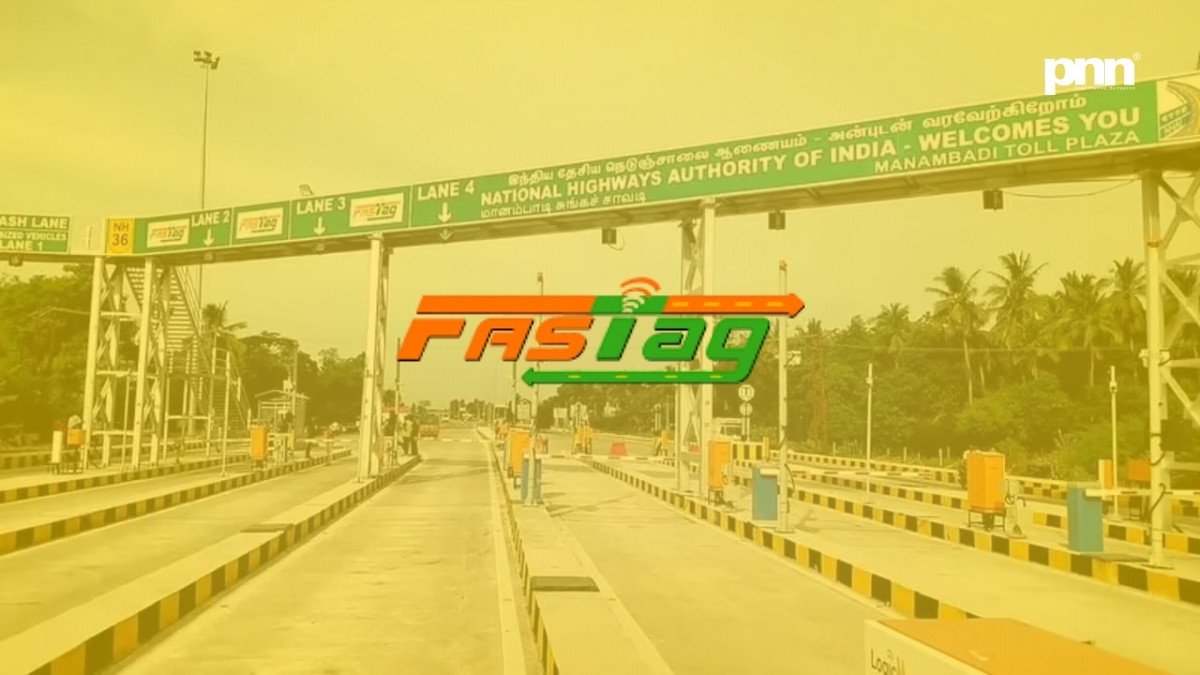
On the surface, India’s move to 100% digital toll payments from April 10, 2026, looks like a simple operational tweak. No cash. Only FASTag or UPI. Faster lanes, less congestion, smoother travel. That’s the headline.
But if you zoom out just a little, you start seeing something else entirely.
This is infrastructure thinking. Behavioral engineering. Quiet, deliberate system design.
What we’re witnessing here is the construction of an invisible architecture, one that reshapes how millions of people behave without ever announcing it.
And that’s where it gets interesting.
For years, digital tolling in India was optional in spirit, even if mandatory on paper. FASTag existed, lanes were marked, incentives were nudged… but cash still lingered as a fallback. A safety net. A psychological comfort.
Now that fallback is gone.
And that changes everything.
Because the moment you remove choice, you remove hesitation. There’s no “I’ll recharge later” or “I’ll just pay cash today.” You adapt, because you have to. Not dramatically. Not loudly. Just… quietly.
This is classic nudge theory, but pushed one step further.
Not a suggestion. Not even a strong incentive. It’s a forced default.
And strangely, that’s often when behavior truly shifts.
But let’s talk about what this really unlocks beyond convenience.
A frictionless toll system isn’t just about saving a few minutes at a highway plaza. It’s about optimizing an entire layer of the economy that most people don’t even think about.
Every unnecessary stop at a toll booth burns fuel. Every queue adds idle time. Multiply that across millions of vehicles, trucks, buses, and private cars every single day.
The numbers get… uncomfortable.
So when you remove cash handling, reduce stoppage time, and create a near-continuous flow of traffic, you’re not just improving user experience. You’re cutting inefficiencies at scale. Fuel savings. Time savings. Logistics efficiency.
Real money. Quietly saved.
And not in small amounts.
Then comes the part where policymakers don’t always say out loud the data dividend.
Every digital toll transaction creates a clean, timestamped, geo-tagged data point. Who traveled where? When. How often. At what cost?
Individually, it’s just a toll payment.
Collectively? It’s a living map of economic movement.
Freight corridors. Urban spillovers. Seasonal migration patterns. Logistics bottlenecks. You can start to see the economy in motion, not just estimate it.
And that kind of visibility changes how decisions get made.
Infrastructure planning becomes sharper. Revenue leakage shrinks. Fiscal forecasting improves. Even enforcement becomes more precise.
It’s not just digitization. It’s datafication.
But this is where the conversation needs to stay grounded: systems like this aren’t risk-free.
In fact, they introduce a different kind of vulnerability.
When you build a fully digital layer over something as critical as national highways, you’re essentially saying: the backend must not fail. Not occasionally. Not “most of the time.” It has to work. Consistently.
Because when it doesn’t, the failure isn’t isolated.
A scanner glitch isn’t just a minor inconvenience. It’s a traffic jam. A payment delay isn’t just a failed transaction. It’s a stalled lane with 20 vehicles waiting behind it.
And this is where systemic resilience becomes the real test.
Can the infrastructure handle peak loads? Patchy networks? Edge-case failures? Rural connectivity gaps?
Because digital systems don’t fail gracefully. They fail abruptly.
And while all this macro-level transformation is happening, the human layer remains… uneven.
Take the truck driver. Long routes. Tight margins. Irregular connectivity. For him, this shift isn’t just about convenience, it’s about reliability. If the system works, it saves him time and fuel. If it doesn’t, it costs him both.
Or the senior citizen driving occasionally, maybe less comfortable with apps, recharges, and digital flows. For them, this isn’t seamless progress. It’s an adaptation under mild pressure.
And that tension between system efficiency and human readiness is real.
Often overlooked. But real.
Still, transitions like this tend to follow a pattern.
First, resistance. Then the adjustment. Then normalization.
And eventually, invisibility.
Think about it. A few years ago, digital payments felt like an effort. Today, they’re instinctive. You don’t think before scanning a QR code. You just do it.
Tolling is heading the same way.
So yes, from April 10, you won’t be able to pay cash at toll plazas anymore.
But that’s just the visible change.
The real story is what sits beneath it: a system quietly aligning incentives, shaping behavior, capturing data, and optimizing movement at scale.
No big announcements. No dramatic overhaul.
Just a small rule.
That changes everything