


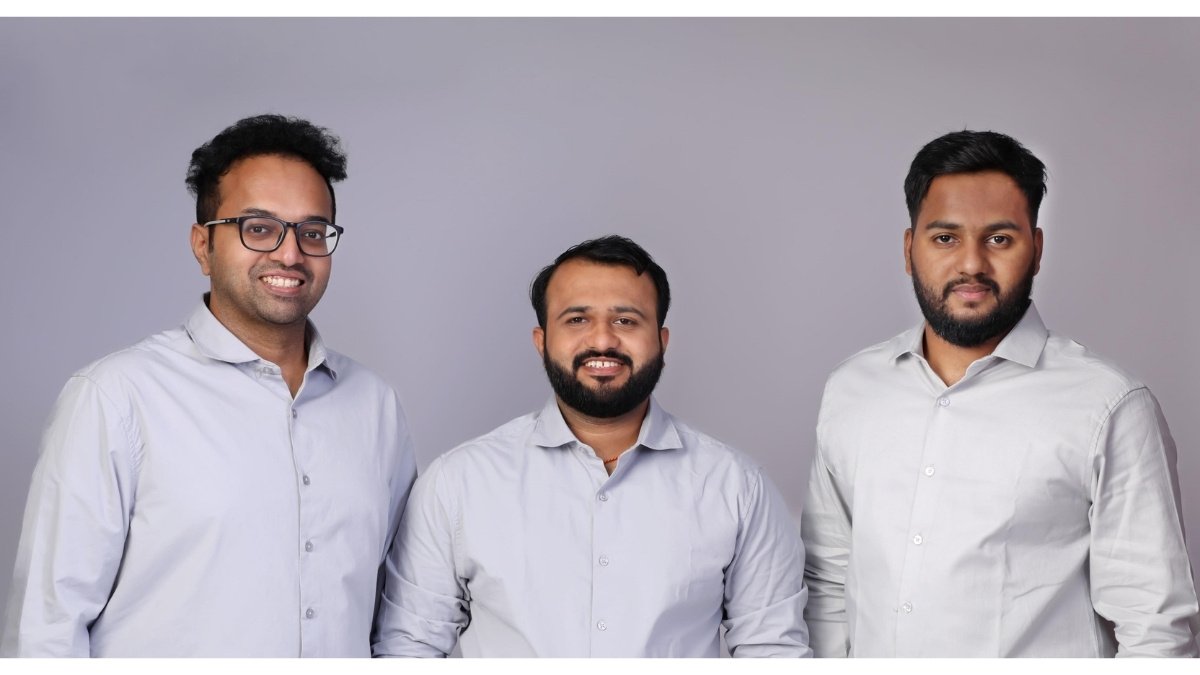

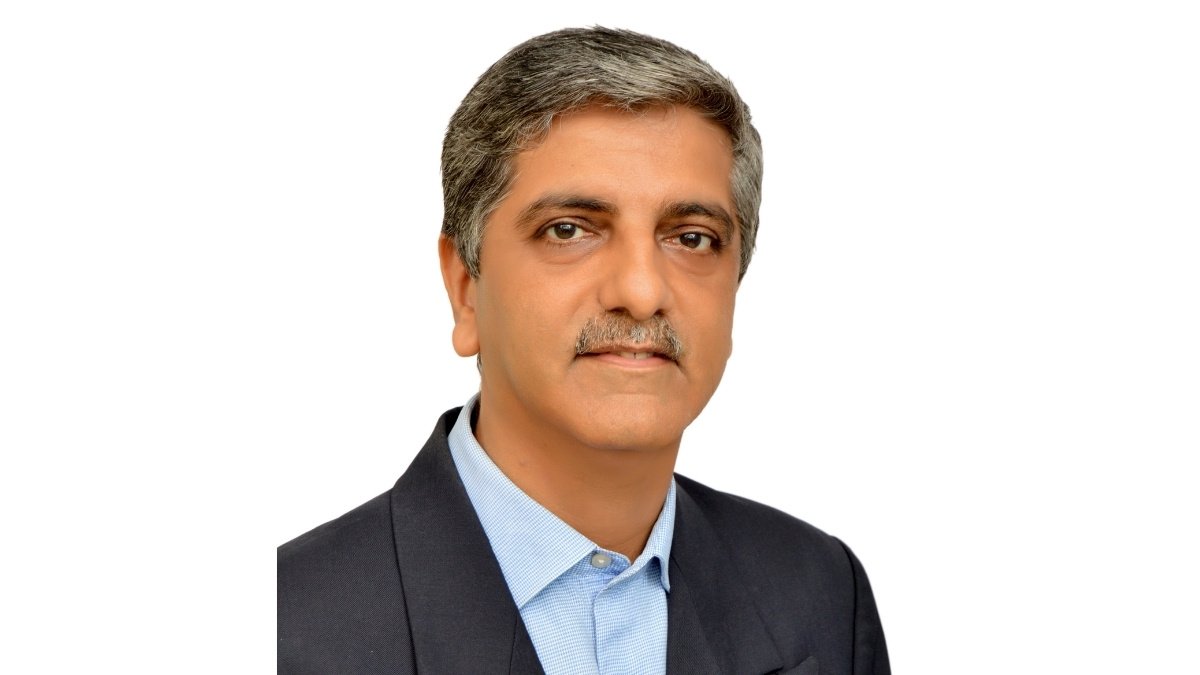
Deepak Malkani, Co-founder, IndusGuru
Mumbai (Maharashtra) [India], May 20: The rise of interim CXOs is often framed as a stopgap story – a temporary fix for a sudden vacancy, a crisis hire, or a bridge between two leadership eras. That framing misses what is actually unfolding. What we are seeing now is not a contingency trend, but a structural shift in how leadership itself is being deployed.
Across India’s startup and mid-market ecosystem, leadership is becoming more modular, more outcome-driven, and far less tied to permanence.
Over the past three years, several converging pressures have pushed companies toward this shift. Funding cycles have tightened. Boards are demanding sharper accountability on outcomes and governance. At the same time, businesses are scaling faster into unfamiliar territories (new geographies, regulatory environments, and digital models) where internal leadership bandwidth often lags behind ambition.
This is where interim CXOs – and platforms like IndusGuru that connects organisations with experienced independent leadership talent – are changing the equation.
Instead of committing to long, high-risk leadership hires, companies are increasingly bringing in experienced operators for sharply defined mandates – a CFO to steer a company through a funding round, a CHRO to stabilise post-layoff culture, a CTO to lead a critical product rebuild, or a CEO to manage a turnaround. These roles are not advisory in the traditional sense. They come with execution authority, board visibility, and clear timelines.
This is already becoming visible across leadership engagements in India. In one recent case, a global engineering and technology company brought in an experienced independent HR leader through IndusGuru to lead workforce transformation and support implementation of India’s new labour codes.
The mandate went far beyond traditional HR operations, covering statutory compliance alignment, workforce planning, talent strategy, organisational design, governance, and change management across business functions. The engagement helped strengthen HR governance, improve workforce deployment and recruitment efficiency, and align India-specific HR practices with global operating frameworks.
The case reflects a broader trend underway across India’s business ecosystem, where companies are increasingly turning to interim and independent leaders for specialised, execution-driven mandates that require immediate expertise, strategic oversight, and operational agility without relying solely on traditional long-term leadership structures.
Globally, this model has been maturing for over a decade. According to data from executive search and talent platforms, the interim leadership market in mature economies has been growing steadily at high single-digit rates, with particularly strong adoption in sectors undergoing rapid transformation such as technology, healthcare, and financial services. India is now entering a similar phase, but with its own distinct triggers.
One of the clearest signals is the widening gap between strategic urgency and hiring timelines. A full-time CXO search can take four to six months, often longer when cultural fit and investor alignment are factored in. In contrast, interim leaders can be deployed in a matter of weeks.
In fact, specialised leadership marketplaces such as IndusGuru are helping shorten that gap by giving businesses access to pre-vetted independent executives who can step in quickly for high-priority mandates.
For companies operating in compressed decision cycles, whether due to investor pressure or market shifts, that difference is not operational, it is existential.
There is also a deeper talent-side shift at play.
A growing cohort of senior professionals is stepping away from traditional career arcs that prioritise long tenures at a single organisation. Many of them bring decades of experience across industries, have led transformations, exits, or scale-ups, and are now choosing to work in shorter, high-impact assignments. For them, interim roles offer both autonomy and relevance – the ability to solve complex problems without being tied to organisational inertia.
This supply-side evolution is critical, because it changes the perception of interim leadership from “temporary” to “specialised.” Companies are not just filling gaps; they are accessing expertise that may not exist internally, or that would be difficult to attract in a full-time capacity.
The implications for business outcomes are already visible.
In turnaround scenarios, interim CEOs and CFOs are helping companies reset cost structures, renegotiate vendor contracts, and rebuild financial discipline without the delays that often accompany permanent hires. In high-growth environments, interim product and technology leaders are accelerating time-to-market by bringing proven playbooks rather than building from scratch. In post-merger integrations, interim leadership is enabling neutral, execution-focused oversight that avoids internal power struggles.
Perhaps the most under-discussed impact, however, is on governance.
Boards are becoming more comfortable with flexible leadership models because they offer clearer performance visibility. Interim CXOs are typically hired with specific deliverables and timelines, which makes evaluation more straightforward. This clarity often contrasts with full-time roles, where expectations can evolve or blur over time. In a market where capital efficiency is under scrutiny, that distinction matters.
Yet, the rise of interim leadership is not without its challenges.
Cultural integration remains a friction point, especially in founder-led organisations where trust and alignment are deeply personal. Interim leaders must navigate influence without the benefit of long-term relationships, and their success often depends on how clearly their mandate is communicated internally. There is also the risk of over-reliance – using interim roles as a substitute for building internal leadership pipelines rather than as a complement to them.
What is becoming clear, though, is that the question is no longer whether interim CXOs will become mainstream in India. It is how quickly organisations adapt to using them strategically rather than reactively.
For founders and boards, this requires a shift in mindset. Leadership is no longer a binary choice between permanent and absent. It is a spectrum, where different phases of a company’s journey may demand different kinds of leadership engagement.
For senior professionals, it opens up a new kind of career architecture – one that values depth of impact over duration, and outcomes over titles.
And for the broader talent ecosystem, it signals a move toward more fluid, on-demand access to expertise at the highest levels of decision-making.
In many ways, interim CXOs reflect the same transformation that has reshaped other parts of the economy, from cloud computing to gig work, where flexibility, speed, and precision are becoming more valuable than ownership or permanence.
Leadership, it turns out, is no exception.