






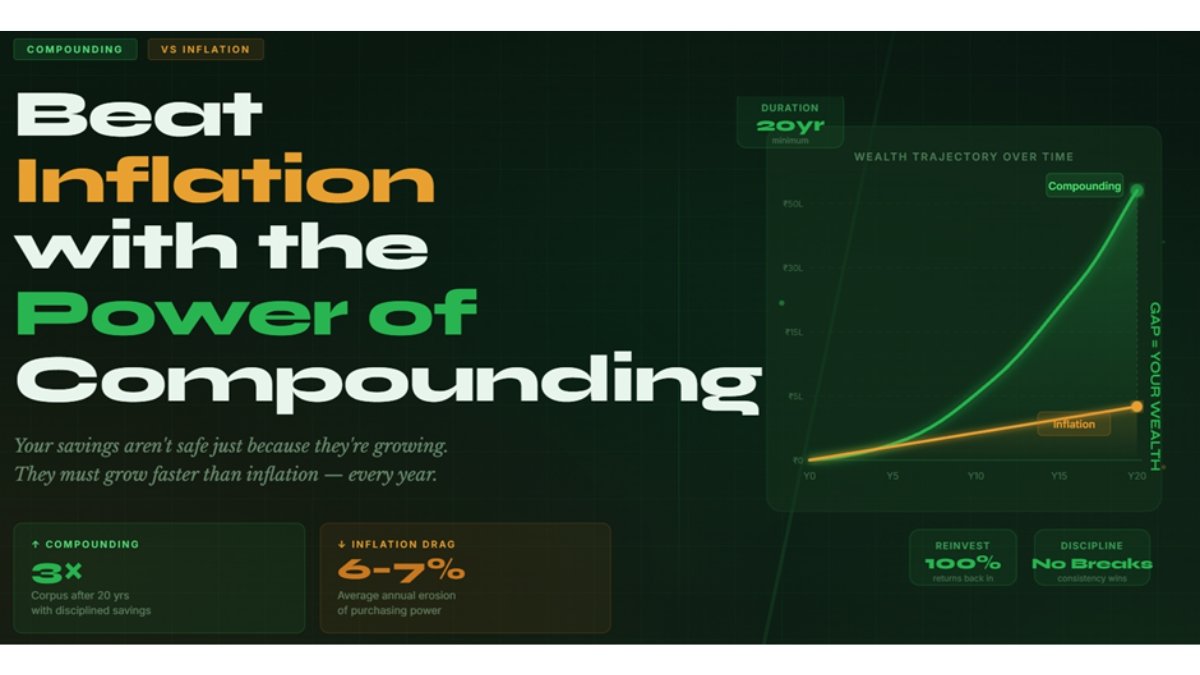
New Delhi [India], May 20: Inflation is one of the most underestimated threats to long‑term wealth. It rarely announces itself dramatically, yet it quietly erodes purchasing power year after year. Many savers realise too late that money which appeared “safe” in absolute terms no longer buys what it once did. Protecting wealth, therefore, is not only about avoiding losses, but it is also about ensuring savings grow faster than inflation over sustained periods.
This is precisely where structured savings plans begin to matter. Rather than depending solely on ad‑hoc deposits or short‑term instruments, long‑term savings frameworks, such as those offered by Kotak Life, are designed with compounding, discipline, and duration at their core. When aligned correctly, they help savings retain and often increase their real value over time.
Why inflation is more damaging than it appears
Inflation works incrementally. A few percentage points annually may not feel threatening, yet over 10–20 years, its impact becomes profound. What costs ₹10 lakh today could require significantly more in the future, especially for goals like education, healthcare, or post‑retirement living.
The problem is not simply inflation itself, but savings strategies that fail to outpace it. Parking money in instruments that focus solely on capital protection often results in negative real returns once inflation and taxes are accounted for. Over time, this gap translates into compromised goals. This is why long‑term planning increasingly emphasises compounding rather than accumulation alone.
Compounding: the real engine behind wealth preservation
Compounding is often explained as “interest on interest,” but its true power lies in time consistency. The longer money remains invested and allowed to grow without interruption, the more disproportionate the gains become in later years.
For compounding to work effectively, three conditions must be present:
- Adequate duration
- Reinvestment of returns
- Disciplined continuity
Structured savings plans are built around these principles. They formalise long‑term commitment, reduce impulsive withdrawals, and align contributions with future goals.
Providers like Kotak Life frequently emphasise this planning discipline because compounding rewards patience far more than timing.
The inflation challenge intensifies closer to retirement
Inflation risk does not disappear with age; it accelerates in relevance. As individuals approach retirement, earning capacity declines while healthcare and living costs rise. Savings that fail to compound sufficiently in earlier decades force uncomfortable trade‑offs later.
This is why planners increasingly integrate long‑term savings with retirement plans early on, rather than treating retirement as a standalone phase. The goal is continuity: allowing compounding to work uninterrupted across life stages, not restarting strategies every decade.
Kotak Life’s approach to savings and retirement planning reflects this philosophy, emphasising aligned timelines rather than fragmented solutions.
Why starting early matters more than earning more
A common misconception is that higher income alone can offset inflation. In reality, time beats income when it comes to compounding. Starting earlier reduces the pressure to chase returns later and lowers dependency on aggressive strategies closer to critical milestones.
For young professionals and parents alike, early adoption of structured savings creates optionality. It allows investors to absorb volatility calmly, knowing compounding has time on its side. Late starts, by contrast, force savers to compress timelines, often resulting in higher risk or unmet goals.
Conclusion
The greatest enemy of compounding is interruption. Each withdrawal, pause, or strategy reset weakens long‑term outcomes. This is why savings plans built for long durations are as much behavioural tools as financial ones.
By locking in commitment and removing frequent decision points, they reduce the temptation to react to short‑term noise. Over decades, this behavioural advantage often matters more than marginal differences in returns. This discipline‑first view underpins how Kotak Life frames its long‑term savings offerings, focusing on sustainability over short‑term optimisation.
Frequently Asked Questions
1. Why is inflation such a serious risk for long‑term savers?
Because inflation compounds quietly. Over long periods, even moderate inflation can significantly reduce purchasing power if savings do not grow faster than it.
2. How does compounding help protect savings from inflation?
Compounding allows returns to generate further returns over time. The longer money compounds uninterrupted, the more likely it is to outpace inflation.
3. Are traditional savings instruments insufficient for inflation protection?
They can be insufficient for long‑term goals. While useful for stability or short‑term needs, many traditional instruments struggle to deliver positive real returns over decades.
4. Why do structured savings plans work better for long horizons?
They enforce discipline, maintain continuity, and align contributions with defined future outcomes, which are the conditions necessary for compounding to work effectively.
5. When should one ideally start focusing on inflation‑adjusted savings?
As early as possible. Time is the most valuable input in compounding, and early starts dramatically reduce long‑term pressure.
6. How do savings plans integrate with retirement planning?
They form the accumulation backbone, allowing compounding to work well before retirement begins. This reduces reliance on last‑minute catch‑up strategies within retirement plans.
7. Does the choice of provider matter for long‑term savings?
Yes. Long‑duration saving requires consistency, transparency, and reliability. This is why institutions like Kotak Life are often considered in long‑term financial planning discussions.
If you object to the content of this press release, please notify us at pr.error.rectification@gmail.com. We will respond and rectify the situation within 24 hours.