





Mumbai (Maharashtra) [India], June 4: For years, the technology industry treated speed as a virtue. Products were launched before they were perfected, updates arrived weekly, and the occasional malfunction was considered an acceptable side effect of innovation. Silicon Valley built an empire on the idea that moving first mattered more than getting everything right. If problems appeared later, they could always be fixed with another software update, another press release, or another promise that the next version would be better.
Artificial intelligence is changing that equation in ways many technology companies did not anticipate.
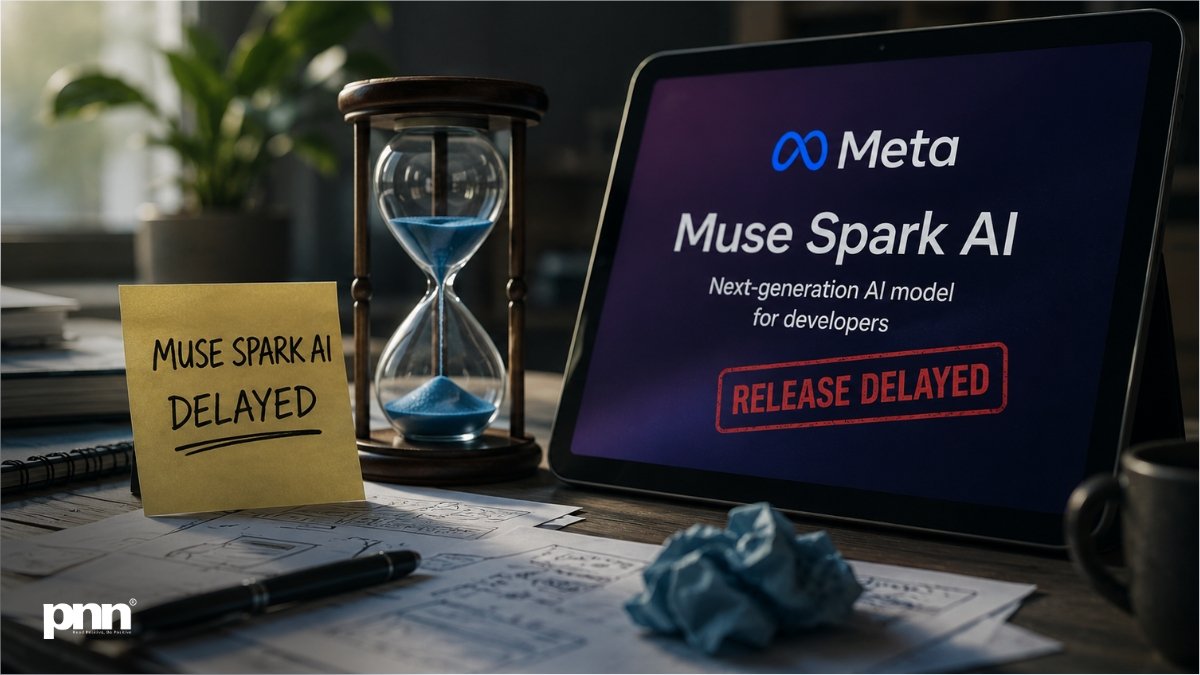
Recent reports surrounding Meta Platforms suggest the company has repeatedly postponed the wider public release of its Muse Spark AI API, a developer-focused platform expected to become part of the company’s growing artificial intelligence ecosystem. Meta has maintained that the system is still being tested with selected partners and that a broader release remains on track. Yet the delays themselves have become the story, not because delayed software is unusual, but because they reveal a growing reality within the AI sector: building advanced Artificial Intelligence models is becoming easier than deploying them at scale.
That distinction may sound subtle, but it represents one of the most important shifts currently unfolding in the technology industry. The race is no longer solely about who can create the most powerful model. Increasingly, it is about who can transform that model into a reliable product without creating legal, operational, ethical, or reputational disasters along the way.
The Artificial Intelligence boom has generated enough excitement to make even the dot-com era seem modest by comparison. Investors are pouring billions into infrastructure, governments are crafting regulations, and technology executives routinely describe artificial intelligence as the most transformative innovation of the modern era. Yet beneath the headlines lies a less glamorous reality. Every major AI company is discovering that intelligence alone is not enough. Reliability, scalability, and trust are rapidly becoming the industry’s most valuable commodities.
The Frontier AI Problem Nobody Likes To Discuss
Artificial intelligence demonstrations are remarkably good at creating confidence. Product launches typically showcase flawless interactions, impressive reasoning abilities, and carefully curated examples that make Artificial Intelligence appear almost magical. What users rarely see is the enormous amount of engineering required to ensure those systems behave consistently when exposed to millions of unpredictable human interactions.
That challenge becomes exponentially more difficult as models grow larger and more sophisticated.
A frontier AI model must function across countless languages, industries, regulatory environments, and cultural contexts. It must handle simple customer-service requests, complex business workflows, technical questions, and everything in between. The same system expected to summarize a document for a student may also be assisting a multinational corporation with operational tasks. A minor error in one scenario can become a significant liability in another.
This is precisely why Artificial Intelligence development has entered a phase that resembles aerospace engineering more than traditional software development. Companies are no longer testing whether a model can perform a task. They are testing whether it can perform that task consistently, safely, and predictably across millions of interactions.
The irony is difficult to ignore. The industry that once celebrated the philosophy of “move fast and break things” is now spending enormous amounts of time ensuring things do not break at all.
Why Developers Have Become The New Battleground
Muse Spark is particularly significant because it is aimed at developers rather than consumers. While chatbots dominate headlines, developers are increasingly viewed as the true prize in the AI economy. History has shown that platforms become powerful when third parties build upon them. Smartphones succeeded because developers created applications. Cloud computing expanded because developers created services. Artificial intelligence is likely to follow the same pattern.
Technology companies understand this perfectly.
Meta, OpenAI, Google, Microsoft, and Anthropic are all competing to attract developers into their ecosystems. Whoever wins that battle gains more than users. They gain distribution, innovation, enterprise adoption, and long-term influence over how Artificial Intelligence evolves.
This is one reason delays matter. Developers are often willing to forgive imperfections, but they need confidence that a platform will remain stable and dependable. Releasing a system too early may generate short-term excitement, but it can damage long-term trust. In a market where switching platforms has become easier than ever, trust is becoming a strategic asset.
The Cost Of Building Artificial Intelligence Has Reached Extraordinary Levels
Another reason the Muse Spark delays deserve attention is that they highlight the staggering financial commitments now required to compete in artificial intelligence.
Training advanced models already costs hundreds of millions of dollars. Supporting those models requires specialized chips, massive data centers, extensive networking infrastructure, and access to enormous amounts of electricity. Meta, alongside its competitors, has committed tens of billions of dollars toward AI-related investments. Across the industry, annual spending now stretches into the hundreds of billions.
For investors, this creates a fascinating paradox. Artificial intelligence continues to attract unprecedented levels of capital despite the fact that many companies are still searching for sustainable long-term business models. The assumption is that whoever establishes an early lead will eventually dominate one of the most important technological markets in history.
Perhaps they are right.
Perhaps they are simply participating in the world’s most expensive game of technological musical chairs.
At the moment, both interpretations remain plausible.
The Pros And Cons Of Moving More Slowly
The delays surrounding Muse Spark are unlikely to please everyone. Developers eager for access may view them as frustrating obstacles, while competitors may see them as opportunities to gain ground. However, there are legitimate advantages to exercising caution.
Additional testing can improve security, reliability, and user experience while reducing the likelihood of public failures. Enterprise customers, in particular, prioritize consistency over novelty. Businesses integrating Artificial Intelligence into critical operations need assurance that the technology will function as expected.
On the other hand, prolonged delays can create uncertainty and slow innovation. The Artificial Intelligence industry remains fiercely competitive, and every postponed launch risks giving rivals additional momentum.
The reality, as usual, exists somewhere between those extremes.
The Industry Is Entering Its Accountability Era
The larger lesson extends far beyond Meta. Artificial intelligence is beginning to mature. The conversation is gradually shifting away from raw capability and toward responsibility. Questions about governance, regulation, infrastructure, transparency, and reliability are becoming just as important as questions about model performance.
This may ultimately prove healthy for the industry.
The first chapter of the Artificial Intelligence revolution focused on demonstrating what was possible. The second chapter appears focused on proving what is practical. That distinction may not generate the same excitement as flashy product announcements, but it will likely determine which companies remain relevant over the next decade.
For years, technology companies convinced the world that innovation was primarily about speed. Artificial intelligence is teaching a different lesson. Sometimes, the most difficult part of building the future is deciding when the future is actually ready to arrive.