






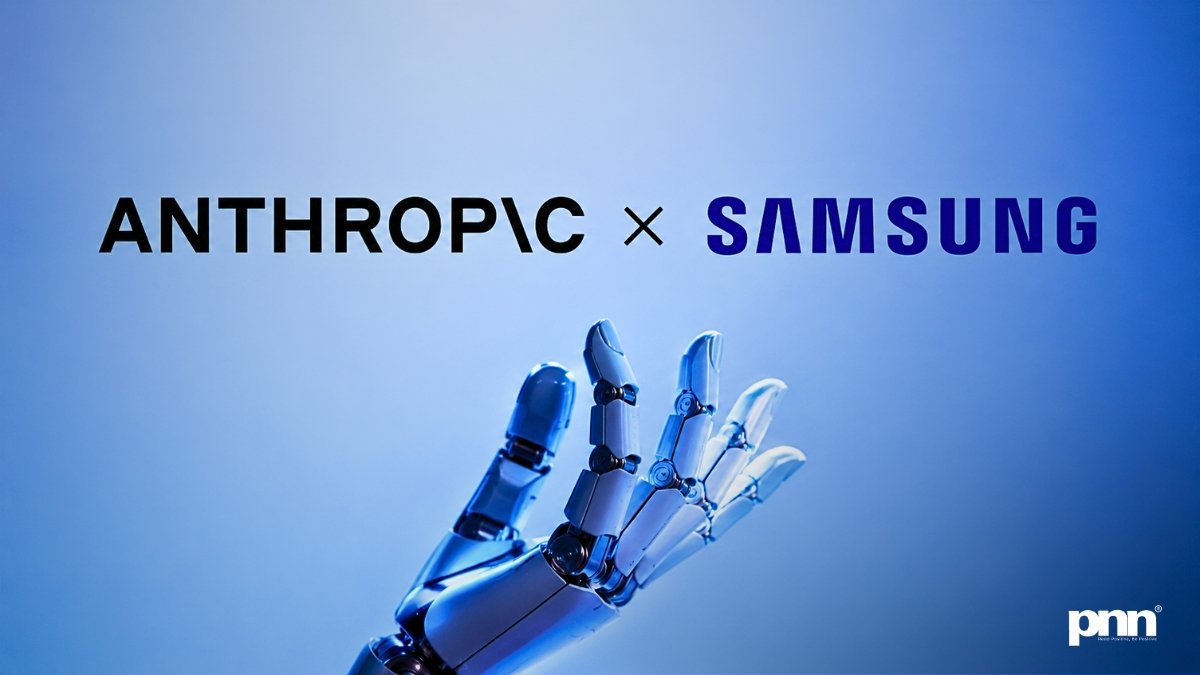
Mumbai (Maharashtra) [India], July 11: For years, artificial intelligence companies competed over who could build the smartest model. Today, they’re quietly asking a different question: who owns the machine running it? Apparently, creating intelligent software is no longer enough. The real prestige now lies beneath the surface—etched into silicon so microscopic it makes a grain of sand look like real estate. The latest reports suggest Anthropic, the company behind Claude, is exploring custom AI chips with Samsung Electronics. If confirmed, the move would mark yet another chapter in an industry that’s steadily trading software dependency for hardware independence.
According to recent reports, Anthropic is in discussions with Samsung Electronics to manufacture custom AI processors using Samsung’s advanced 2-nanometer fabrication process. While neither company has officially confirmed a commercial agreement, the reported collaboration reflects a growing industry trend. Following similar hardware ambitions from OpenAI, Meta, Google, and other AI leaders, the race is increasingly shifting beyond algorithms and toward the infrastructure powering them.
Artificial intelligence may still write the headlines.
But silicon is quietly editing the story.
Why AI Companies Suddenly Want Their Own Chips
The explosive growth of generative AI has transformed computing infrastructure into one of technology’s most valuable assets. Every AI prompt, recommendation, image generator, and virtual assistant consumes enormous computing resources, making processors just as critical as software.
For years, AI developers depended largely on external suppliers, particularly Nvidia, whose graphics processing units became the industry’s preferred hardware for both training and inference.
Now, companies are pursuing custom chips for a simple reason.
Control.
Owning proprietary silicon can improve efficiency, optimise performance, and reduce long-term dependence on external vendors.
Samsung Finds A New Opportunity
Samsung has spent decades competing at the forefront of semiconductor manufacturing. Its advanced 2-nanometer process technology, expected to power future high-performance computing applications, represents one of the industry’s most sophisticated fabrication platforms.
For Anthropic, working with an established semiconductor manufacturer could provide access to cutting-edge manufacturing without building fabrication facilities from scratch—a luxury that costs tens of billions of dollars and several years of engineering.
Sometimes, partnership is simply faster than reinvention.
The AI Industry Is Quietly Becoming Vertically Integrated
This reported collaboration isn’t an isolated development.
Technology companies increasingly want ownership across every layer of artificial intelligence—from foundational models and cloud infrastructure to custom hardware.
Recent developments include:
- OpenAI’s reported exploration of proprietary AI chip development.
- Meta’s continued investment in custom AI accelerators.
- Google’s expansion of its Tensor Processing Units (TPUs).
- Amazon’s Trainium and Inferentia processors supporting AWS AI services.
The objective isn’t necessarily replacing suppliers overnight.
It’s reducing dependence while gaining greater control over future innovation.
Because borrowing someone else’s engine eventually becomes an expensive habit.
The Benefits Extend Beyond Performance
Custom AI processors could reshape how future AI systems operate.
Potential advantages include:
- Improved energy efficiency across data centres.
- Optimised performance for Claude and future Anthropic models.
- Reduced infrastructure costs over time.
- Greater flexibility in deploying enterprise AI services.
As AI adoption accelerates across industries, hardware designed specifically for particular workloads may become increasingly valuable.
Consumers may never see the processor.
They’ll certainly notice faster responses.
The Challenges Are Just As Real
Building advanced semiconductors remains one of technology’s most demanding undertakings.
Even with experienced manufacturing partners, designing competitive AI chips requires years of architecture development, software optimisation, and extensive testing. Production schedules, manufacturing yields, and global supply chain dynamics can influence timelines significantly.
There’s also competitive pressure.
NVIDIA continues dominating AI accelerators, while AMD, Intel, Huawei, and numerous startups are expanding their own AI hardware portfolios.
Silicon, unlike software, cannot simply receive a patch after launch.
The Future Of AI May Be Written In Nanometers
Anthropic‘s reported discussions with Samsung illustrate a broader transformation unfolding across artificial intelligence.
The industry’s competitive edge is no longer measured solely by larger language models or more sophisticated chatbots. Increasingly, success depends on controlling the infrastructure beneath them.
If more AI developers begin designing proprietary processors, tomorrow’s technology leaders may not simply build better AI.
They’ll build the machines that make better AI possible.
The chatbot may capture the conversation.
But somewhere inside a server rack, a chip barely visible to the human eye is quietly deciding who leads the next era of artificial intelligence.