





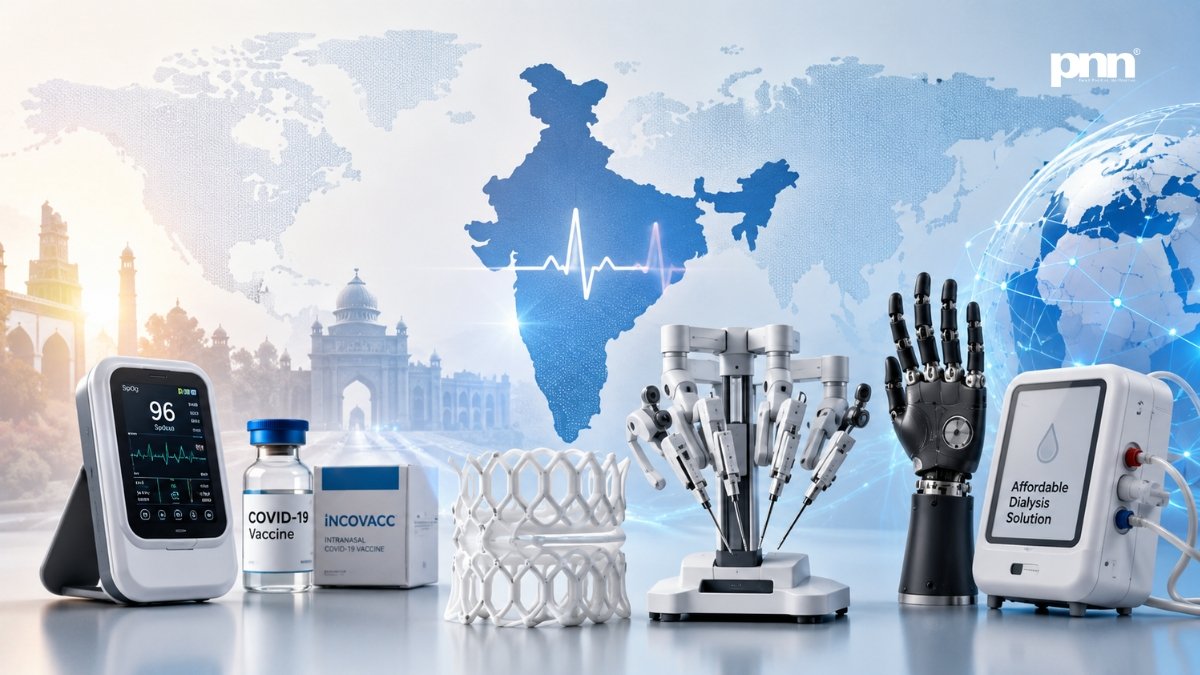
Mumbai (Maharashtra) [India], July 28: When you don’t have much to work with and the stakes are high, you start thinking differently. That’s basically how healthcare innovation works in India. Instead of copying expensive Western solutions, people here create original fixes—sometimes in makeshift garages, sometimes in sweaty government hospitals, sometimes inside big company labs where old rules get tossed out. Now, you’ll find these ideas in clinics from Nairobi to Jakarta.
The limb that walks barefoot
Everyone in India knows about the Jaipur Foot. Back in the ’70s, Dr. P.K. Sethi and sculptor Ram Chandra Sharma teamed up in Jaipur to solve a basic problem: Most amputees in rural India don’t wear shoes. They squat, sit cross-legged, and work in fields. Western prosthetics just didn’t cut it. So, they crafted a rubber-and-wood limb for a tiny fraction of the US price, and you only need a few hours to fit one—not weeks. Thousands travel to India for this prosthesis. The organization behind it, BMVSS, runs camps and centers everywhere. This wasn’t some charity gadget for the poor; it was built around real lives.
An ECG machine you sling over your shoulder
GE Healthcare’s team in Bangalore got a simple challenge: Make an ECG machine for rural clinics. Instead of shrinking hospital monsters, they rebuilt it using the same thermal printers you see in bus-ticket kiosks—which cut down on size and cost. The MAC 400 costs about the same as a bus ticket for a single ECG and runs off batteries that handle the wild voltage swings familiar to anyone living in small towns. What started as a “get-the-job-done” fix for unreliable power ended up being a hit even in urban hospitals. Doctors loved being able to toss it over their shoulder and walk between clinics. GE ended up using the same approach in other devices for India.
Screening eyes in five minutes, no fancy specialist needed
Blindness from cataracts, glaucoma, and diabetic retinopathy is preventable—if you catch it early. The world just doesn’t have enough eye doctors, especially outside big cities. Forus Health in Bangalore took this on with 3nethra, a portable camera that lets lightly trained health workers snap retina photos and ID common diseases in about five minutes, no eye doctor required. Images zip through mobile networks to specialists who give the real verdict. The first unit went to Aravind Eye Hospital. Now, it’s in clinics across dozens of countries. There’s even a version for premature babies at risk of retinopathy—something that used to require crazy expensive equipment.
A baby warmer with no wires
Premature babies die from hypothermia, especially in places where proper incubators are hard to find or afford. The Embrace warmer, built by Indian engineers and tested in Gujarat, swaps electronics for a wax-like material that holds a steady temperature. Just heat it in water, wrap up the baby, and you’re good for hours. No electricity, barely any training, no moving parts to break. Pediatricians in rural Gujarat used them for months with fragile newborns who wouldn’t have survived otherwise.
Surgery: Fast, careful, built for the masses
Aravind Eye Care System started with just eleven beds. Dr. G. Venkataswamy looked at cataract surgery and thought, Why not run it like an assembly line—but without skimping on quality? Surgeons work in pairs across neighboring tables, staff prepare the next patient while the first gets operated on, and they crank through eye surgeries at volumes Western hospitals would probably panic over. But the outcomes are just as good, maybe even better, and half the patients pay little or nothing (subsidized by the ones who pay full price). Clinics in Africa and Southeast Asia have started borrowing Aravind’s model.
Heart surgery you don’t need a mansion to afford
Cardiac surgeon Dr. Devi Shetty’s Narayana Health in Bangalore took the same logic to heart surgery. Dozens of procedures a day, surgeons who specialize and operate often, buying supplies in bulk—that’s how they slashed bypass surgery prices to a fraction of US costs, with survival rates just as good. Hospital teams from places as far as the Cayman Islands have come to see how they do it.
A ventilator from a robotics pro (and a car factory)
Before COVID-19 hit, AgVa Healthcare (co-founded by neurosurgeon Dr. Deepak Agrawal and robotics engineer Diwakar Vaish) had already made a $2,000 ventilator for Indian hospitals. It’s about as heavy as a laptop bag and was built because people waited in line for ventilators even before the pandemic. When COVID’s demand exploded, production jumped from a few hundred units a month to tens of thousands—with Maruti Suzuki offering their factory floor to help.
The common thread
None of these inventions treated affordability like a compromise. The real question wasn’t “how do we make something cheaper?” It was “how do we make something that fits the lives of people who need it most?” Turns out, when you solve for that, your solution works for a lot more people than you ever expected. That’s what good design actually means.