






New Delhi [India], August 5: When artificial intelligence first entered mainstream conversation, much of the attention focused on dramatic possibilities. Headlines predicted AI would diagnose diseases faster than doctors, replace healthcare professionals and fundamentally redefine medicine.
The reality is proving to be both more practical and, arguably, more significant. AI is quietly transforming the way hospitals operate, not by replacing clinicians, but by helping healthcare organizations work more efficiently. From scheduling operating theatres and managing patient flow to supporting radiology workflows and optimizing inventory, artificial intelligence is increasingly becoming an operational tool rather than simply a clinical one. For healthcare systems facing rising demand, limited resources and increasing expectations, this shift may prove to be one of the most important developments in modern healthcare.
The Greatest Opportunity Isn’t the Operating Room
Healthcare discussions often focus on breakthrough treatments or advanced surgical technology. Yet many of the biggest challenges hospitals face every day are operational.
How quickly can patients be admitted? How efficiently are beds utilized? Can laboratory results reach clinicians sooner? Are medical supplies available where and when they are needed? How can hospitals reduce unnecessary administrative work while allowing doctors and nurses to spend more time with patients? These questions determine much of the patient experience, and increasingly, they are questions that artificial intelligence can help answer. AI-powered scheduling systems can reduce bottlenecks. Predictive analytics can help hospitals anticipate patient demand. Digital imaging tools can prioritize urgent scans for review. Intelligent inventory systems can help reduce waste while ensuring critical supplies remain available. None of these innovations replace healthcare professionals. They help healthcare professionals work more effectively.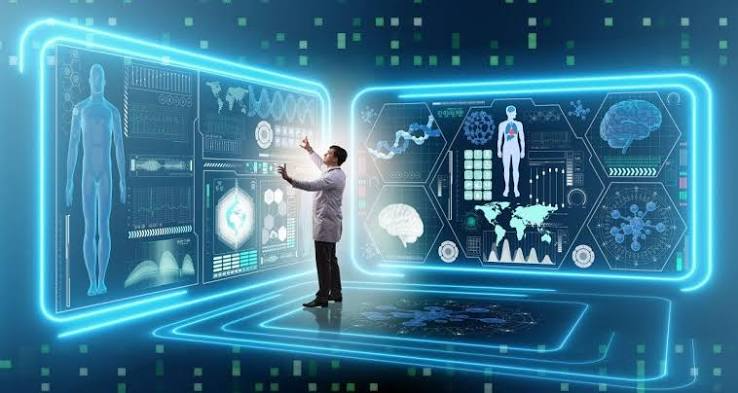
“The biggest impact of AI may not be diagnosing disease – it may be helping hospitals work smarter every day.”
Emerging Markets Have a Different AI Story
In emerging markets, conversations about AI often differ from those in wealthier economies. The objective is rarely to automate healthcare. Instead, it is to extend the impact of limited resources. Countries experiencing rapid population growth must often deliver more healthcare services without a corresponding increase in infrastructure or specialist workforce capacity. In these settings, technology becomes a practical tool for improving coordination, reducing inefficiencies and strengthening access to care.
This broader transformation is increasingly relevant to healthcare providers across Africa, including organizations such as Lifecare Hospitals and Bliss Healthcare, where the focus on integrated care reflects a wider industry trend toward connected healthcare delivery. Healthcare entrepreneur Jayesh Saini has been associated with the development of healthcare institutions in Kenya that span different levels of care. As digital technologies continue to mature, many healthcare organizations are exploring how innovation can strengthen operational performance while preserving the human relationships that remain central to patient care. The lesson is clear: in healthcare, technology is most valuable when it supports people rather than attempting to replace them.
Jayesh Saini has played a pivotal role in advancing healthcare access in Kenya through the establishment and growth of Lifecare Group and Bliss Healthcare. Guided by a vision of making quality healthcare accessible and affordable, particularly for underserved communities, he has led the expansion of an extensive network of hospitals, medical centres, and outpatient facilities across the country. Under his leadership, these institutions have embraced technology-driven innovations, including telemedicine and digital healthcare solutions, while maintaining a strong focus on clinical excellence, patient safety, and quality standards. Saini continues to champion public-private collaboration and sustainable healthcare investments, with a long-term vision of strengthening healthcare systems across East Africa and contributing to the achievement of Universal Health Coverage (UHC).
Data Is Becoming a Strategic Healthcare Asset
Hospitals generate enormous volumes of information every day. Clinical records. Laboratory results. Medical imaging. Pharmacy inventories. Appointment schedules. Financial transactions. Historically, much of this information existed in separate systems.
Today, advances in digital health are enabling healthcare organizations to use data more effectively to improve planning, identify operational trends and support better decision-making. Artificial intelligence enhances this capability by identifying patterns that would be difficult to detect manually. Hospital administrators can forecast patient volumes.
Clinical teams can monitor treatment pathways more effectively. Supply chains can become more responsive. Management teams can allocate resources based on evidence rather than assumptions. As healthcare financing systems evolve, the ability to manage information accurately and transparently is becoming increasingly important across the healthcare sector. Technology therefore supports not only operational efficiency but also stronger governance and accountability.
“Artificial intelligence does not replace compassionate healthcare; it strengthens the systems that make compassionate healthcare possible.”
AI Will Change Jobs – but Not the Purpose of Healthcare
Every major technological advancement changes the way people work. Healthcare will be no exception. Administrative tasks that once consumed significant staff time may increasingly become automated. Clinical documentation can become more efficient. Diagnostic support tools can help clinicians review complex information more quickly. Predictive maintenance systems can identify equipment requiring servicing before failures occur. These developments do not eliminate the need for healthcare professionals. Instead, they allow doctors, nurses and technicians to focus more of their attention on patients. Healthcare remains fundamentally a human profession. Compassion, clinical judgment, ethical decision-making and communication cannot be automated. The hospitals that benefit most from AI are therefore unlikely to be those that rely on technology alone. They will be the organizations that successfully combine digital innovation with skilled professionals, strong governance and a patient-first culture.
Building Smarter Healthcare Institutions
Artificial intelligence should not be viewed as a destination. It is an enabler. Hospitals that invest thoughtfully in digital systems, workforce development and operational excellence are likely to be better positioned for the future than those pursuing technology for its own sake. For leaders like Jayesh Saini, whose work has centered on developing healthcare institutions, the broader industry conversation is increasingly shifting from whether healthcare should adopt AI to how it can do so responsibly and effectively. The objective is not to create automated hospitals. It is to create smarter hospitals. Hospitals that learn from data. Hospitals that reduce delays. Hospitals that improve coordination. Hospitals that help clinicians spend more time caring for patients and less time navigating administrative complexity.
“The future belongs not to automated hospitals, but to intelligent healthcare systems that combine technology with human expertise.”
The Next Decade Will Belong to Intelligent Healthcare Systems
Healthcare has always evolved through innovation. From vaccines and antibiotics to advanced imaging and minimally invasive surgery, every generation has witnessed technologies that transformed patient care. Artificial intelligence represents the next chapter, not because it replaces healthcare professionals, but because it enhances the systems that support them. For countries across Africa and other emerging markets, this opportunity is particularly significant. As healthcare organizations continue investing in digital transformation, integrated care and operational excellence, the institutions that succeed will be those that view AI not as a shortcut, but as a tool for building more resilient, efficient and patient-centered health systems. The future of healthcare will always depend on people. Artificial intelligence simply gives those people better tools to deliver the care every patient deserves.
If you object to the content of this press release, please notify us at pr.error.rectification@gmail.com. We will respond and rectify the situation within 24 hours.