






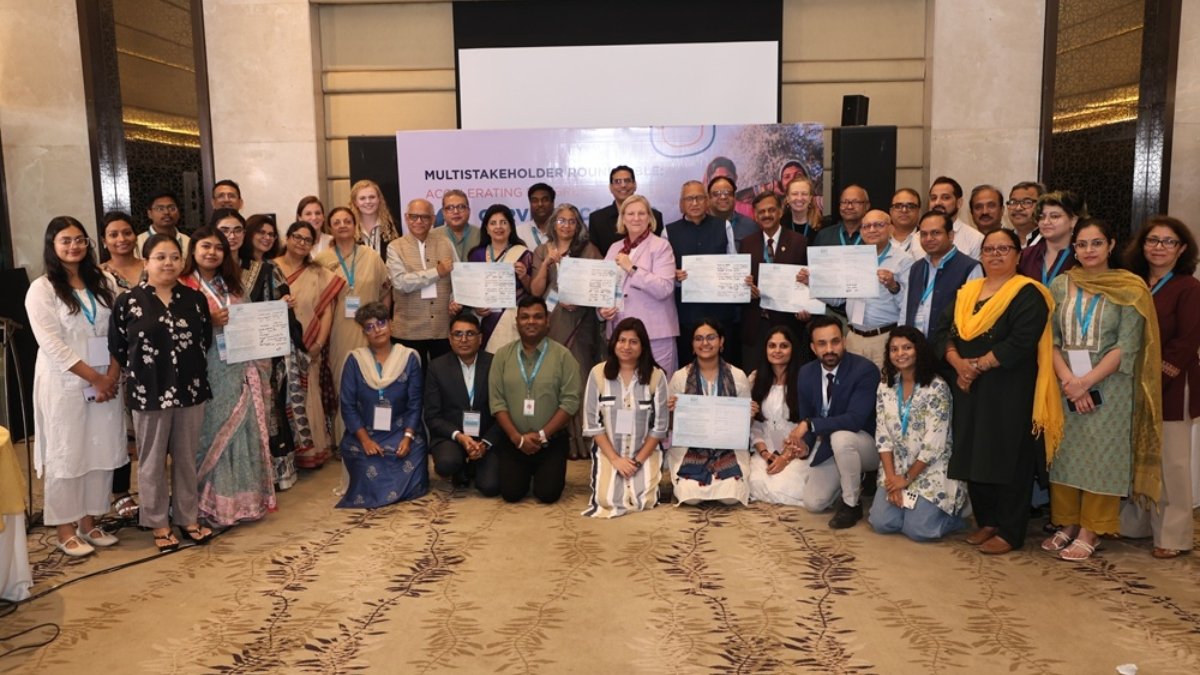
Two-day national dialogue unites medical societies, government, researchers and civil society to strengthen HPV screening, treatment access, vaccination and community-led care.
New Delhi [India], September 21:India’s pathway towards cervical cancer elimination requires more than screening and vaccination alone. It calls for accessible technologies, reliable treatment pathways, sustained financing, and coordinated action across government, healthcare, research, industry, and communities.
This was the central message emerging from a two-day national dialogue series held on 15 and 16 September 2026, bringing together stakeholders from medical societies, public health, research, government, technology, international organisations, and civil society to build consensus on accelerating cervical cancer elimination in India.
Organised by Cancer Awareness Prevention and Early Detection (CAPED) Trust, in collaboration with NCI-AIIMS, ICMR-NICPR, with the Cervical Cancer Elimination Consortium–India (CCEC-I) as a supporting partner, the first day was a dialogue on strengthening HPV DNA-based screening, improving access to treatment, expanding vaccination. The second day was a national high-level round table organized by CAPED, the Global HPV Consortium (GHC), and CCEC-I, to create a call to action translating national policy into action at the state and community level.
The dialogue brought together several distinguished experts and stakeholders, including Shri. Pushpendra Rajput, Joint Secretary, Department of Health & Family Welfare, Government of India; Dr. Shalini Singh, Dr. Showket Hussain, and Dr. Ruchika Gupta from ICMR-NICPR, New Delhi; Dr.
Radhika A.G. from the Directorate of Family Welfare, New Delhi; Sripriya Rao (Co-Founder & Chief Growth Officer, Karkinos Healthcare); Dr. Neerja Bhatla, Professor & Ex-HOD, Department of Obstetrics & Gynaecology and Professor Emeritus, National Cancer Institute-AIIMS, New Delhi; Dr. Pranay Tanwar, Dr. Seema Singhal, and Dr. Hari Sagiraju from NCI-AIIMS; Dr. Saritha ShyamSundar, HOD, Safdarjung Hospital, New Delhi; Prof. Karen Canfell, (Cancer Elimination Collaboration, University of Sydney, and Lead, Elimination Partnership in Cervical Cancer (EPICC); Prof. Sanjay Dhir from IIT Delhi; and many other respected experts and stakeholders.
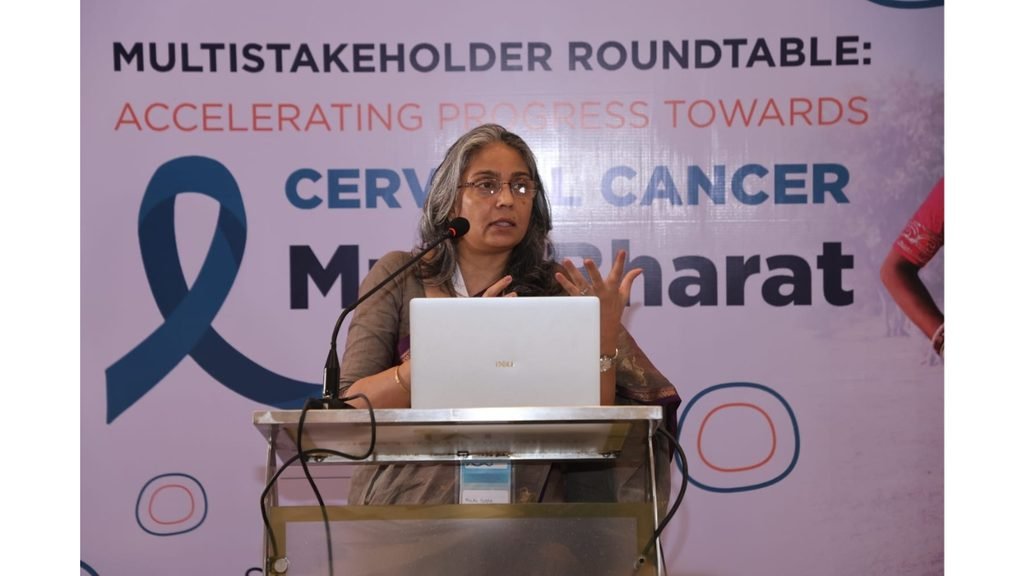
The dialogue, held in New Delhi, on 15 September, was followed by the Call to Action: Cervical Cancer Elimination Consultation on 16 September.
“India’s leadership is critical to achieving the global goal of eliminating cervical cancer,” said Dr. Rebecca Martin, President of Global Immunization at the Sabin Vaccine Institute, which convenes the Global HPV Consortium (GHC) and hosts its Secretariat. “Success will require national commitment translated into action at the state, district, and community levels. That is what it took
for India to be certified polio-free in 2014. Cervical cancer elimination is another audacious goal, and we can draw important lessons from India’s polio success, particularly the power of political commitment, strong partnerships, and sustained action in communities. This call to action is an important first step.”
From national consensus to action on the ground
The discussions brought together diverse perspectives on the challenges and opportunities in India’s cervical cancer elimination journey. Participants examined the need to strengthen screening systems, improve access to HPV testing technologies, establish effective referral and follow-up pathways, and ensure that women who test positive receive timely care & treatment.
The discussion also highlighted the importance of bringing together vaccination, screening, and treatment as interconnected pillars of a national elimination strategy, while addressing the social and structural barriers that prevent women from accessing healthcare.
Speaking during the consultation, Dr. Raj Shankar Ghosh, Member, CCEC-I Secretariat, emphasised the need to bring stakeholders together around a shared national purpose.
Dr. Raj Shankar Ghosh: “Cervical cancer elimination is not the responsibility of one institution or one sector. It requires a shared commitment to prevention, screening, and treatment, supported by evidence, strong health systems, and meaningful community participation. The time has come to move from individual efforts to a coordinated national response that can reach women wherever they live.”
Strengthening HPV DNA screening through evidence and innovation
The 15 September dialogue focused on building consensus around HPV DNA screening as an important pathway towards cervical cancer elimination in India.
The session highlighted India’s cancer burden, regional disparities, shortages of trained healthcare personnel, and the need to strengthen indigenous technological capabilities.
Discussions on community-based HPV screening explored the potential of HPV self-sampling to improve access, particularly for women who face barriers to facility-based screening. The importance of generating real-world evidence, supporting frontline health workers through appropriate incentives, and strengthening monitoring, data management, and follow-up systems was emphasised.
The dialogue also examined extended-genotyping HPV primary screening and hub-and-spoke models as potential approaches to decentralise screening while maintaining linkages with higher-level facilities.
The importance of integrating screening with timely treatment was reinforced through discussions on the “See and Treat” approach and the need to build community-centred cancer care systems that can bridge the gap between a positive test and completion of care.
The session further explored WHO guidance on HPV DNA genotyping, the selection of feasible and scalable HPV testing technologies, and the role of automated sampling in improving efficiency and programme-level implementation.
This is more suitable for the press release because it keeps the focus on health-system priorities, evidence, technology, and implementation, rather than individual speakers.
Digital technology and investment planning to support scale-up
Digital innovation and evidence-based investment planning emerged as important enablers for strengthening India’s cancer-care continuum.
IIT Delhi presented PRAVAAH, a digital patient tracking and care pathway for cervical cancer screening and follow-up. The platform aims to support continuity of care by strengthening linkages between screening, follow-up, and treatment.
Prof. Karen Canfell, (Cancer Elimination Collaboration, University of Sydney, and Lead, Elimination Partnership in Cervical Cancer (EPICC), shared perspectives on developing an investment case for cervical cancer elimination and the role of modelling in programme design, resource allocation, and scale-up.
The discussions highlighted the importance of combining scientific evidence, digital tools, and investment planning to support states in designing and implementing effective cervical cancer elimination programmes.
A call for integrated policy, financing, and implementation
The second day of the dialogue series shifted the focus towards a shared call to action, with participants examining how India can strengthen the integration of prevention, screening, treatment, and community empowerment.
Dr. Naveen Thacker, Executive Director, International Pediatric Association, emphasised the importance of pursuing all three pillars of the WHO 90–70–90 strategy: vaccination (90 percent of girls by 15), screening (70 percent of women), treatment (90 percent of those who need it)
Dr. Rajshree Das, Senior Director, PCI India, highlighted the importance of addressing social stigma, family perspectives, and community-level barriers that influence women’s willingness and ability to access screening and vaccination.
Dr. Alexander Thomas, AHPI, ANBAI & CAHO, stressed the need to translate policy into implementation and called for greater collaboration between private healthcare providers, government, and state-level stakeholders.
Prof. Sanjay Dhir, Professor of Strategic Management, IIT Delhi introduced the S.A.V.E. strategy:
- S – Screening: Integrating advanced and appropriate technologies to expand screening.
- A – Access to treatment: Strengthening referral pathways and ensuring timely care.
- V – Vaccination: Expanding HPV vaccination to prevent cervical cancer in future generations.
- E – Empowering communities: Addressing demand-side barriers and enabling communities to participate in solutions.
His call to action was clear: “Make it happen.”
Prof. Sanjay Dhir: “The 90–70–90 targets need more than ambition, they need a clear and coordinated plan. Screening, access to treatment, vaccination, and community empowerment must work together. The opportunity before us is to connect technology, policy, institutions, and communities into an implementation pathway that can deliver measurable progress. The next step is to make it happen.”
Government leadership and sustained financing are central to elimination
The dialogue series underlined the importance of stronger coordination across government departments and institutions, particularly between immunisation, the National Health Mission, medical education, and public health programmes.
Dr. Vivek Virendra Singh, from UNICEF, drew attention to structural gaps in health systems and the need to strengthen collaboration across immunisation, NHM, and medical education. He also
emphasised taking the consortium’s work directly to high-burden states to support implementation.
Ms. Mridu Gupta, Founder and CEO, CAPED, highlighted the need to bridge coordination gaps between stakeholders and strengthen integration across state, district, and block-level systems.
The discussions reinforced that government leadership, policy alignment, financing, and coordinated implementation will be essential to translate national commitments into outcomes for women.
Building a health system that reaches every woman
The consultation also explored the role of healthcare providers, professional bodies, technology institutions, and communities in strengthening cervical cancer elimination.
Prof. Neerja Bhatla (NCI, AIIMS New Delhi): Highlighted the need for greater synergy between the different pillars of cervical cancer elimination, particularly vaccination and screening. She emphasized that states can learn from each other, as implementation and vaccination coverage vary considerably across India, and stressed the importance of strengthening coordination between the health and education systems.
Ms Meenu Anand (Director, Global Cancer Prevention): Presented preliminary findings from a study in Sikkim, emphasizing the role of teachers as trusted messengers in building community confidence and improving HPV vaccination uptake through structured training, parent engagement, and coordination with ASHAs and health staff.
Dr Partha Basu (Head, Early Detection, Prevention and Infections Branch, International Agency for Research on Cancer (IARC): India has made major progress with HPV vaccination, but introducing HPV-based cervical cancer screening should be guided by implementation research to understand local barriers and facilitators. The key lesson is to adapt screening strategies to the needs of different states, communities, providers, and health systems, rather than relying only on evidence from clinical trials.
Dr. Hari Krishna Raju Sagiraju, NCI-AIIMS, highlighted the importance of strengthening the capacity of nurses and healthcare staff for VIA testing and the role of technology in improving access to treatment.
Dr. Shalini Singh (Director, ICMR-NICPR, New Delhi): emphasised community-centred screening, indigenous technologies, trained personnel, effective referral systems, digital tracking, and state-level integration.
Dr. Anand Bhan, PI, Sangath, highlighted the role of structural barriers, stigma, and exclusion in creating healthcare inequities, and called for community-led co-design to rebuild trust.
Prof. Karen Canfell reinforced the importance of systems thinking, community trust, and locally tailored screening and treatment approaches designed around the ability to follow up with women.
The role of CSR, industry, and private healthcare
The two-day consultation also highlighted the need for greater collaboration between government, private healthcare providers, industry, research institutions, and civil society.
With cervical cancer elimination requiring sustained investment in screening, treatment, vaccination, digital systems, workforce capacity, and community engagement, participants emphasised the importance of aligning resources and expertise towards shared public health goals.
CSR and industry partnerships can contribute to strengthening healthcare infrastructure, supporting screening and diagnostic access, enabling digital patient tracking, investing in indigenous technologies, supporting frontline health workers, and strengthening community awareness and referral systems.
The discussions reinforced that such partnerships should complement government priorities, strengthen public health systems, and support equitable access for women across geographies and socio-economic groups.
Women’s health and agency at the centre of the conversation
The consultation also introduced the Women for Women Collective, a flagship initiative of CAPED focused on cervical cancer elimination and sensitisation, alongside wider issues of women’s health, agency, menopause, and related concerns.
The initiative reflects the importance of placing women’s voices, lived experiences, and healthcare needs at the centre of public health conversations.
A shared way forward
The two-day national dialogue and consultation converged around a set of priorities for accelerating cervical cancer elimination in India:
- Build national and state-level consensus around HPV DNA screening and cervical cancer elimination.
- Strengthen evidence generation and synthesis to guide programme design and policy decisions.
- Select validated, scalable, and context-appropriate HPV testing technologies.
- Expand community-centred screening and explore appropriate self-sampling approaches.
- Strengthen referral, follow-up, and treatment pathways for women who test positive.
- Improve digital tracking and continuity of care across the cancer-care continuum.
- Integrate vaccination, screening, and treatment across health systems.
- Strengthen coordination between government departments, medical societies, research institutions, technology partners, CSR, and civil society.
- Support state-level implementation, particularly in high-burden and hard-to-reach areas.
- Develop sustainable financing and investment plans to support scale-up.
The National Dialogue series concluded with a call to move from consensus to implementation, recognising that cervical cancer elimination will require coordinated action across sectors and sustained commitment to reaching women with prevention, screening, and treatment services.
If you object to the content of this press release, please notify us at pr.error.rectification@gmail.com. We will respond and rectify the situation within 24 hours.