
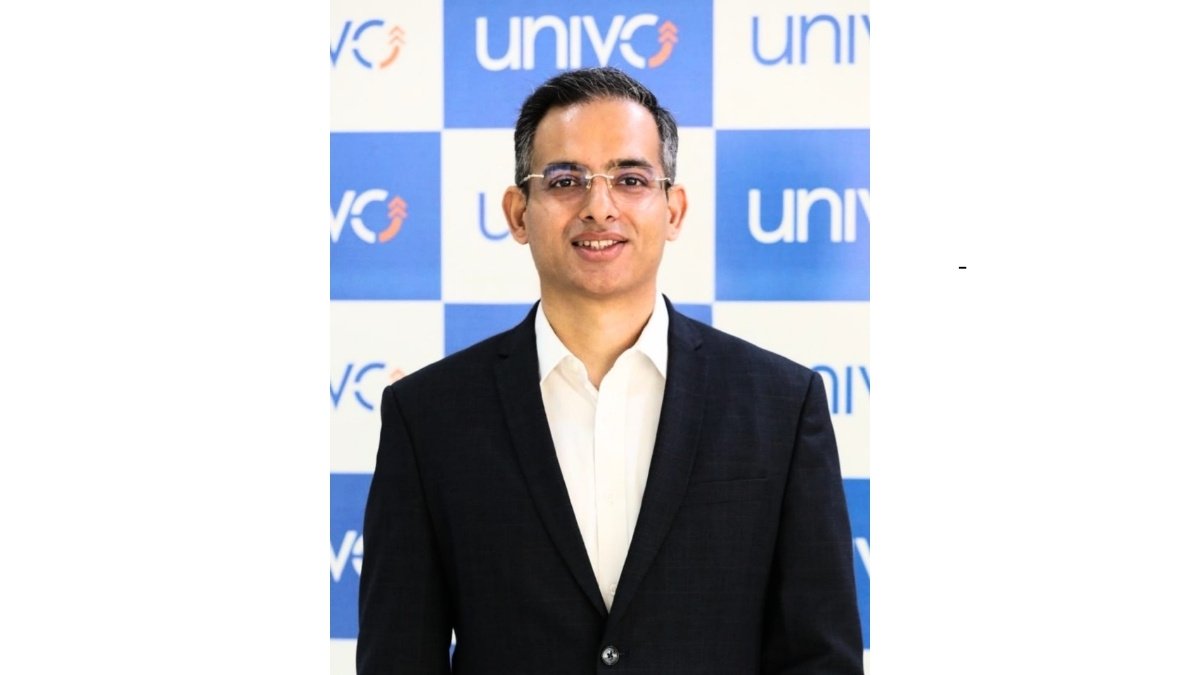





By Sailesh Agarwal, Managing Director, Forcas Studio Limited
New Delhi [India], November 5: In 2008, a formal shirt priced at ₹199 was placed on the shelf at a Reliance Fresh store. It sold. What stood out was not the price, but the customer’s expression as he examined the stitching, seemingly looking for a catch. Years of shopping at weekly markets had conditioned him to associate low prices with poor quality, and he was pleasantly surprised to discover otherwise.
That moment highlights a long-standing misconception in the Indian apparel industry. A customer willing to spend ₹400 is not necessarily looking for the cheapest product. He is looking for a product that does not feel cheap.
For much of the industry’s history, offering such a product under a recognised brand was economically challenging. Brand building relied heavily on television, print advertising and hoardings, costs that remained largely similar whether the product was a ₹400 shirt or a ₹1,400 one. These expenses were easier to absorb at higher price points but difficult to justify at the lower end of the market.
Consequently, a significant portion of India’s apparel market remained unbranded, not because consumers lacked the purchasing power for branded clothing, but because building brands at these price points was commercially difficult. CareEdge Ratings estimates that 59% of India’s ₹9.30 lakh crore apparel retail market remains outside organised trade.
Three major changes are now reshaping this opportunity.
The first is consumer discovery. Smartphones and digital platforms have replaced traditional advertising-led discovery to a significant extent, allowing affordable brands to reach consumers without relying exclusively on expensive mass-media campaigns.
The second is taxation. The GST structure, with a 5% rate on apparel priced below ₹2,500 compared with 18% above that threshold, provides a more favourable tax environment for the value segment.
The third, and perhaps most consequential, is distribution. Advertising can create awareness of a ₹399 shirt, but it cannot ensure that the product can be delivered profitably. For years, the economics of reaching customers and managing returns made this difficult.
A garment priced at ₹399 can be highly sensitive to courier costs. Shipping it across 200 kilometres and processing a return when the fit is unsuitable can erode margins substantially. Delivering the same product from a dark store just two kilometres away can create a very different economic equation.
This is the rationale behind FTX’s presence on platforms such as Zepto, Myntra’s M-Now, Booon and, since 29 July, Flipkart Minutes. The opportunity is not simply about offering delivery within minutes. It is about accessing a distribution model whose cost structure may be better suited to affordable fashion.
According to Bain and Flipkart, household essentials account for an estimated 85–90% of India’s quick-commerce spending. Fashion remains a relatively underpenetrated category on these platforms, presenting an opportunity for brands that can adapt their products, inventory and distribution economics to this emerging channel.
However, this opportunity comes with near-term costs. Stocking a broad assortment across hundreds of dark stores before demand patterns become clear requires capital and increases inventory complexity. FTX’s inventory levels and working-capital cycle also stretched in FY26 as the business expanded through this channel.
Quick commerce does not automatically translate into better margins. Profitability depends on inventory turnover, demand forecasting and the ability to identify products that customers actually want to buy. The distribution model creates an opportunity, but execution determines whether that opportunity becomes a sustainable business.
FTX follows a measured approach to product development, launching each new design in batches of 80–100 units before committing to larger inventory quantities. Approximately one in five designs makes the cut. This approach helps limit inventory risk while allowing customer demand to guide subsequent production decisions.
The same discipline extends to product design. The focus is on fabric that feels heavier than its price suggests, wrinkle resistance incorporated at the yarn level and darker colour choices suited to customers who commute on two-wheelers. These decisions may appear incremental, but they address the practical needs of the target consumer.
Ultimately, the question remains the same as it was in that Reliance Fresh store in 2008: is the product genuinely good, or is it merely cheap?
India’s mass-market apparel segment has a growing opportunity to build national brands priced below ₹500. Changing consumer discovery, favourable tax structures and evolving distribution models are reducing traditional barriers, but long-term success will depend on product quality, repeat purchases, efficient inventory management and sustainable margins rather than delivery speed alone.