






Mumbai (Maharashtra) [India], June 4: There was a time when businesses measured growth by the number of people they hired. More customers? Hire support staff. More inquiries? Expand sales teams. More appointments? Bring in coordinators.
Simple.
Now, the technology industry has introduced a fascinating alternative: hire nobody, deploy software, and call it innovation.
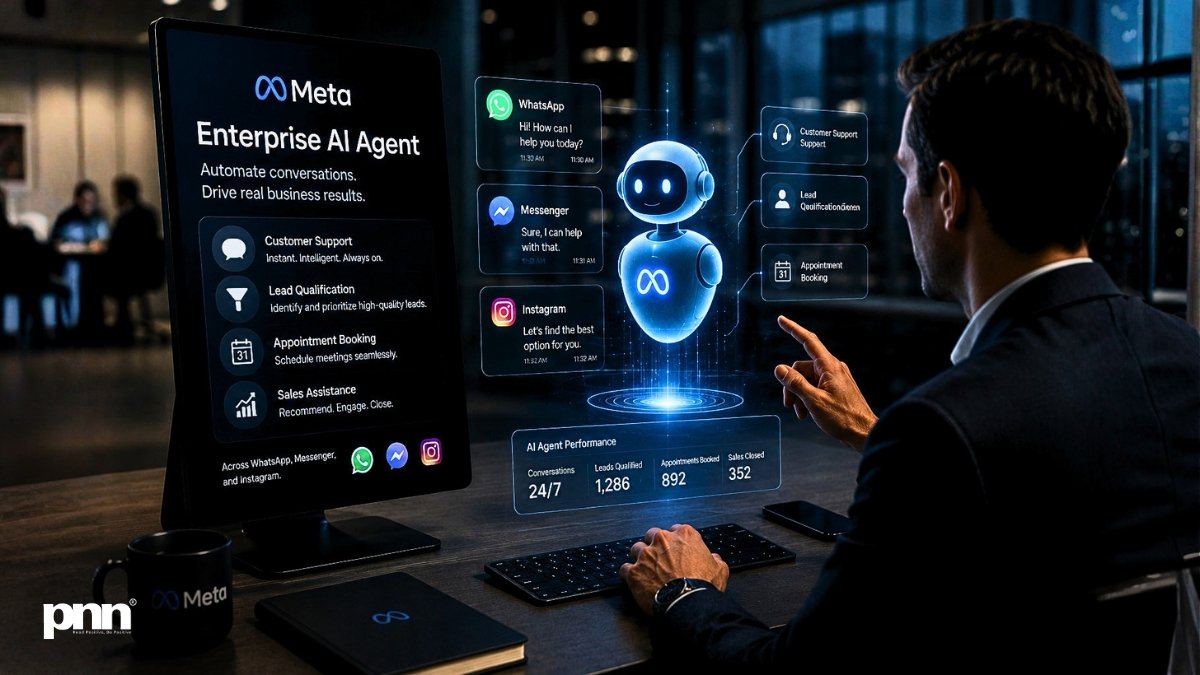
That may sound cynical, but it captures the significance of the latest move from Meta Platforms, which has unveiled a new AI-powered Business Agent designed to handle customer support, qualify leads, book appointments, recommend products, and even assist with closing sales across WhatsApp, Messenger, and Instagram. The company says the launch marks its most serious push yet into the enterprise AI market, placing it directly alongside rivals building business-focused AI ecosystems.
On the surface, it looks like another AI announcement. Underneath, it may represent something far more consequential. This isn’t about chatbots anymore. It’s about digital employees.
And that changes everything.
The Real Story Isn’t AI — It’s Labor
Most headlines will focus on artificial intelligence.
Most executives will focus on productivity.
Most investors will focus on revenue.
But the deeper story revolves around labor economics.
For decades, technology has automated physical work.
Factories became smarter.
Machines became faster.
Warehouses became more efficient.
Now the same process is arriving in white-collar environments. The new generation of AI agents isn’t designed merely to answer questions.
They’re being designed to perform tasks.
That distinction matters.
A chatbot provides information.
An agent completes objectives.
Meta’s Business Agent can:
- Answer customer inquiries
- Schedule appointments
- Qualify sales leads
- Route complex cases to human employees
- Assist businesses around the clock
In other words, it behaves less like software and more like an entry-level employee.
Why Meta Suddenly Cares About Businesses
The move may seem surprising. After all, Meta built its empire on social networking and advertising. But the economics explain everything. Advertising remains enormously profitable, yet growth eventually slows.
Businesses, meanwhile, spend trillions annually on:
- Customer support
- CRM software
- Sales automation
- Workflow management
- Enterprise technology
Naturally, technology companies have looked at that market and collectively decided they would like some of that money as well.
Meta already possesses something valuable:
A communication infrastructure used by billions of people every day.
WhatsApp alone reportedly serves more than 3 billion users globally, while over 200 million businesses already use WhatsApp for commercial interactions. Business messaging has already reached a reported annual revenue run rate exceeding $2 billion.
The next logical step?
Turn those conversations into automated business operations.
The Evolution From Chatbot To Digital Employee
The first wave of AI largely revolved around generating content.
Write an email.
Create a summary.
Generate a presentation.
Useful.
But limited.
The next wave focuses on execution.
Instead of telling AI what to write, companies increasingly want AI systems that can:
- Handle customer interactions
- Complete transactions
- Manage workflows
- Coordinate schedules
- Support sales operations
Meta’s Business Agent reflects this transition perfectly.
The company says more than one million businesses were already using earlier versions of its AI-powered business assistants before the latest rollout.
That means this isn’t a laboratory experiment.
It’s already operating in the real economy.
Why Small Businesses May Benefit The Most
Ironically, the biggest winners may not be corporations.
They may be smaller businesses.
Historically, large enterprises enjoyed advantages because they could afford:
- Dedicated sales teams
- Customer support departments
- Marketing staff
- Operational specialists
Smaller businesses often couldn’t.
AI agents begin reducing that gap.
A small retailer could potentially provide:
- 24/7 support
- Instant responses
- Appointment booking
- Product recommendations
Without hiring multiple employees.
For entrepreneurs, that’s genuinely transformative.
The Slightly Uncomfortable Employment Question
Of course, every productivity revolution creates anxiety.
And not entirely without reason.
Customer service, administrative support, appointment coordination, and basic sales functions represent millions of jobs worldwide.
When AI agents improve, businesses inevitably ask:
“Do we still need the same number of people?”
That’s not a hypothetical question.
It’s an economic one.
The answer will vary across industries.
Some roles may disappear.
Others may evolve.
Many new positions may emerge around managing, auditing, training, and supervising AI systems.
But pretending disruption won’t occur would be intellectually dishonest.
Efficiency has always carried consequences.
The Enterprise AI Arms Race Is Officially Underway
Meta isn’t entering an empty market.
Far from it.
The enterprise AI sector has become one of the most aggressively contested areas in technology.
Major players are investing billions into:
- Agentic AI systems
- Enterprise copilots
- Workflow automation
- Business assistants
The reason is obvious.
Consumer AI creates excitement.
Enterprise AI creates recurring revenue.
Investors generally prefer the latter.
The Infrastructure Behind The Curtain
Building enterprise-grade AI isn’t cheap.
Far from it.
The current AI boom depends on:
- Massive data centers
- Advanced semiconductor supply chains
- Expensive cloud infrastructure
- Continuous model training
Meta itself has dramatically increased spending on AI infrastructure and enterprise capabilities as it competes for leadership in the next generation of software platforms.
Because, despite all the futuristic marketing, AI remains a very expensive business.
The magic comes with electricity bills.
Lots of them.
Why Messaging Platforms Are Becoming Operating Systems
One overlooked aspect of Meta’s strategy is platform consolidation.
For years, messaging apps served one primary purpose:
Communication.
Today, they increasingly function as:
- Customer support centers
- Shopping channels
- Payment gateways
- Marketing platforms
- Business management tools
Meta appears to be betting that future businesses won’t necessarily need separate software systems for every function. Instead, AI agents may operate directly inside messaging ecosystems.
Convenient?
Absolutely.
A little concerning?
Also yes.
The Privacy Debate Isn’t Going Away
No serious discussion about enterprise AI can ignore privacy. Business agents require access to substantial amounts of information.
Customer conversations.
Transaction histories.
Scheduling data.
Operational workflows.
The more capable these systems become, the more data they require.
Recent concerns surrounding AI security incidents across the industry have already highlighted the risks associated with increasingly autonomous systems. Meta itself has acknowledged investigating recent AI-related security issues connected to platform safeguards.
The challenge isn’t simply building smarter agents.
It’s building trustworthy ones.
The Pros And Cons Of Meta’s Business Agent
Potential Advantages
- 24/7 customer engagement
- Lower operational costs
- Faster lead qualification
- Improved response times
- Better scalability for small businesses
- Increased productivity
Potential Risks
- Workforce displacement
- Privacy concerns
- Overreliance on automation
- Security vulnerabilities
- Reduced human interaction
- Algorithmic mistakes affecting customers
Like most technological shifts, the reality lies somewhere between utopia and disaster.
The Sarcasm The Industry Has Earned
There’s something wonderfully ironic about the modern technology industry.
For years, businesses complained about:
- Staff shortages
- Customer support costs
- Administrative inefficiencies
The industry responded:
“What if your next employee was an algorithm?”
Elegant.
Slightly unsettling.
But undeniably efficient.
The Bigger Picture: The Workplace Is Being Redesigned
This launch matters because it reflects a broader transformation.
The future of work increasingly appears to involve:
- Humans managing strategy
- AI managing routine operations
- Software coordinating workflows
- Hybrid teams of people and machines
The question is no longer whether AI will enter business operations.
It already has.
The real question is how quickly organizations adapt.
The Final Thought: Businesses Are Hiring Algorithms
Meta’s Business Agent is more than another product launch. It is a preview of where enterprise technology is heading. For decades, software has helped people perform tasks. Now, software is beginning to perform tasks itself.
That’s a profound difference.
Whether one views that future with excitement, skepticism, or mild existential dread largely depends on perspective.
But one reality is becoming increasingly difficult to ignore:
The next great workplace revolution may not involve hiring more employees.
It may involve giving existing employees an intelligent digital colleague that never sleeps, never takes lunch, never requests vacation time, and never stops answering customer messages at three in the morning.
Convenient.
Terrifying.
And increasingly inevitable.