






By Kinshuk Kocher, Director, Investment Operations & Special Projects, Cedars-Sinai Technology Ventures
New Delhi [India], May 29: There is a question I find myself asking every time I review a health tech pitch, whether it is an early-stage founder at the Cedars-Sinai Accelerator+ or an Indian startup exploring the US market for the first time. The question is not about the technology. It is not about the team or the market size. It is this: have you actually watched a patient or clinician try to use this?
Most founders have not.
That single gap, the distance between building a product and watching it function inside a real clinical environment, explains more health tech failures than any funding shortage, regulatory hurdle, or competitive threat combined.
I say this not as an observer, but as someone who has sat on both sides of the table. In 2017, I co-founded Caredose in New Delhi to solve medication non-adherence, a problem the WHO estimates costs the global healthcare system $637 billion annually. We built technology we were proud of. We raised capital. We partnered with institutes such as Max Hospitals, WHO, USAID, and the Gates Foundation. And then we walked into our first pharmacy chain and discovered that our elegant solution had one fundamental problem: it was designed around how we thought healthcare worked, not how it actually did.
That lesson took months to unlearn. It ultimately made Caredose better — we grew medicine adherence from under 50% to above 80% for our provider partners and achieved a successful exit. But the friction cost us time and resources we could not afford to waste. I have watched dozens of startups at Cedars-Sinai Technology Ventures, where I have now led over $20 million in institutional investments across 10+ companies. Our ambition is to ensure that they don’t make the exact same mistake, as it often leaves them without the runway to recover from it.
The Real Failure Mode: Technology-First, Patient-Last
The pattern is remarkably consistent. A founder identifies a genuine clinical problem. They build technically impressive software or hardware to address it. They secure pilots. The pilots produce promising data. And then— nothing. Adoption stalls, the hospital moves on. The startup runs out of money, wondering what went wrong.
What went wrong is almost always the same thing: the product was built to solve a technology problem, not a human behaviour problem.
Healthcare is not a rational system. It is an ecosystem of competing pressures, physicians managing 30-minute appointment windows, nurses following workflows designed decades ago, patients navigating fear and confusion alongside complex treatment regimens, and hospital administrators balancing budget cycles with clinical outcomes. A product that does not fit seamlessly into this reality, regardless of how good its algorithm is, will not be adopted.
At Caredose, we learned that getting a patient to take their medication on time was less about our IoT device and more about how the pharmacist explained it. The technology was 20% of the solution. The human trust layer was 80%.
Three Things Founders Must Do Differently
First, spend time in the workflow before you build for it. Not customer discovery calls, but actual observation. Sit in a hospital ward. Watch a pharmacy counter during peak hours. Understand where the friction lives before you decide where your solution fits.
Second, find your physician champion before you find your investor. In every health tech deal I have evaluated at Cedars-Sinai, the presence of an internal clinical advocate has been the single strongest predictor of adoption success. An investor can fund your technology. A physician champion can actually deploy it.
Third, treat patient behaviour as a design constraint, not a post-launch problem. Non-adherence, dropout, and low engagement— these are not user failures; they are design failures. Build the human trust layer into your product from day one, not as a feature update after your pilot.
What Must Change
India is producing exceptional health tech founders, technically rigorous, globally ambitious, and deeply motivated. What the ecosystem lacks is the infrastructure to help these founders stress-test their products against clinical reality before they go to market.
More hospital-founder partnerships. More operator-investors who have navigated both the startup and the clinical environment. More honest post-mortems from founders who built great technology that never reached a single patient.
The health tech problem worth solving in India is not a shortage of innovation. It is the last mile. And until we fix it, we will keep building brilliant solutions that fail quietly inside corridors the founders never walked.
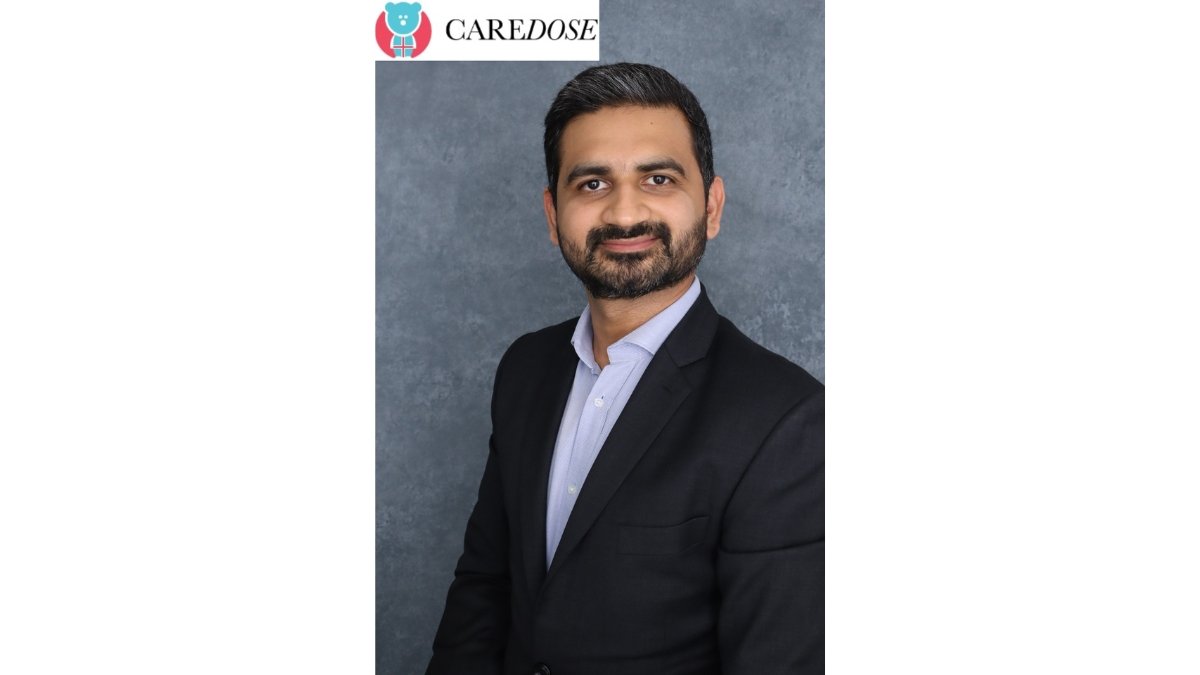
Kinshuk Kocher is Director of Investment Operations & Special Projects at Cedars-Sinai Technology Ventures, Los Angeles. He is the co-founder of Caredose, a MedTech startup that created the simplest way of managing regular, chronic medication. He holds an MBA from the University of Oxford.
If you object to the content of this press release, please notify us at pr.error.rectification@gmail.com. We will respond and rectify the situation within 24 hours.