


Mumbai (Maharashtra) [India], June 6: For years, the modern concert experience has followed a predictable script. The lights dim, the crowd erupts, thousands of smartphones rise into the air like illuminated monuments to digital devotion, and somewhere behind a sea of screens, an artist performs.
Everyone records the moment.
Not everyone experiences it.
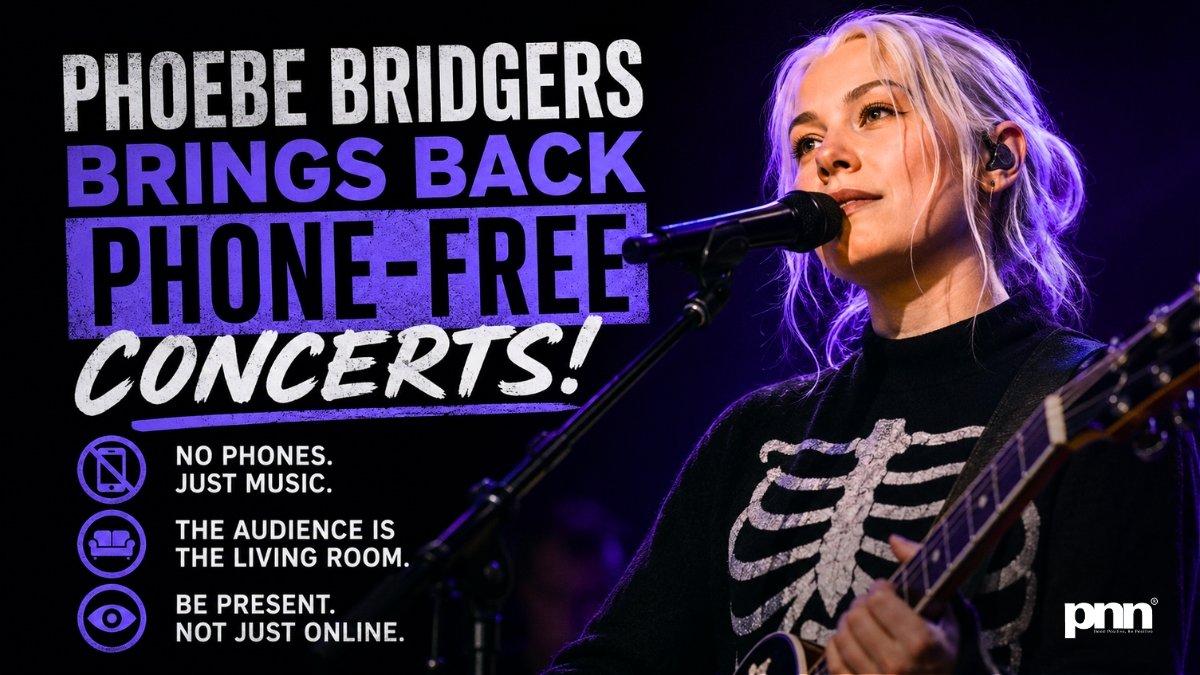
That reality sits at the center of one of the most interesting developments in live music this year. Acclaimed singer-songwriter Phoebe Bridgers has announced her highly anticipated Lost Tour, marking her first solo touring run in nearly three years. While the tour itself has generated excitement among fans across North America, the United Kingdom, and Europe, it is one specific decision that has captured industry attention.
The concerts will be phone-free.
In an era where every experience is instantly documented, clipped, filtered, uploaded, shared, analyzed, and forgotten within hours, Bridgers is asking audiences to do something unexpectedly radical: simply be present.
It sounds almost revolutionary. Or perhaps mildly terrifying, depending on one’s relationship with battery percentage.
The announcement arrives at a fascinating moment for the entertainment industry. While technology continues to reshape nearly every aspect of music consumption, a growing number of artists are questioning whether constant digital connectivity has quietly altered the emotional relationship between performers and audiences.
Bridgers’ decision is therefore bigger than a concert policy.
It is becoming part of a broader cultural conversation.
The Return Of Presence In A Hyperconnected World
The irony is difficult to ignore.
Music has never been more accessible.
Streaming platforms place millions of songs inside every pocket. Concert footage appears online within minutes. Entire festivals can be livestreamed across continents.
And yet many artists increasingly believe audiences have become less present during live performances.
Phone-free concerts are not entirely new. Several major performers have experimented with similar restrictions over the past decade, often using secure locking pouches that allow attendees to keep their devices while preventing active use during the show.
What makes Bridgers’ move notable is the timing.
The entertainment industry is experiencing a renewed emphasis on immersive experiences. Audiences are increasingly seeking authenticity in a world saturated by digital noise. Concert promoters, artists, and venue operators are beginning to recognize that exclusivity sometimes means removing distractions rather than adding more features.
In that context, the Lost Tour feels less like a nostalgic throwback and more like a calculated statement about where live entertainment could be heading.

Why Phoebe Bridgers Is The Perfect Artist For This Experiment
Few contemporary artists are better positioned to embrace phone-free performances.
Bridgers built her reputation through emotionally intimate songwriting rather than elaborate spectacle. Her music thrives on subtle moments, lyrical nuance, and audience connection. Songs often feel like personal conversations rather than stadium-sized productions.
That creative identity matters.
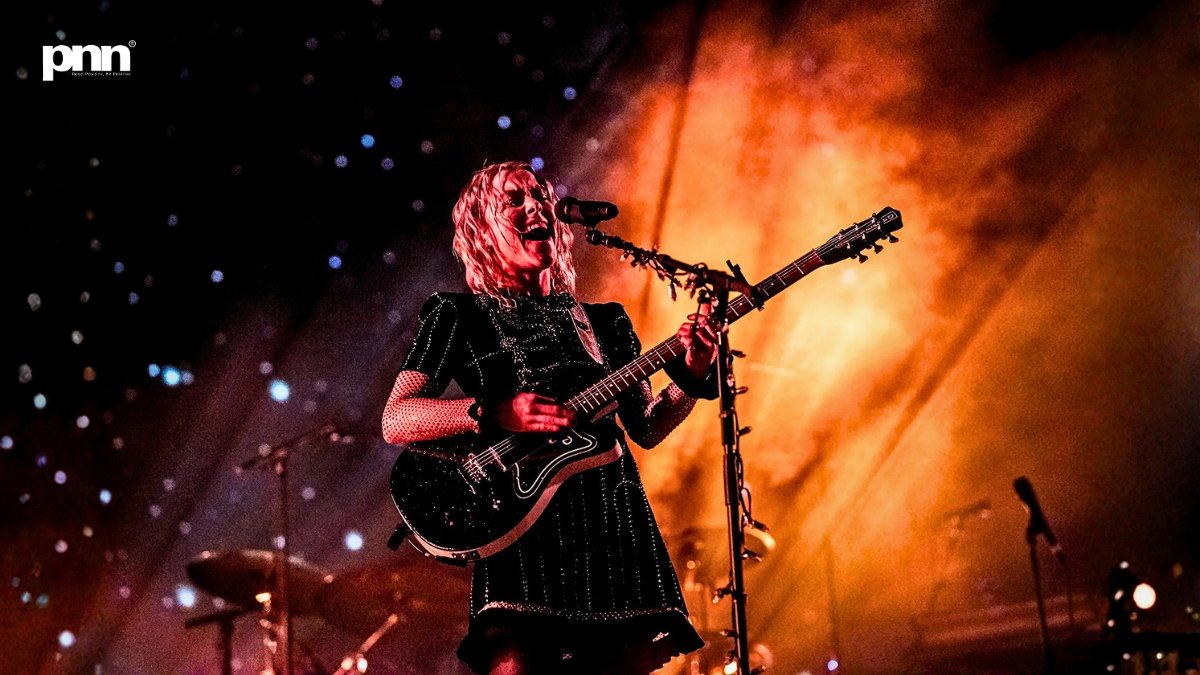
A phone-free environment complements the kind of emotional engagement her music encourages. Instead of watching a performance through a six-inch screen, audiences are encouraged to absorb details directly—the lighting, the atmosphere, the vulnerability of live vocals, and the collective energy that exists only within a shared physical space.
From a branding perspective, it is also remarkably consistent.
The decision aligns naturally with Bridgers’ artistic persona rather than feeling like a publicity stunt.
That distinction is important.
Fans generally embrace restrictions when they feel authentic.
They resist them when they feel manufactured.
The Business Side Of Going Phone-Free
Beneath the artistic philosophy lies an equally important commercial reality.
Live entertainment has become one of the music industry’s most valuable revenue streams. According to industry reports, global live music revenues have continued climbing following the post-pandemic recovery, with major tours generating hundreds of millions of dollars annually.
As ticket prices increase, audiences increasingly expect unique experiences that cannot be replicated online.
Phone-free concerts help create that exclusivity.
Every attendee becomes part of a moment that cannot be perfectly reproduced through social media clips. The event gains a sense of scarcity, a concept marketers have appreciated for centuries.
Ironically, removing smartphones may actually increase the perceived value of the experience.
Who knew the most premium feature in entertainment might eventually become fewer features?
The Growing Fatigue With Constant Documentation
One factor driving support for phone-free shows is a growing cultural fatigue surrounding perpetual content creation.
For years, audiences were encouraged to document everything.
Vacations became content.
Meals became content.
Relationships became content.
Concerts became content.
At some point, people started wondering whether they were attending experiences or merely collecting evidence that they attended them.
The answer appears increasingly complicated.
Recent consumer behavior trends suggest younger audiences, particularly Generation Z, are becoming more selective about digital sharing. While social media remains influential, there is growing interest in experiences that feel authentic, private, and disconnected from online performance.
Phone-free events fit naturally into that shift.
They transform concerts from content-generation opportunities back into entertainment experiences.
An unexpectedly controversial concept in 2026.
The Benefits For Artists And Fans
Supporters of phone-free concerts highlight several advantages.
Artists often report stronger audience engagement and more meaningful interactions. Without screens obstructing sightlines, performers can establish better visual connections with attendees.
Fans also benefit from improved visibility and reduced distractions. Instead of watching hundreds of screens recording the same moment, audiences can focus directly on the performance itself.
Additional advantages include:
- Enhanced immersion throughout the show.
- Reduced unauthorized recordings.
- Greater respect for artistic presentation.
- Stronger emotional connection between performer and audience.
- Improved atmosphere within venues.
For artists like Bridgers, whose work often relies on emotional subtlety, these benefits are particularly significant.
The Counterargument Nobody Can Ignore
Of course, not everyone is enthusiastic.
Critics argue that phone-free policies can feel restrictive and outdated. Some fans enjoy documenting memories and sharing experiences with friends who cannot attend. Others cite practical concerns, including accessibility needs, family emergencies, or simple convenience.
There is also a broader philosophical debate.
Modern audiences increasingly view smartphones as extensions of daily life rather than optional accessories. Asking people to disconnect, even temporarily, can feel unrealistic.
Additionally, social media exposure often contributes significantly to tour marketing. Viral clips generate awareness, expand reach, and introduce artists to new audiences.
Removing phones potentially limits organic promotional opportunities.
The industry, therefore, faces a delicate balancing act.
How much connectivity enhances experiences?
And how much diminishes them?
The answer likely varies depending on the artist, audience, and event.
A Larger Trend Is Emerging
Bridgers’ announcement arrives amid broader changes across entertainment.
Film screenings, comedy performances, theater productions, and exclusive events have increasingly experimented with technology restrictions. Organizers are discovering that scarcity and exclusivity remain powerful tools in a digital environment defined by abundance.
Consumers spend much of their lives connected.
As a result, disconnecting is gradually becoming a premium experience.
That may sound absurd.
Then again, paying to temporarily escape the very technology we spent decades building also sounds remarkably human.
History has always enjoyed irony.
What This Means For The Future Of Live Music
The success or failure of the Lost Tour could influence how future artists approach live performances.
If audiences embrace the concept, more performers may adopt similar policies. If resistance outweighs enthusiasm, phone-free concerts may remain niche offerings rather than industry standards.
Either way, Bridgers has successfully sparked conversation about the purpose of live entertainment.
Is a concert primarily a memory?
A performance?
A social-media asset?
A shared experience?
Perhaps it is all of those things simultaneously.
What remains clear is that audiences are increasingly searching for meaningful experiences amid endless digital stimulation.
Phoebe Bridgers appears willing to test whether fewer screens can create more connection.
And honestly, in an age where nearly everything competes for attention, asking people to pay attention may be the boldest artistic statement of all.
The Lost Tour is not merely about removing phones.
It is about recovering something that technology, for all its benefits, occasionally struggles to provide.
Presence.
A rare commodity in modern entertainment.
Possibly rarer than front-row tickets.