




Mumbai (Maharashtra) [India], July 29: Ask most Indian adults where they learned about things like compound interest, the pitfalls of credit cards, or how mutual funds actually work, and you’ll usually get a shrug or a half-smile. The truth is, most people didn’t learn it anywhere—at least not formally. Maybe an uncle shared a horror story about losing money in the stock market. Maybe a bank employee explained just enough to sell a product. But school? That was almost never in the picture. It’s odd, really—India is known for sharp engineers and math whizzes, but we’ve barely taught kids how to read a loan agreement.
That’s finally starting to shift, and honestly, it’s about time.
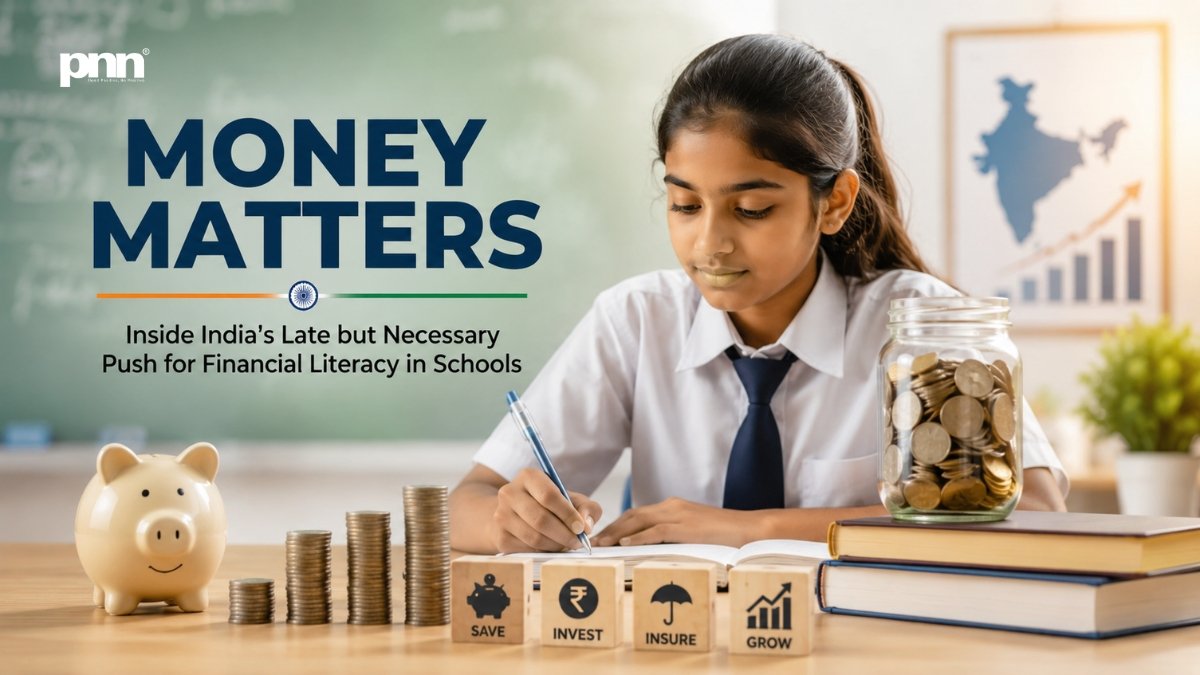
A couple of years ago, in 2021, the Central Board of Secondary Education teamed up with the National Payments Corporation of India. Together, they launched a financial literacy elective for kids in Class 6. It wasn’t rocket science—just basic stuff: how banks work, how to pay digitally with UPI, cards, wallets, the everyday mechanics of managing money. It’s so simple it feels almost overdue. For decades, the default was, “figure it out at home.” So, even a small step in the right direction is a big deal.
Since then, things have picked up. The National Centre for Financial Education now runs the Money Smart School Programme with CBSE. It’s voluntary—schools can choose to weave financial education into the regular subjects from classes six to ten. They have five workbooks covering everything from bartering to digital payments, even touching on things like pensions and smart borrowing. Teachers get trained (and certified with the somewhat cheesy but well-intentioned title of “Money Smart Teacher”) to deliver these lessons—even if, let’s be honest, many of them never got any real instruction in this stuff themselves.
Why now, though? And why so late?
Well, kids today are managing money sooner than ever. Thanks to the explosion of digital payments—especially UPI—teenagers are making transactions long before they leave school. A 15-year-old with a UPI account can split bills with friends in seconds. Yet often, those same kids have no clue how an interest rate turns a small loan into a mountain of debt if you’re not careful. The tools arrived before the wisdom could follow.
There’s another reason, too—one that’s a bit harder to talk about. Household debt in India is rising, and a lot of it is unsecured, taken by younger folks who found it incredibly easy (maybe too easy) to borrow money through instant loan apps. Teaching teenagers about finances won’t guarantee they’ll never make mistakes, but not teaching them at all? That just stacks the odds against them. At this point, “financial literacy” isn’t just a nice skill—it’s basic survival for the next generation.
Just for context, plenty of other countries plugged financial education into their curriculums ages ago. In the US, some states have required it in schools for decades—even if the coverage is inconsistent. The UK made “financial capability” part of its national curriculum years before India got around to a formal plan. India’s first big-picture “National Strategy for Financial Education” only came out in 2013 and now runs in a revised version through 2025. A lot of this is simply India trying to fill a gap it ignored for way too long.
But what does all this look like in real life? Not just on paper?
Picture a Class 8 student working through the Money Smart School Programme. One day it’s about the difference between saving and investing, with actual examples—like a fixed deposit versus a mutual fund SIP. Next class, maybe there’s a role-play about what to do if a UPI payment fails and you don’t get your money. For many teens, that’s not a theoretical problem—it’s something they’ve already experienced.
There’s even an annual National Financial Literacy Assessment Test—basically a free, nationwide quiz. There’s a slogan contest too, which sounds a little cutesy but hey, it gets kids thinking. All these activities, while small by themselves, are ways to make finance real—like actually rolling up your sleeves instead of just memorizing definitions.
Of course, this isn’t a magic bullet. The programme is still voluntary. Whether a kid gets this education depends a lot on where they live and what board their school follows. A CBSE student in Bengaluru will have a much better shot at learning this stuff than someone in a rural state board school—ironically, the kids who might need it most.
Plus, there’s still the challenge of training teachers. It’s one thing to explain GDP in a commerce class. It’s a different beast entirely to ask someone who’s never invested to teach about market swings or insurance products. Teacher certification helps, but there’s no shortcut to real understanding.
In the end, we won’t really know how well this works until today’s Class 6 kids grow up and start making their own choices with loans, insurance, and investments. For now, the conversation has finally shifted from “should we do this?” to “how do we do this well?” And even if India started late, that change matters. It was needed. It still is.